

What a Bather Statue Is
In sculpture, a bather is a figure engaged in bathing or the moments around it—approach, pause, dry, turn. Compared with mythic nudes that announce themselves to an audience, a bather statue often looks absorbed, even private. The stance is typically relaxed rather than rigid, and that relaxed balance carries meaning.
One key to this poise is contrapposto: the classic weight shift onto one leg that sets hips and shoulders in quiet opposition. It suggests a contained, potential movement—freedom as readiness rather than spectacle.

How to Read a Bronze Bather
When you meet a bronze bather statue in a gallery or park, try this quick scan:
Start with balance and reach: Does the figure open outward, or curl inward? Openness often reads as agency and ease.
Follow the light: Where the surface is smoother, light pools; where it’s tool-marked, light scatters. Sheen and texture steer emotion.
Check the eye-line: Is the gaze inward, downward, or outward? Eye-line and plinth height decide whether you feel like a voyeur or a companion.
Bronze and the Foundry
So why bronze? Because the choices the metal allows—thin, hollow shells; crisp detail; lively or serene surfaces—directly support the meanings we attach to a bather statue. The classic technique, called lost‑wax casting, can be understood in friendly steps.
Here’s the gist—and how each step shapes feeling:
A model and a wax skin are prepared around a core. Uniform wall thickness keeps the eventual bronze light enough for extended arms and gentle reaches. Thin walls enable gestures that read as openness.
Sprues and vents form a channel system. Good flow and gas escape preserve delicate transitions—the subtle scoop of a shoulder that suggests breath.
The wax is melted out and replaced with molten bronze. Strong in tension, bronze supports outstretched poses without chunky supports, maintaining a sense of ease.
Parts are joined and chased. Chasing—fine, post-cast tooling—can smooth surfaces into calm continuity or leave a flicker of tool marks, like ripples on water, adding energy.
Patination completes the surface. Chemical color and sheen modulate mood, from warm, translucent browns (empathy, nearness) to cool, matte greens (distance, time, resilience).
Material Choices, Emotional Readings
Let’s translate a few craft decisions into what you might feel when you look.
Smooth, continuous surfaces and warm brown patina A closely chased, softly polished surface gathers light in broad pools. With a translucent brown patina, the figure can feel proximate, almost breathing. That warmth supports readings of beauty as serenity and freedom as unforced balance—like standing at the shoreline with time to spare.
Lively tool texture and mixed sheen When a sculptor leaves micro-textures—fine punch marks, subtle rasp traces—light breaks into tiny flashes. The body reads as active, energized, made. This visibility of making can feel like freedom, too: the figure asserts her constructed nature rather than masquerading as marble-smooth perfection.
Outdoor weathering and resilient presence Outdoors, bronze develops matte, mottled greens and browns; rain and pollution slowly reorganize sheen and tone. Details soften, but the figure can acquire a sense of time-worn steadiness—beauty as endurance, freedom as survival in public space. Conservation protocols help distinguish stable patina from corrosion.
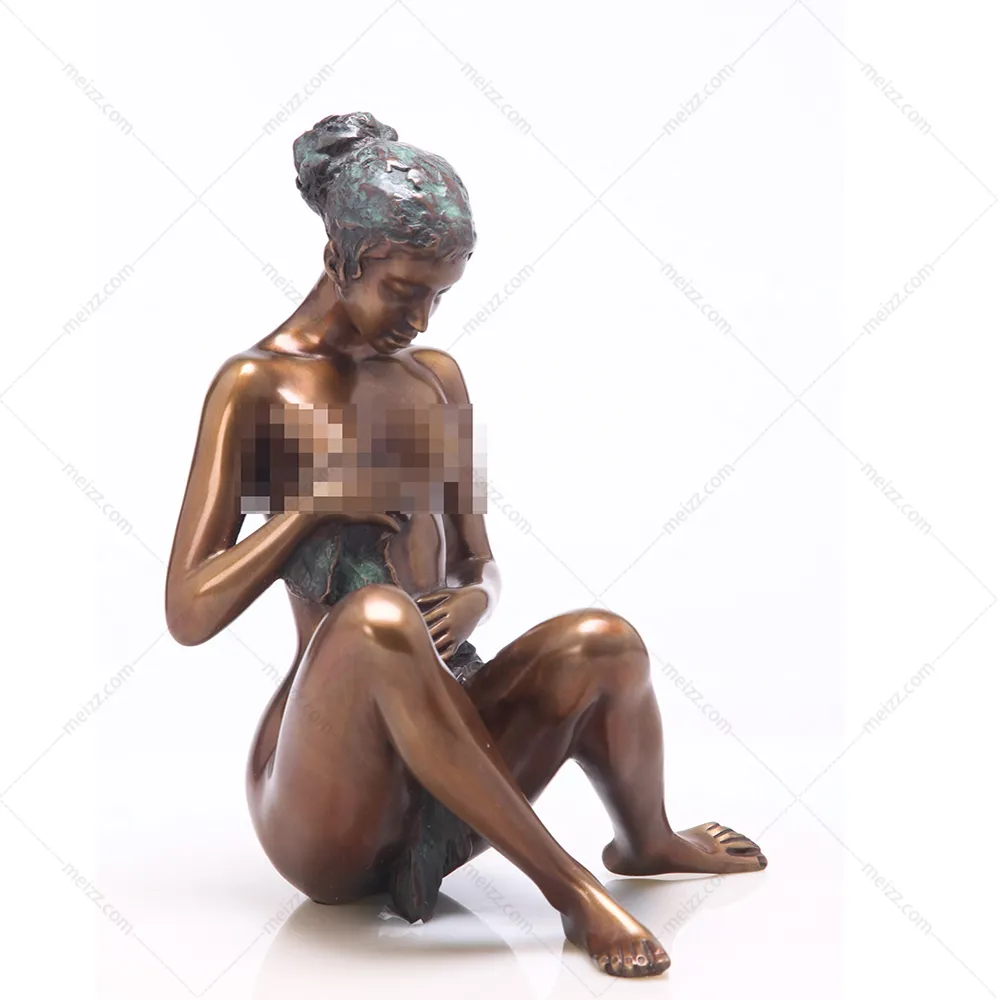
From Classical Grace to Modern Mass
The bather motif carries across centuries, and in bronze it wears many skins.
Eighteenth-century elegance Étienne‑Maurice Falconet’s celebrated model for a bathing figure refined classical modesty into Rococo grace, favoring unbroken contours and smooth continuity. A concise object entry at the V&A provides a tangible point of reference: Falconet’s A Bather. In bronze, this continuity reads as poise, a beauty of effortless line.
Early modern serenity In the early twentieth century, Aristide Maillol simplified volumes, treating the body as calm, weighted masses rather than nervy anatomy. The National Gallery of Art’s entries on his bathers show this clarity; see Bather with Raised Arms. Cast in bronze, those solid, rounded forms feel secure and self-possessed—freedom as inward steadiness.
Modernist structure and rethinking Painters like Cézanne restructured the figure into rhythm and plane, a shift that rippled into sculpture and influenced artists’ decisions about massing and surface. The echoes in bronze bathers—more block-like masses, clarified planes—underscore how material and form together reframe beauty as structure rather than mere smoothness.
Bronze vs Marble at a Glance
Below is a compact comparison of two traditional materials and how they shape what we feel in a bather statue.
Aspect | Bronze | Marble |
|---|---|---|
Structural behavior | Hollow shell, strong in tension; supports outstretched limbs | Strong in compression; slender projections are fragile |
Making process | Lost‑wax casting allows joined sections and post-cast chasing | Carving subtracts from a solid block; finish is integral |
Surface modulation | Wide range of patinas; textures can be tuned after casting | Natural translucency and polish; color is intrinsic |
Emotional cues (typical) | Openness, agility, “skin-like” warmth or weathered resilience | Luminous stillness, purity, ideal calm |

Quick Answers to Common Questions
Why do artists choose bronze for a bather statue?
Because hollow, tensile bronze supports open, balanced poses without heavy supports and can carry surfaces from mirror-smooth to lively textured. That flexibility lets artists tune how we read freedom and beauty.
What is patina, and why does it matter?
Patina is a surface layer formed naturally or by the artist’s chemicals and heat. It changes color and sheen—warm browns, cool greens—and therefore mood. A conservation guide from the Getty offers clear definitions in its patina chapter.
Is contrapposto just a fancy word for standing?
Not quite. It’s a specific weight shift that sets the body in dynamic balance, suggesting potential movement. That small architectural change in the body reads as self-possession—freedom without fuss.
Does outdoor display change the meaning of a bronze bather statue?
Weathering can mute details and introduce mottled color, which many viewers read as time and resilience. With regular care, that change becomes part of the sculpture’s public life rather than decay.
A Closing Look
Next time you encounter a bather statue—museum stillness or park-side breeze—step close and let the light tell you how it was made. Do thin limbs feel buoyant rather than brittle? Does a warm brown patina draw you into empathy, while a textured shoulder throws back little sparks of light? Material isn’t an afterthought; it’s the story. And bronze, from wax skin to living surface, makes freedom and beauty visible in the turn of a wrist, the shift of a hip, the glimmer of a tide-line on metal.