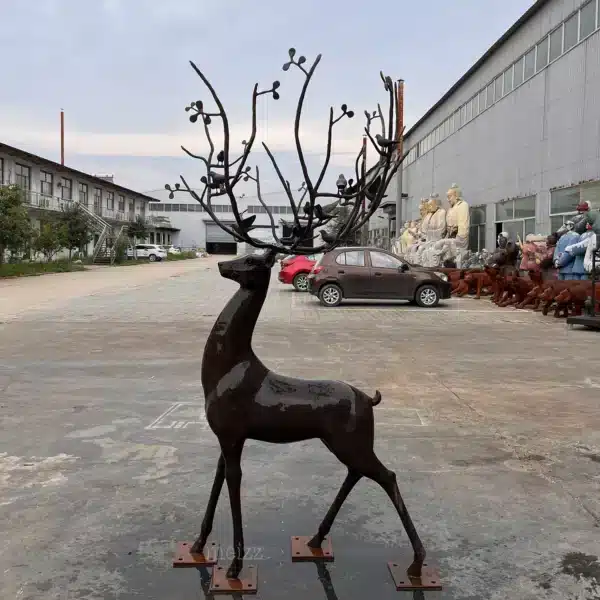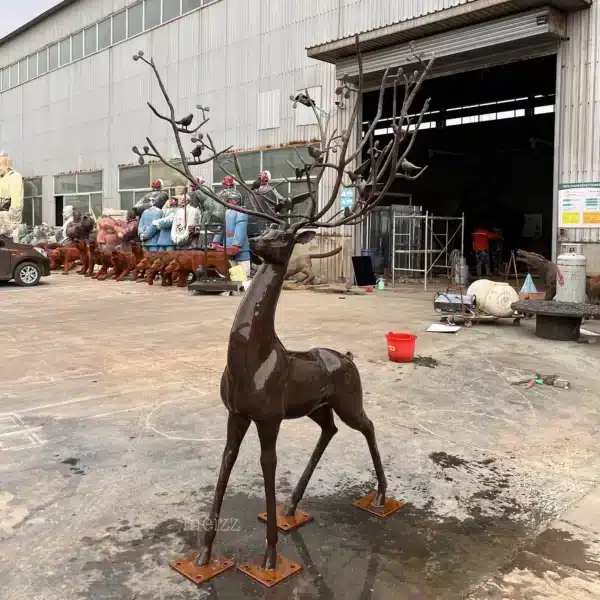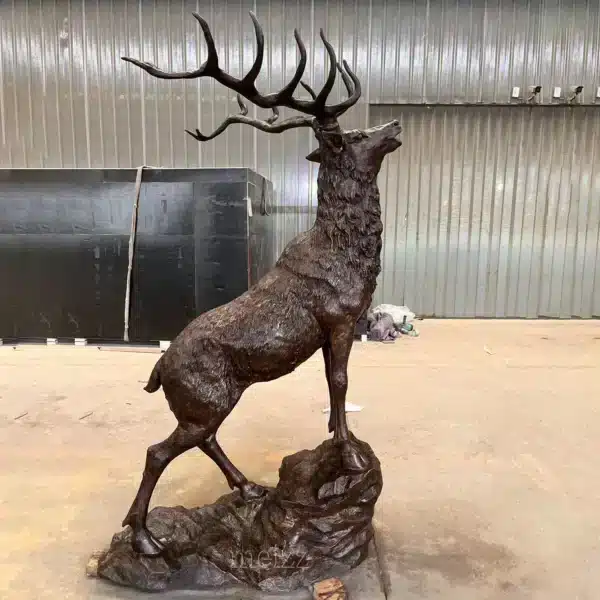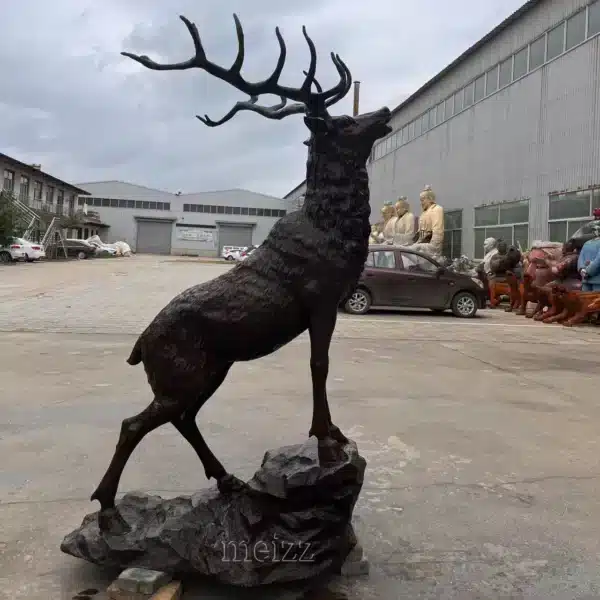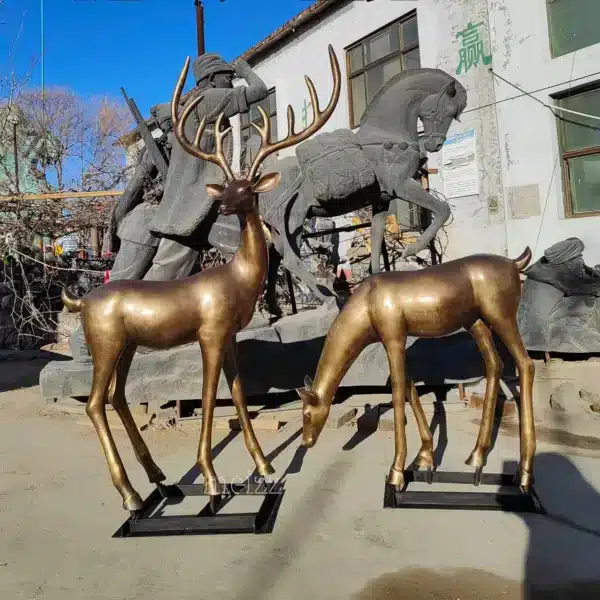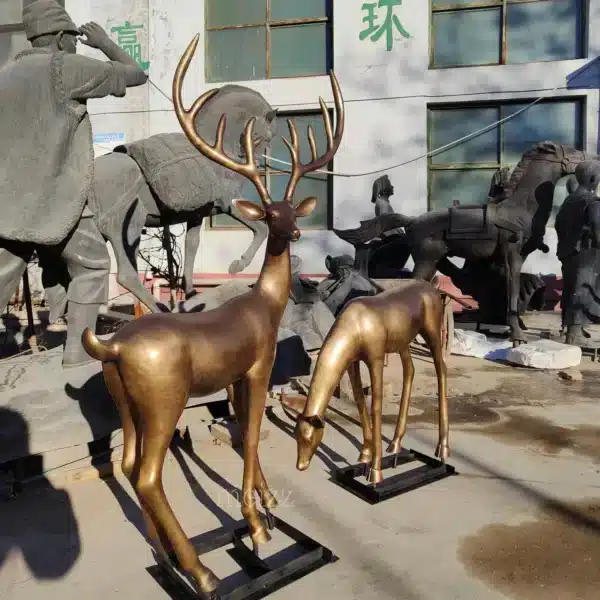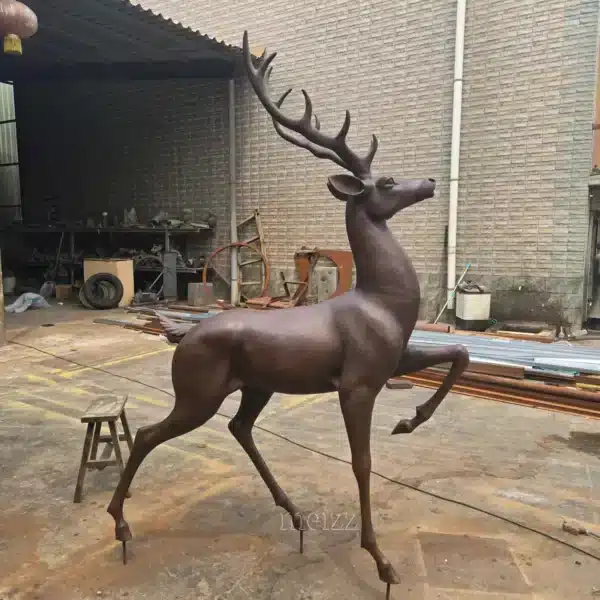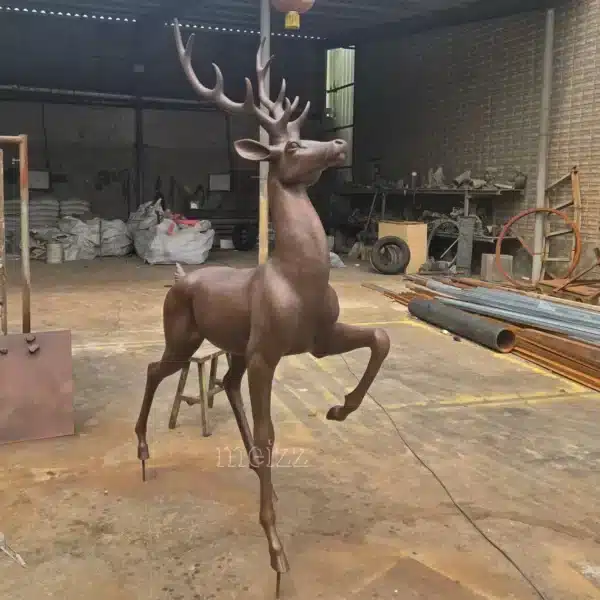
The symbolism of deer sculptures in public landscapes
Across cultures, deer carry meanings that align naturally with parks: peace, renewal, nobility, and harmony with living systems. In Japan, for example, Nara’s deer are regarded as sacred messengers; the city’s park has become a living emblem of respect for nature, as described by the Nara City tourism board. In the British Isles and Europe, historic deer parks shaped landscape traditions and associations with stewardship and open country; see the National Trust’s overview of deer parks in historic landscapes.
Public gardens and civic landscapes borrow this shared language. A deer’s poised posture, attentive ears, and branching antlers read clearly at a distance, making the form effective as a focal point or quiet marker. Think of it this way: the sculpture says “you’re in a place of care, where nature leads,” without a word of text.
Interpretive note: Symbolism isn’t a single story. When meaning is central to your project, collaborate with cultural advisors and present multi‑voice interpretation. For broad surveys of deer in mythology across regions, an encyclopedic overview like Deer in mythology can help frame research, but local context should guide final narratives.
From biophilia to placemaking: how deer forms create calm, legible parks
A deer’s silhouette feels at home against trees, meadow edges, and water. That natural fit is biophilic—our brains tend to relax around cues of living landscapes. In practice, that calm can support placemaking goals: a sculpture becomes a gentle anchor that people remember when giving directions or deciding where to linger.
Public art can also work as a landmark within a larger wayfinding system. Examples from cultural institutions show how art‑as‑wayfinding strengthens legibility: the Buffalo AKG Museum’s campus installation uses sculptural signs to orient visitors across parkland, illustrating how artful wayfinding can become a memorable landmark network. At a city scale, creative placemaking initiatives documented by the NEA demonstrate how integrated wayfinding reduces reliance on cluttered signage and invites exploration;
Placement that works: sightlines, scale, and context
Getting the siting right is where harmony becomes real. Start with view cones from paths and seating, aim for a clear silhouette, and use a simple backdrop—lawn, low plantings, or a single tree mass.

Field notes you can apply:
Sightlines: Map approach angles from the main path and a nearby bench. Ensure the head and antlers read cleanly without merging into high‑contrast clutter. Avoid placing the piece directly behind complex signage, bike racks, or play structures.
Scale: Match size to viewing distance. Life‑size or slightly larger reads well at 40–80 feet. For long lawns or axial views, consider a modest plinth (6–12 inches) to elevate the silhouette without creating a trip hazard near paths.
Context: Keep the immediate backdrop simple. Low grasses or clipped hedging can frame without competing. In multi‑program parks, place the sculpture to one side of the main desire line to reduce congestion and make lingering feel comfortable.
Drainage and grime control: Slightly crown or slope the pad 1–2% away from the base. Avoid sprinkler overspray and fertilizer runoff that can streak metal finishes.
Accessibility, safety, and CPTED basics
Public art must welcome everyone and avoid hazards—especially along circulation routes.
Accessibility
Protruding objects rules protect people with low vision. Along routes, objects with leading edges between 27 and 80 inches above grade shouldn’t jut into the path beyond allowed limits; keep headroom at or above 80 inches, or add cane‑detectable barriers with edges at or below 27 inches.
CPTED
Favor visible, well‑used areas with “eyes on the space.” Keep plantings low around the base, ensure easy maintenance access, and coordinate nearby programming to increase passive surveillance.
Lighting
Illuminate for recognition and comfort, not spectacle. Use shielded, downward‑directed fixtures, warm color temperatures, and controls that respect dark‑sky policies.
Materials and maintenance at a glance
Material choice shapes look, longevity, and maintenance.
Bronze
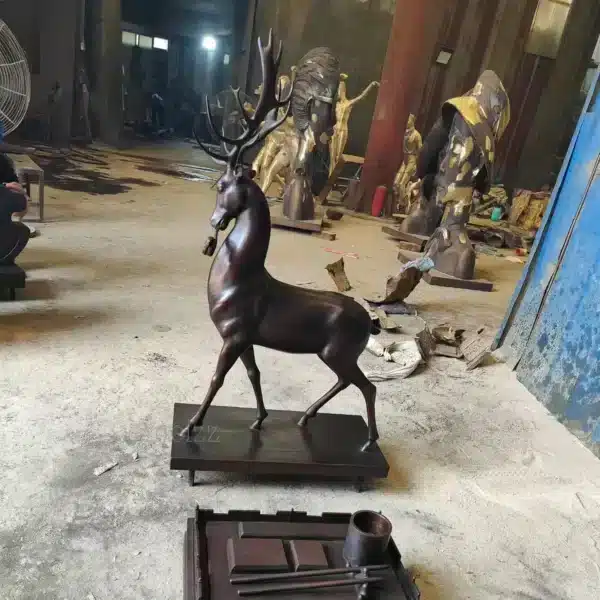
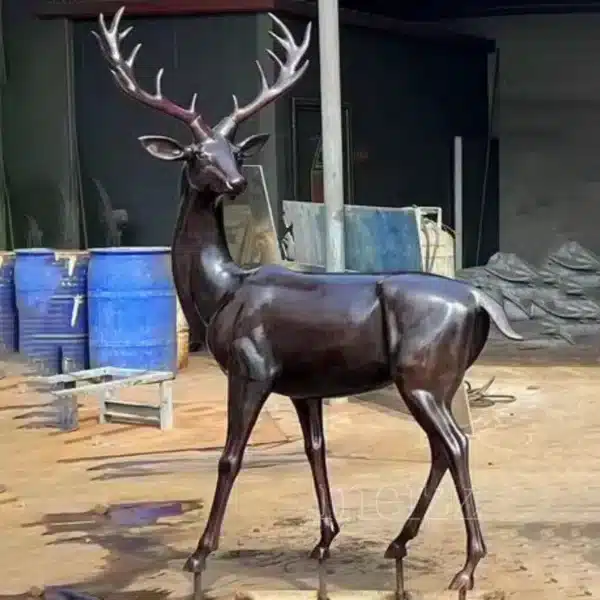
Foundry bronze can last for generations with routine care. Conservation literature commonly recommends annual waxing in moderate climates and more frequent schedules in coastal or polluted environments. See the National Park Service technical note on conserving outdoor bronze and GSA’s cleaning and protection procedures for bronze elements.
Fiberglass/Imitation Bronze – Fiberglass
Lighter and often less costly up front, but more sensitive to UV, heat, and freeze‑thaw at seams. Placement should avoid pooled water and extreme sun exposure; plan for periodic finish repair.
Stainless steel
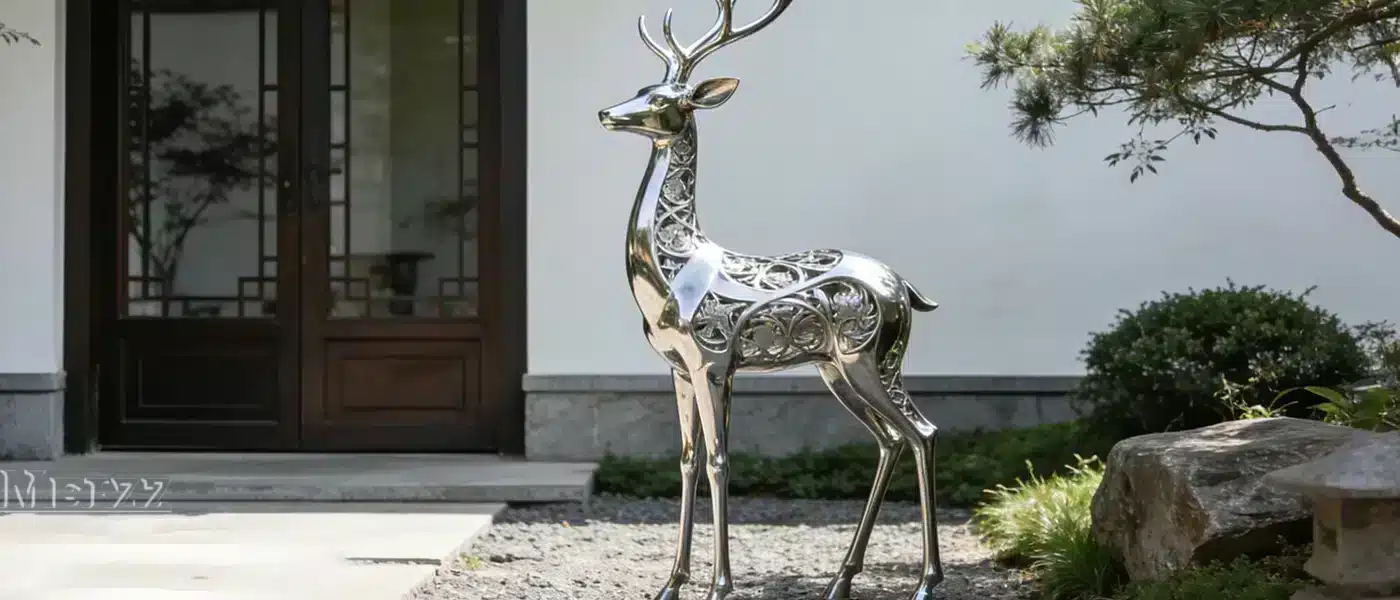
Grades 304 or 316 offer robust corrosion resistance with low routine maintenance; 316 is favored near marine or deicing salt exposure. Choose finishes that balance sheen with glare control.
Whatever the medium, location matters: elevated, well‑drained bases; irrigation kept off surfaces; and prompt, qualified graffiti removal.
Anchoring and installation—what planners must specify
A beautiful piece still needs engineered support. Treat anchoring as a small structure with real loads, not just a heavy object.
Design framework
Building codes reference structural standards for wind (and seismic where applicable). Sculptures may be designed as nonstructural components or nonbuilding structures. Positive, mechanical connections to reinforced concrete are the norm; friction alone isn’t acceptable. For an accessible overview of how codes treat attachments and loads, see this summary of nonbuilding structures and nonstructural components.
Foundations and frost
In freezing climates, extend footings below local frost depth or use an engineered frost‑protected shallow foundation. your engineer will size for soil bearing, weight, and wind exposure.
Anti‑theft and detailing
Favor concealed, tamper‑resistant fixings and continuous embedded anchors where compatible with the artwork. Seal the base interface to keep water out, slope the pad to shed rain, and protect adjacent soil from splash‑back.
Installation planning
Coordinate lifts, clearances, and surface protections. Document shop drawings, as‑builts, and maintenance manuals at closeout. Plan inspection after the first storm season to confirm stability and drainage.
Important disclaimer: Any dimensions, loads, or anchor types discussed in this guide are illustrative. Final design and details require a licensed structural engineer’s calculations and sign‑off per local code.
Procurement, commissioning, and care
Before you bid or commission, define expectations clearly.
RFP and contracts
Clarify artist qualifications, submittals (shop drawings, anchoring details, base coordination), schedule, insurance, and warranties. Municipal exemplars offer structure and language;
Insurance and risk
Typical coverages include general liability, workers’ compensation, and installation/inland marine during transport and setting. Confirm limits with your risk manager and require additional insured status as appropriate.
Maintenance and inspection cadence
Build a schedule into the commissioning documents. For bronze, plan seasonal washdowns and annual waxing in many climates; document condition photos at handoff. Government guidance such as GSA’s inspection procedures and CCI’s preventive care can serve as templates for your program.
Deaccession planning
Include a transparent process for retirement if safety, site changes, or condition require it. Many municipal policies define criteria and steps;
Deer sculptures recommendations
-
Animal Statues
Wire Reindeer Sculpture – Large Lighted Metal Reindeer for Outdoor Christmas Display
Item No: 26091101
Size: Life size or as requested
Material: Stainless steel
Color: Same as Picture
Professional packing: We take extra care in safely packing our fragile items to ensure safe delivery.
Leading time: Ready to ship
Service: Size and color can be done as requested, custom is available, 3D design and printing, door to door delivery, free taxes. -
Animal Statues
Outdoor Bronze Deer Statues – Sculptural Wildlife Art for Gardens & Public Spaces
Item No: 26081604
Size: Life size or as requested
Material: Brass/ Bronze/ Copper
Color: Same as Picture
Professional packing: We take extra care in safely packing our fragile items to ensure safe delivery.
Leading time: Ready to ship
Service: Size and color can be done as requested, custom is available, 3D design and printing, door to door delivery, free taxes. -
Animal Statues
Bronze Deer Garden Sculptures: Large Antlered Stag
Item No: 26081103
Size: Life size or as requested
Material: Brass/ Bronze/ Copper
Color: Same as Picture
Professional packing: We take extra care in safely packing our fragile items to ensure safe delivery.
Leading time: Ready to ship
Service: Size and color can be done as requested, custom is available, 3D design and printing, door to door delivery, free taxes. -
Animal Statues
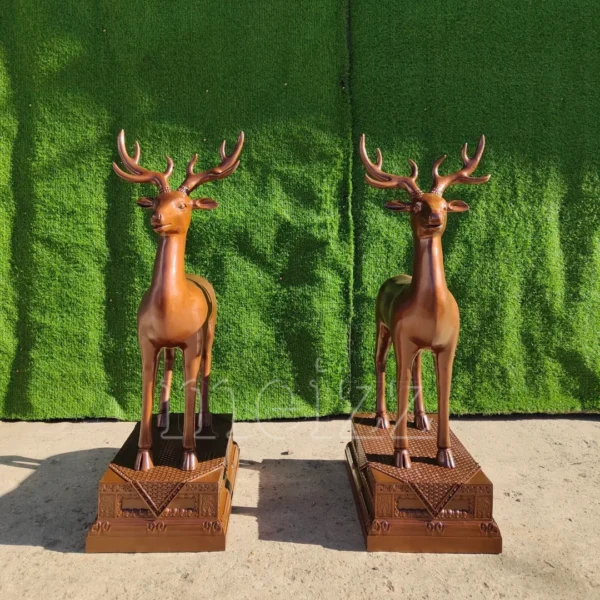
Bronze Deer Statue Set for Outdoor Landscapes
Item No: 26042201
Size: Life size or as requested
Material: Brass/ Bronze/ Copper
Color: Same as Picture
Professional packing: We take extra care in safely packing our fragile items to ensure safe delivery.
Leading time: Ready to ship
Service: Size and color can be done as requested, custom is available, 3D design and printing, door to door delivery, free taxes. -
Animal Statues
Life Size Bronze Deer Sculpture for Sale
Item No: 26041801
Size: Life size or as requested
Material: Brass/ Bronze/ Copper
Color: Same as Picture
Professional packing: We take extra care in safely packing our fragile items to ensure safe delivery.
Leading time: Ready to ship
Service: Size and color can be done as requested, custom is available, 3D design and printing, door to door delivery, free taxes. -
Animal Statues
Life Size Stag Garden Ornament | Custom Bronze Stag
Item No: 26013101
Size: Life size or as requested
Material: Brass/ Bronze/ Copper
Color: Same as Picture
Professional packing: We take extra care in safely packing our fragile items to ensure safe delivery.
Leading time: Ready to ship
Service: Size and color can be done as requested, custom is available, 3D design and printing, door to door delivery, free taxes. -
Animal Statues
Bronze Deer Family Sculpture
Item No: 25090601
Size: Life size or as requested
Material: Brass/ Bronze/ Copper
Color: Same as Picture
Professional packing: We take extra care in safely packing our fragile items to ensure safe delivery.
Leading time: Ready to ship
Service: Size and color can be done as requested, custom is available, 3D design and printing, door to door delivery, free taxes. -
Animal Statues
Bronze Stag Statue Garden
Item No: 25041302
Size: Life size or as requested
Material: Brass/ Bronze/ Copper
Color: Same as Picture
Professional packing: We take extra care in safely packing our fragile items to ensure safe delivery.
Leading time: Ready to ship
Service: Size and color can be done as requested, custom is available, 3D design and printing, door to door delivery, free taxes. -
Animal Statues
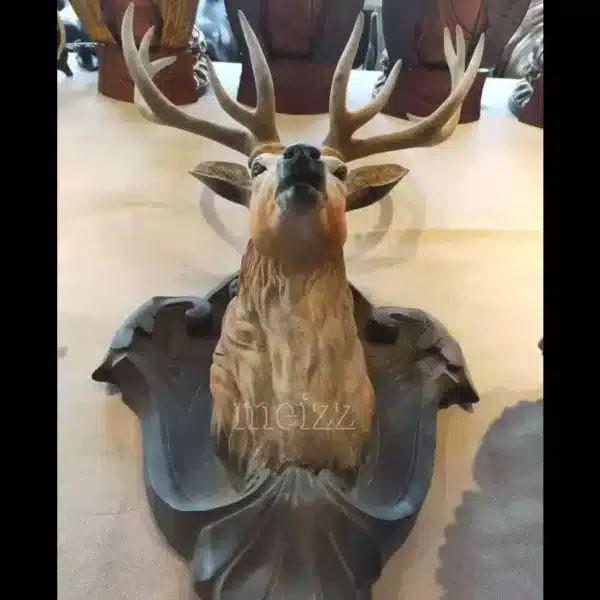
European Bronze Stag Head Wall Mount
Item No: 24120201
Size: Height: 75cm, Width: 65cm, Base Height 28cm, Base Width 18cm or as requested
Material: Brass/ Bronze/ Copper
Color: Same as Picture
Professional packing: We take extra care in safely packing our fragile items to ensure safe delivery.
Leading time: Ready to ship
Service: Size and color can be done as requested. Custom is available, 3D design and printing, door to door delivery, free taxes. -
Animal Statues
Fiberglass Decorative Deer Figurines
Item No: 24112501
Size: Life size or as requested
Material: Brass/ Bronze/ Copper
Color: Same as Picture
Professional packing: We take extra care in safely packing our fragile items to ensure safe delivery.
Leading time: Ready to ship
Service: Size and color can be done as requested, custom is available, 3D design and printing, door to door delivery, free taxes.