
Key takeaways
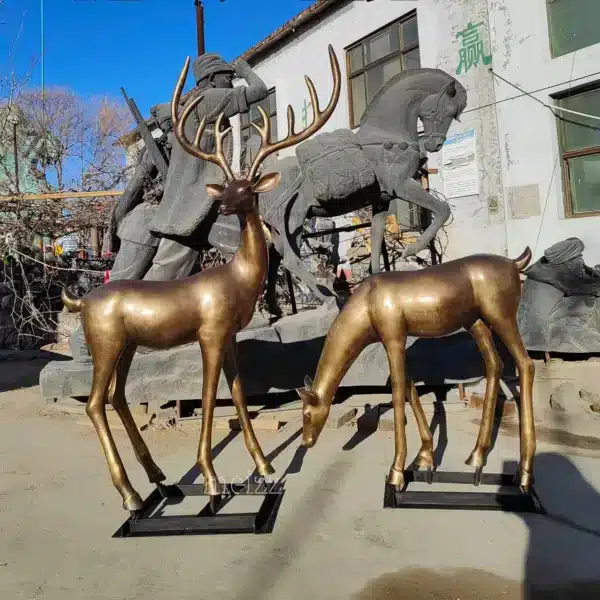
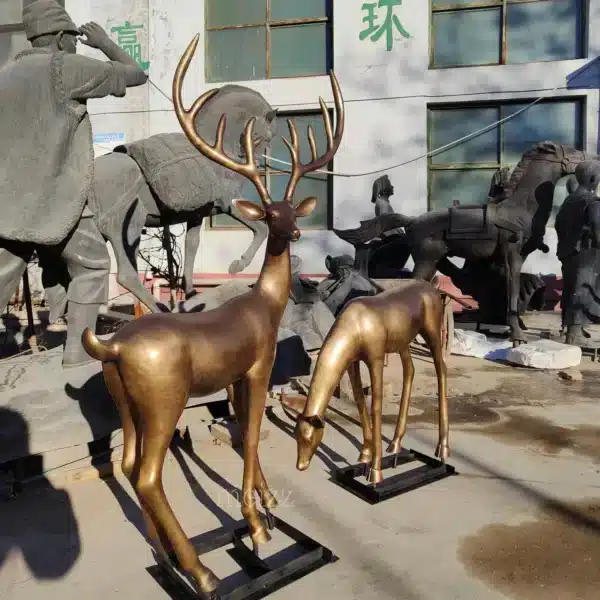
Mother-and-fawn groupings humanize small landscapes, encouraging gentle behavior and longer pauses without shouting for attention.
Success comes from placement and light: choreograph sightlines, scale the group correctly, anchor discreetly, and light for warm, glare-free photography.
Choose materials and maintenance plans that fit the site; track simple ROI proxies like photo counts and dwell observations.
Why deer resonate in high-end gardens
Deer read as calm, alert, and safe—a visual cue guests intuitively respond to. In small spaces, that mood matters: it lowers the energy, invites quiet conversation, and guides movement without signage. The mother-and-fawn story also cues care and protection, which makes the ensemble feel at home in family gardens and private woodland trails. Think of it this way: you’re not just placing an object; you’re scripting a tiny scene that people remember and share.
Case vignette: a mother-and-fawn along a woodland path
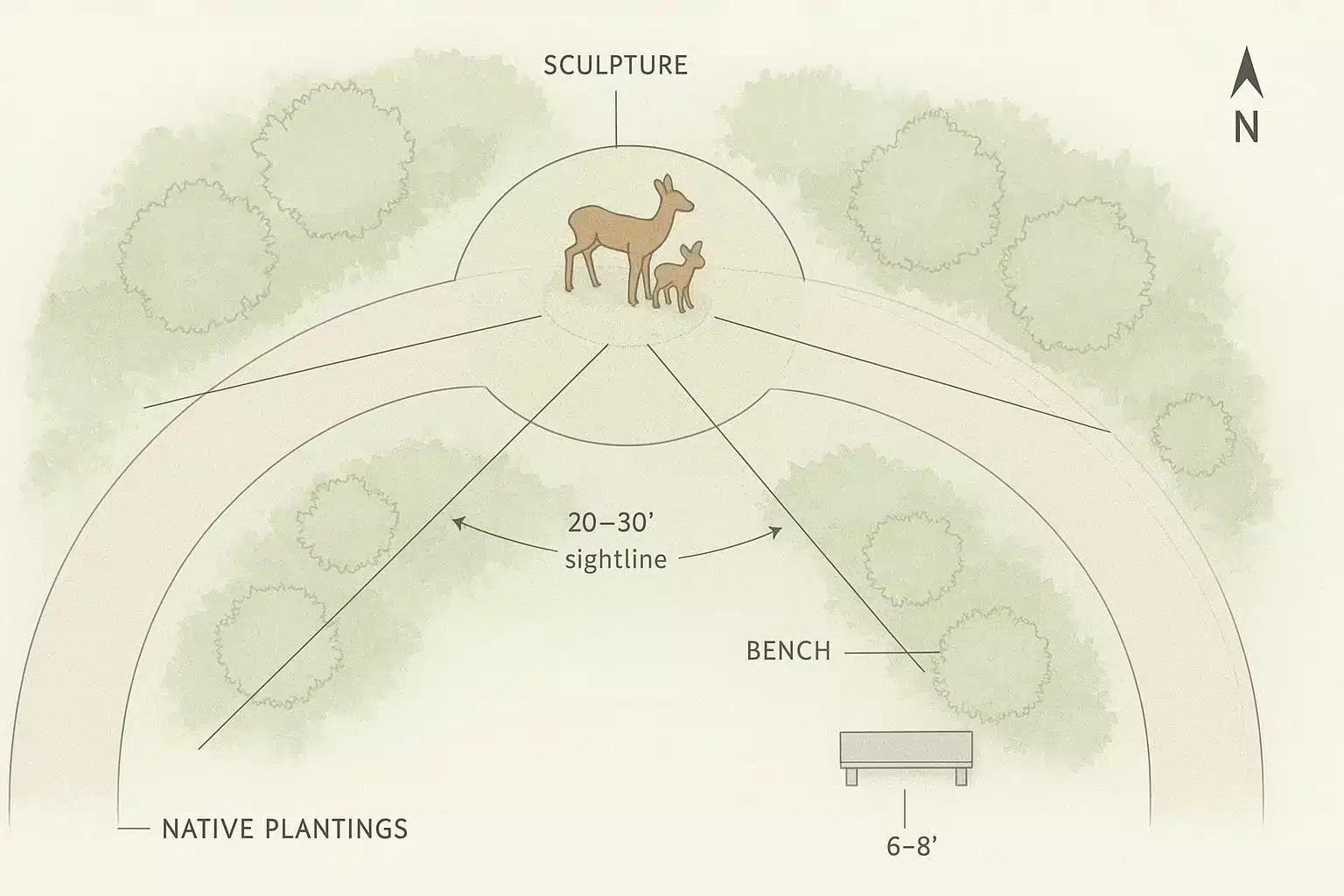
Picture a 6-foot-wide curving path under mature oaks. At a soft widening in the path, a subtle planted mound holds a mother-and-fawn group set 6–8 feet off the edge. Approach angles are open—about 20–30 degrees on either side—so the figures appear gradually, not all at once. Opposite, a low stone bench provides a pause point where guests can take in the silhouettes and, yes, take that golden-hour photo. The forms are life-size but slightly under-scale to keep the scene intimate. The fawn’s posture is curious, not startled, which reads “welcome” rather than “warning.”
Design moves for deer statues outdoor art on woodland paths
Proper choreography makes the difference between a sweet accent and a true landmark.
Scale and grouping ratios: Keep mother at 0.9–1.0 life-size for small clearings; fawn at 0.5–0.7 of mother’s height. This preserves readable hierarchy without overwhelming the path.
Setback and reveal: Offset the group 6–8 feet from the path edge in pocket-park contexts so visitors discover the scene as they walk. Maintain a clear-view wedge of roughly 20–30 degrees along primary approaches.
Micro-topography: A 6–12-inch mound is enough to lift the silhouettes above low plantings while remaining naturalistic. Avoid steep berms that look engineered.
Framing plants: Use layered natives (ferns, low grasses, shade perennials) to frame ankles and legs without obscuring faces or key contours. Keep a 2–3-foot clear gravel or mulch collar around bases to protect finishes from string trimmers.
Seating and dwell: Position a bench or flat rock 10–14 feet away, slightly off-axis, so viewers photograph across the group rather than directly head-on. Integrate a small, level pad for tripods without turning the clearing into a plaza.

Materials and maintenance that age gracefully
Selecting the right material is half the project’s success. The other half is a preventive care plan grounded in conservation practice.
Material | Pros | Watch-outs | Indicative care cadence | Sources |
|---|---|---|---|---|
Bronze (patinated) | Timeless, highly durable, repairable patina | Coating choice matters; UV and pollution weather wax | Annual wash/inspection; rewax as needed by exposure | National Park Service Tech Note on bronze care; Smithsonian conservator guidance (NPS bronze care, Smithsonian video, 2025 context) |
Stainless steel (304/316) | Clean, modern look; corrosion-resistant | Tea staining in chlorides; finish quality critical | Routine washing; use 316 near coast/pools; passivate after fabrication | Australian Stainless Steel Dev. Assoc.; International Molybdenum Assoc. (ASSDA guidance, IMOA on pools) |
Fiberglass/FRP (painted) | Lightweight, cost-effective; flexible forms | UV chalking; paint delamination over time | Annual inspection/wash; full repaint roughly 5–15 years depending exposure | Getty Conservation Institute proceedings (outdoor painted sculpture care) |
Marble/limestone | Classic, cool palette | Acid rain; freeze–thaw risk; biological growth | Seasonal inspections; low-pressure water cleaning | NPS Preservation Briefs and “Keeping It Clean” (stone care, cleaning guide) |
Weathering steel | Earthy patina; low applied finish needs | Requires wet/dry cycles; runoff staining | Ensure drainage; avoid marine/high-humidity settings | NPS metals guidance (weathering steel notes) |
A practical nuance on bronze: programs often perform an annual wash and inspection, then rewax “as needed” based on exposure and a simple water-break test rather than a fixed calendar, a practice echoed in NPS and museum guidance (NPS metals overview; Hirshhorn maintenance practices).
Installation logistics made simple
Small sites still deserve professional planning. Before you pour anything, conduct utility locates, confirm permits, and define a maintenance plan in the commission documents. Favor reversible strategies—bolt-down bases or sleeves—so future adjustments don’t scar the site. Public art toolkits emphasize these fundamentals and the value of engineered solutions (Americans for the Arts Materials & Fabrication Handbook).
Foundations and anchoring: Pad dimensions and bolt patterns should be engineered for soil, weight, and wind load. There’s no universal standard published for deer forms; treat each as a unique structure (again, per public-art manuals above).
Weights and rigging: Life-size deer vary widely; documented contemporary examples can exceed 1,000 lb. Use certified rigging rated at least 1.5× the anticipated load and sling at reinforced points; protect patina during lifts (reference project with deer weight).
Security and theft deterrence: Use tamper-resistant stainless hardware, concealed anchors, and layered security. Consider discreet cameras and, for high-value pieces, GPS tags. Museum security and public art references offer solid checklists (NPS museum security guidance; Public Art FAQs).
Light it to be seen (and shared)
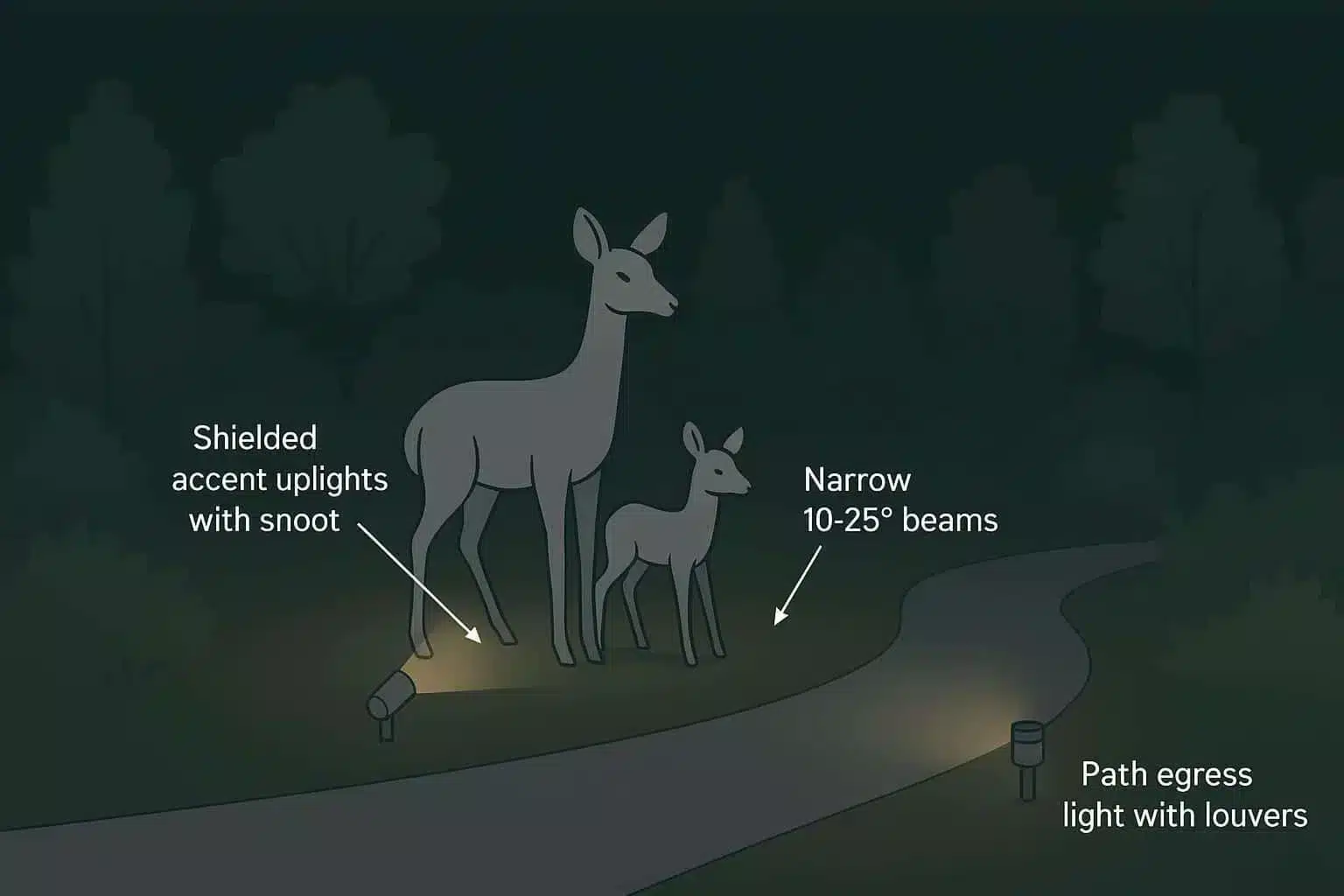
Lighting should separate path safety from sculptural drama. Accent the forms; don’t blind the walker.
Optics and aiming: Use narrow to medium beams (approximately 10–30°) for accents, with snoots/louvers to suppress glare. Downlight where possible; keep luminaire faces hidden. IES design objectives stress beam control and glare management in pedestrian zones (IES Lighting Design Objectives).
Color and fidelity: 2700–3000K warm white feels comfortable outdoors at night, while high CRI (90+) preserves bronze, stone, or painted tones accurately. Museum-focused guidance translates well to outdoor artwork viewing (IES museum lighting practices).
Controls and codes: Use astronomical timers or simple scenes to respond to seasons and events. Maintain local path-lighting minimums per jurisdiction—codes vary, so coordinate with a lighting designer and check local standards (overview primers via Lighting Design Lab: codes and standards overview).
ROI and spread: set goals you can actually measure
Precise, peer-reviewed numbers for “art equals X more minutes of dwell” in gardens are scarce. But you can still manage what matters. Define proxies before installation, then track them for a season:
Photo engagement: Count unique guest photos at the node (staff observations or opt-in image shares). Track hashtagged posts and story mentions.
Dwell and use: Note average linger time at the bench during scheduled walkthroughs; record small-event use (toasts, portraits) near the piece.
Seasonal refresh: Stage spring ephemerals or autumn leaves as backdrops; adjust lighting scenes for holidays.
A 2024 study on art-infused urban parklets found increased visual attraction and time-in-space vs. greenery alone—while not directly comparable to private gardens, it supports the proxy approach (Frontiers in Psychology, 2024). Use these data points to justify small upgrades like better seating or refined lighting.
Commissioning workflow (with Meizz sculpture company example)
Here’s a dependable path from idea to first-year care:
Site survey and brief: Document path widths, clearances, plant layers, soil conditions, and access for equipment. Capture goals: mood, viewing distances, photo angles, and family use.
Material selection: Match environment (e.g., 316 stainless near chlorides), desired finish, and maintenance resources. Review the materials table above.
Engineering and foundations: Engage a structural engineer for pad/anchor design. Aim for reversibility where feasible.
Fabrication/commissioning: Define pose, scale, and finish in drawings or 3D mockups.
Rigging and install: Schedule utility locates, delivery routing, lift plan, and protection of finishes and plantings.
Lighting and controls: Specify optics, color temp, and glare control; pre-run conduit as needed.
Security plan: Hardware, concealment, cameras/sensors as appropriate.
Maintenance plan: Annual wash/inspection cadence; who does what, when, and with which materials.
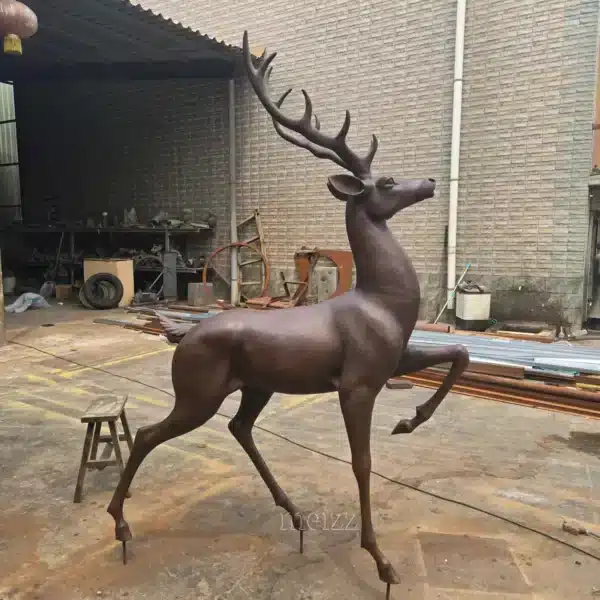
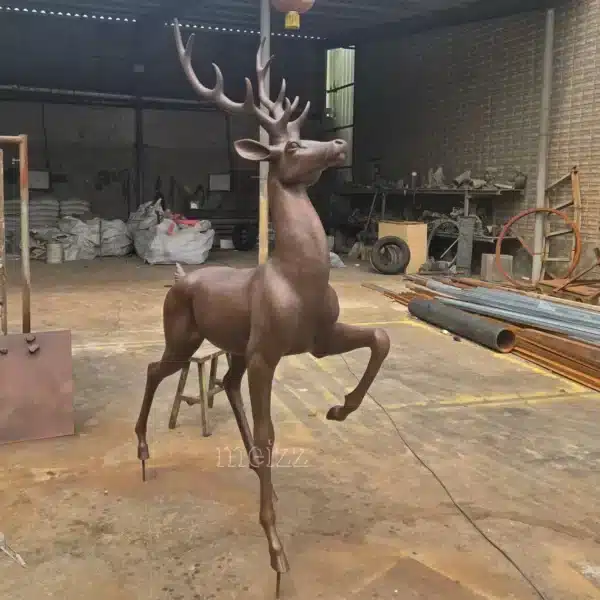
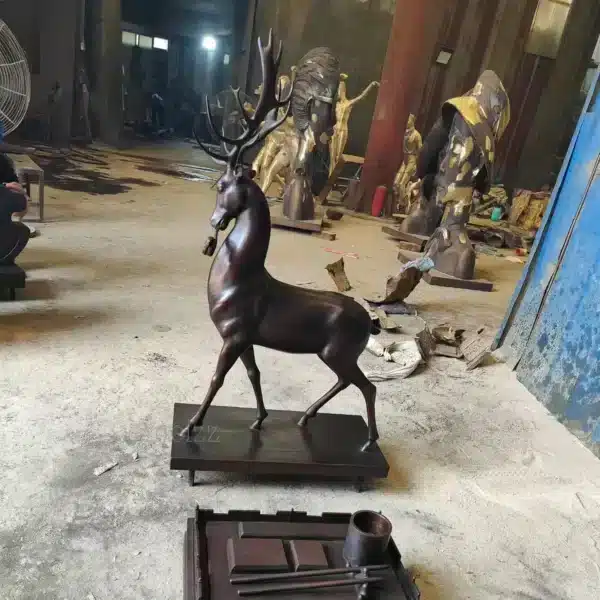
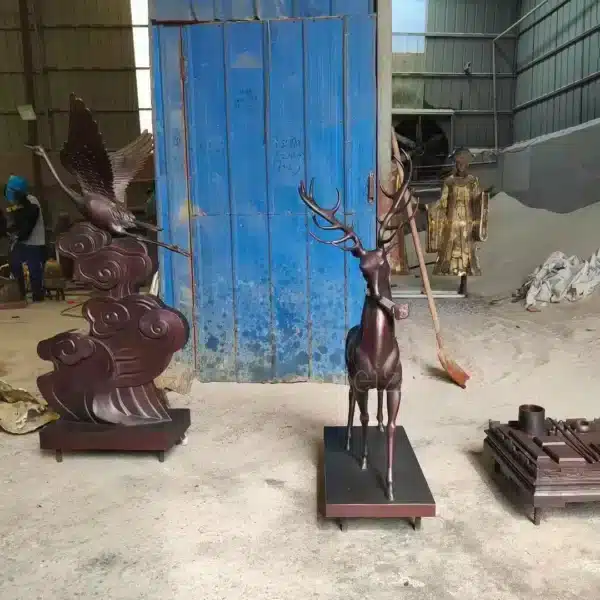
Sculpture factory workflow example: Using a custom life-size mother-and-fawn bronze sculpture as an example, a factory-direct foundry typically builds a full-scale armature and clay model, which are reviewed and approved via photos or video. After approval, molds are made for the lost-wax casting process. The foundry casts the sculpture in sections, then welds and chases the seams before applying the specified patina. Finally, a protective coating (wax or lacquer) is applied based on conservator recommendations.
At the same time, the team provides base plate drawings and anchor layout details for your engineer. From final design approval to delivery, the process usually takes 4–5 weeks. Installation is completed in a single day once the foundation has cured and the site is fully prepared.
Commissioning checklist
Clear project brief: goals, constraints, preferred materials/finishes, budget range, and timeline
Site readiness: utility locates, access path, staging area, and protection for trees/plantings
Engineer-reviewed foundation and anchor details with reversibility considered
Fabrication documents: approved pose, scale, finish samples, and coating system
Lighting plan: fixtures, optics, color temperature, control method, and conduit routing
Security plan: tamper-resistant hardware, concealment, and surveillance (if needed)
Maintenance plan: annual wash/inspection, coating care, and contacts for conservator support
Insurance, permits, and delivery/rigging plan with lift points and protection methods
First-year maintenance calendar
Spring (Q1): Gentle wash of sculpture and base; inspect coatings (wax or lacquer) and fasteners; perform water-break test on bronze to judge rewaxing needs
Early Summer (Q2): Trim plantings to preserve sightlines; re-aim luminaires as foliage fills in; inspect for tea staining on stainless or chalking on painted FRP
Late Summer (Q3): Touch up coatings where appropriate; check anchor tightness and security systems; clean lenses and louvers on fixtures
Late Fall (Q4): Winterize—monitor stone for cracks, clear leaf litter from bases, and lower light levels with earlier timers; document condition with photos for next year
Enjoy the products of Meizz Sculpture Company
-
Animal Statues
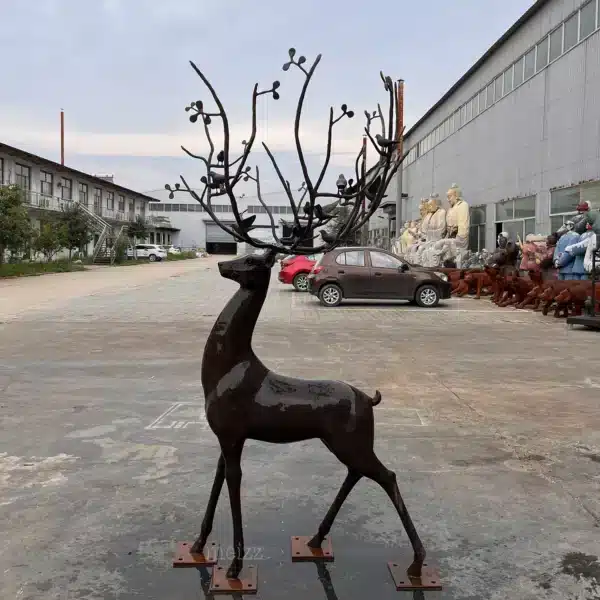
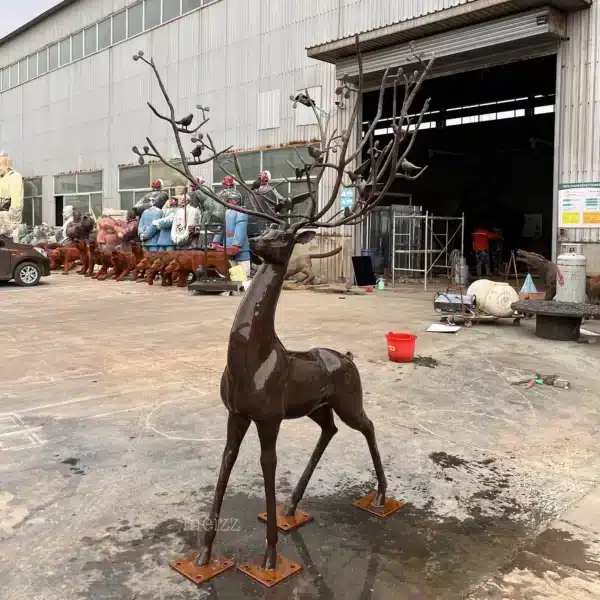
Wire Reindeer Sculpture – Large Lighted Metal Reindeer for Outdoor Christmas Display
Item No: 26091101
Size: Life size or as requested
Material: Stainless steel
Color: Same as Picture
Professional packing: We take extra care in safely packing our fragile items to ensure safe delivery.
Leading time: Ready to ship
Service: Size and color can be done as requested, custom is available, 3D design and printing, door to door delivery, free taxes. -
Animal Statues
Outdoor Bronze Deer Statues – Sculptural Wildlife Art for Gardens & Public Spaces
Item No: 26081604
Size: Life size or as requested
Material: Brass/ Bronze/ Copper
Color: Same as Picture
Professional packing: We take extra care in safely packing our fragile items to ensure safe delivery.
Leading time: Ready to ship
Service: Size and color can be done as requested, custom is available, 3D design and printing, door to door delivery, free taxes. -
Animal Statues
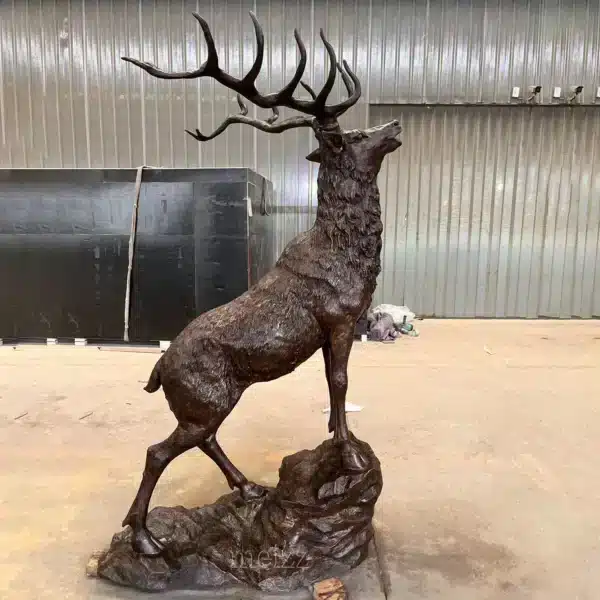
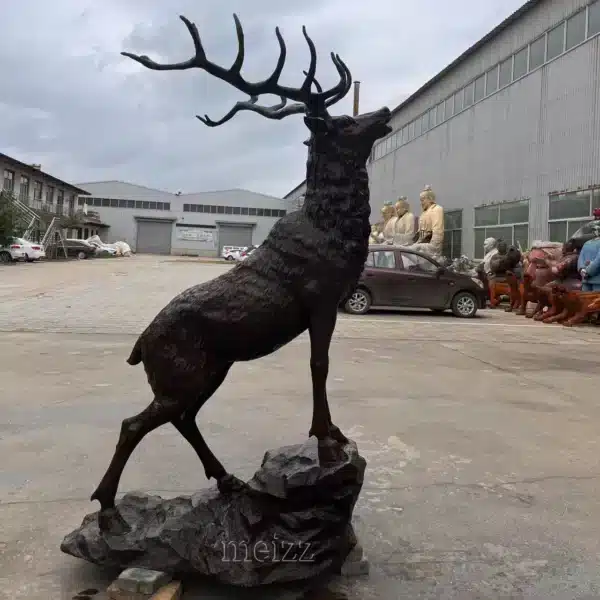
Bronze Deer Garden Sculptures: Large Antlered Stag
Item No: 26081103
Size: Life size or as requested
Material: Brass/ Bronze/ Copper
Color: Same as Picture
Professional packing: We take extra care in safely packing our fragile items to ensure safe delivery.
Leading time: Ready to ship
Service: Size and color can be done as requested, custom is available, 3D design and printing, door to door delivery, free taxes. -
Animal Statues
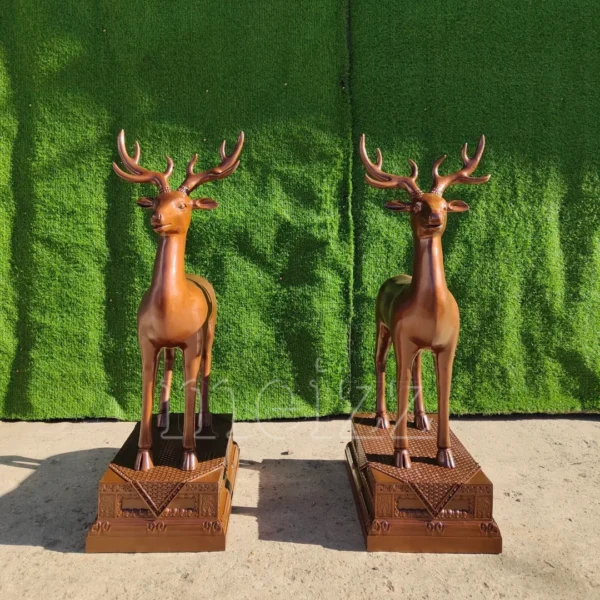
Bronze Deer Statue Set for Outdoor Landscapes
Item No: 26042201
Size: Life size or as requested
Material: Brass/ Bronze/ Copper
Color: Same as Picture
Professional packing: We take extra care in safely packing our fragile items to ensure safe delivery.
Leading time: Ready to ship
Service: Size and color can be done as requested, custom is available, 3D design and printing, door to door delivery, free taxes. -
Animal Statues
Life Size Bronze Deer Sculpture for Sale
Item No: 26041801
Size: Life size or as requested
Material: Brass/ Bronze/ Copper
Color: Same as Picture
Professional packing: We take extra care in safely packing our fragile items to ensure safe delivery.
Leading time: Ready to ship
Service: Size and color can be done as requested, custom is available, 3D design and printing, door to door delivery, free taxes. -
Animal Statues
Life Size Stag Garden Ornament | Custom Bronze Stag
Item No: 26013101
Size: Life size or as requested
Material: Brass/ Bronze/ Copper
Color: Same as Picture
Professional packing: We take extra care in safely packing our fragile items to ensure safe delivery.
Leading time: Ready to ship
Service: Size and color can be done as requested, custom is available, 3D design and printing, door to door delivery, free taxes. -
Animal Statues
Bronze Deer Family Sculpture
Item No: 25090601
Size: Life size or as requested
Material: Brass/ Bronze/ Copper
Color: Same as Picture
Professional packing: We take extra care in safely packing our fragile items to ensure safe delivery.
Leading time: Ready to ship
Service: Size and color can be done as requested, custom is available, 3D design and printing, door to door delivery, free taxes. -
Animal Statues
Bronze Stag Statue Garden
Item No: 25041302
Size: Life size or as requested
Material: Brass/ Bronze/ Copper
Color: Same as Picture
Professional packing: We take extra care in safely packing our fragile items to ensure safe delivery.
Leading time: Ready to ship
Service: Size and color can be done as requested, custom is available, 3D design and printing, door to door delivery, free taxes. -
Animal Statues
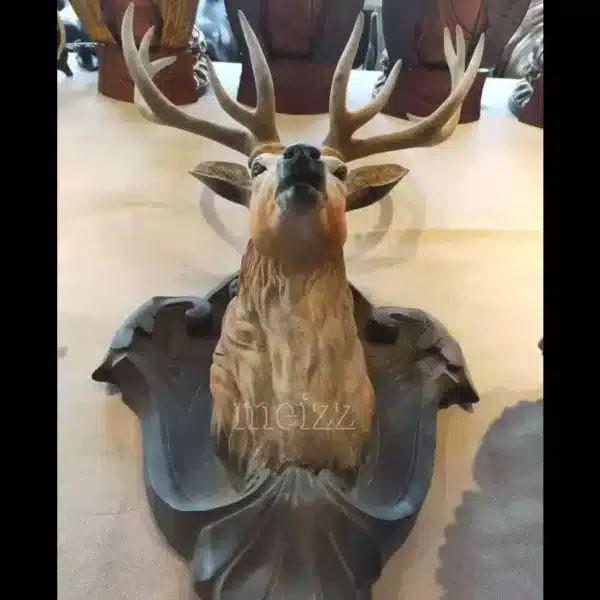
European Bronze Stag Head Wall Mount
Item No: 24120201
Size: Height: 75cm, Width: 65cm, Base Height 28cm, Base Width 18cm or as requested
Material: Brass/ Bronze/ Copper
Color: Same as Picture
Professional packing: We take extra care in safely packing our fragile items to ensure safe delivery.
Leading time: Ready to ship
Service: Size and color can be done as requested. Custom is available, 3D design and printing, door to door delivery, free taxes. -
Animal Statues
Fiberglass Decorative Deer Figurines
Item No: 24112501
Size: Life size or as requested
Material: Brass/ Bronze/ Copper
Color: Same as Picture
Professional packing: We take extra care in safely packing our fragile items to ensure safe delivery.
Leading time: Ready to ship
Service: Size and color can be done as requested, custom is available, 3D design and printing, door to door delivery, free taxes.