1) The Molly Malone statue is on Suffolk Street today
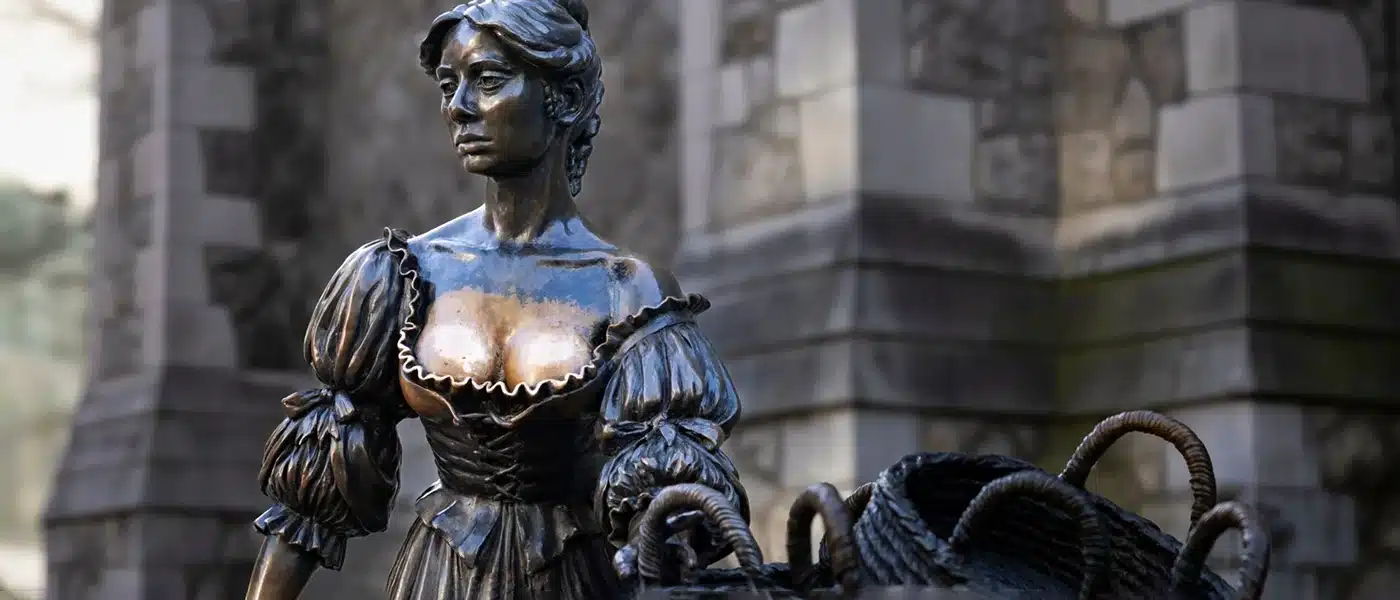
Right now, you’ll find the Molly Malone statue on Suffolk Street, outside the Dublin Tourist Office near the former St Andrew’s Church. Many walking tours use it as a meet-up point, so it’s normal to see groups rotating through for photos.
If you want a quick location snapshot and why this spot matters, CityDays has a simple overview: Molly Malone Statue — Dublin, Ireland.
2) It didn’t start on Suffolk Street—the 2014 move was about the Luas
The statue originally stood at the bottom of Grafton Street. In April 2014, it was removed to make way for the Luas (tram) works, and later relocated to Suffolk Street.
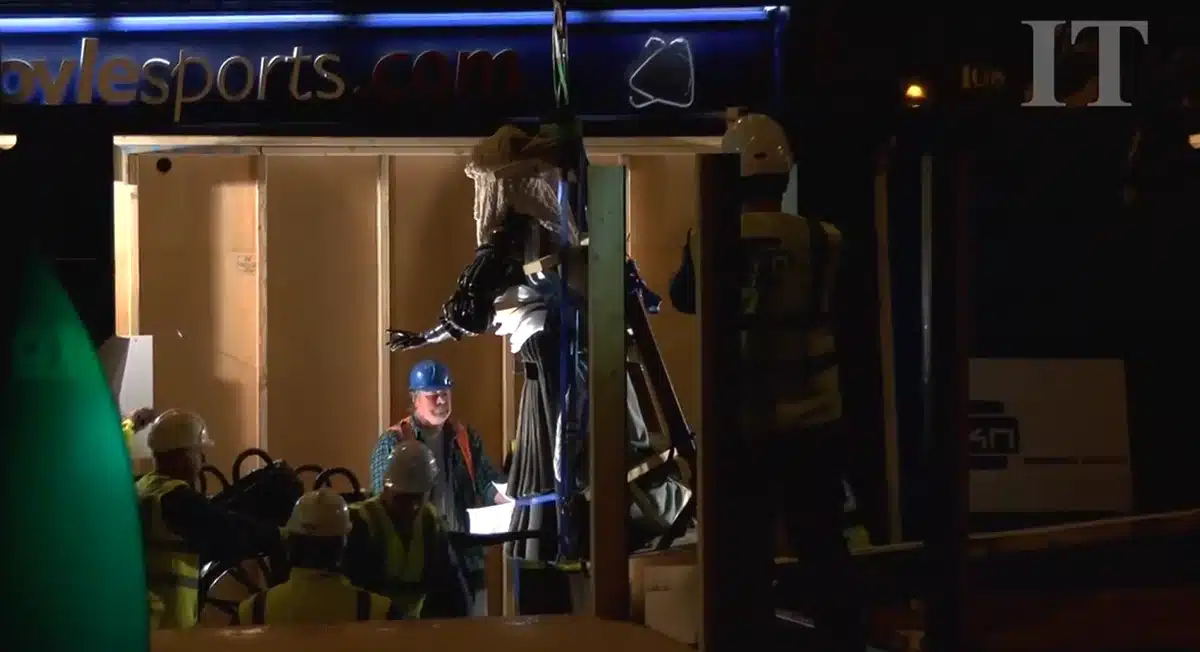
The move wasn’t just a lift-and-drop. The Irish Times described how the relocation involved specialists and restoration work in “Molly Malone statue wheeled away to make way for Luas” (2014).
3) The statue is inseparable from the song “Molly Malone” (Cockles and Mussels)
Even if you don’t know all the lyrics, you’ve probably heard the chorus: “Alive, alive, oh.” The statue depicts the character from the song—a street vendor pushing a handcart and selling shellfish.
The song is often treated like an ancient ballad, but the widely known version is tied to late-19th-century music-hall culture, and the story blends folklore, city identity, and theatrical drama. For a clean background summary, see Wikipedia’s entry on Molly Malone (song history and origins).
4) “Who was Molly Malone?” is still a trick question
Here’s the most honest answer: there’s no solid historical evidence that the song is based on one specific real woman.
Legends often place Molly in 17th-century Dublin, but “Molly” (often a familiar form of Mary or Margaret) was common—meaning plenty of women had similar names over the centuries.
5) The statue dates to 1988—and the sculptor was Jeanne Rynhart
The statue was unveiled in 1988 as part of Dublin Millennium celebrations, and it was designed by Dublin artist Jeanne Rynhart.
That late-20th-century timestamp explains why the statue feels both “traditional” (in costume and theme) and “modern” (as a public artwork that became a social-media-era photo magnet).
6) The handcart details are the quiet masterpiece (don’t skip them in photos)
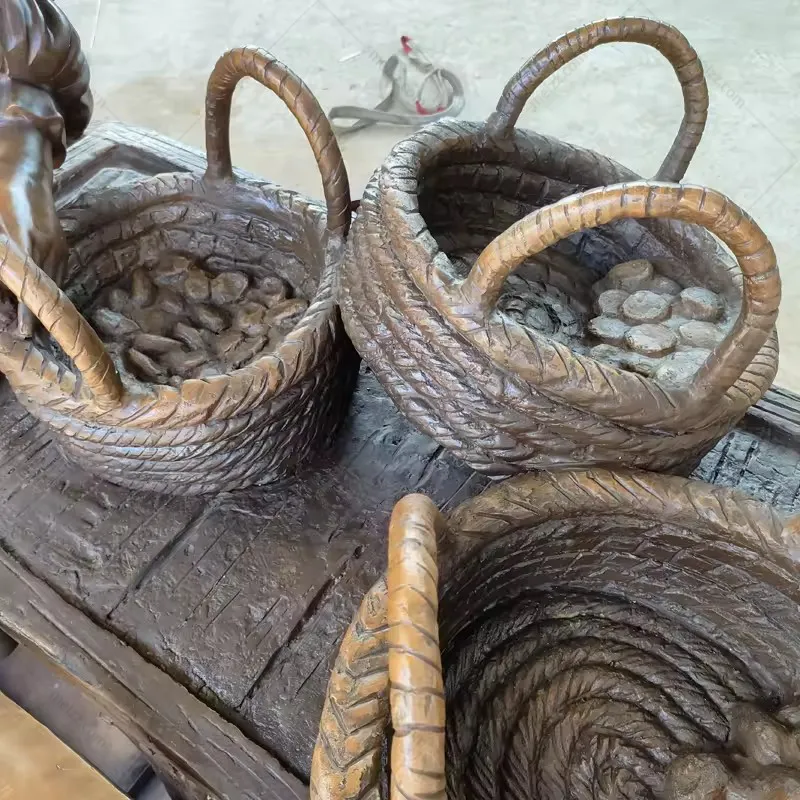
Most people frame their shot around Molly’s figure and miss the storytelling in the cart.
Look closer at:
the cart’s lines and texture
the baskets and seafood details
the “in motion” posture (it doesn’t feel like a static pose)
If you’re taking photos, try one wider shot for context—and then a second shot that’s basically “hands, wheels, baskets.” It’s the part of the sculpture that makes the folk-song scene feel real.
7) The “good luck” tradition is famous—and it’s also why the bronze looks worn
A common tourist tradition is touching the statue for “good luck.” Over time, repeated contact can change how bronze looks: skin oils and friction can wear down protective wax and alter the patina.
A travel write-up by Fodors notes visible wear to the statue’s bronze surface where it’s frequently touched in “Don’t Touch the Molly Malone Statue in Dublin” (2024).
8) The modern “please don’t touch” push isn’t only about conservation
The pushback isn’t just about the metal—it’s also about basic respect.
Many locals and campaigners have criticized the groping-for-luck ritual as inappropriate, especially since it centers on touching a woman’s body in public. If you’re traveling with kids or in a group, treat it as an easy etiquette rule: get your photo, enjoy the story, and keep your hands to yourself.
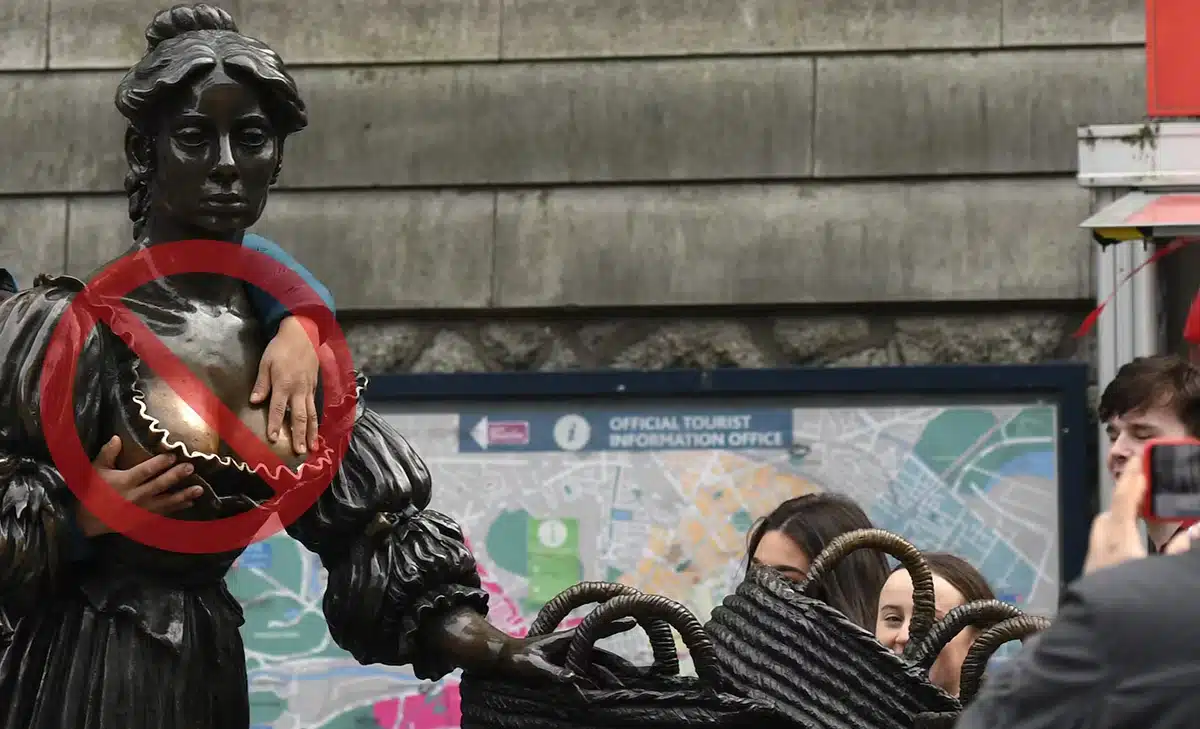
Pro Tip: If you want a memorable photo without the cliché, shoot from slightly to the side and let the cart lead the eye through the frame.
9) Vandalism has happened—so the statue’s condition is an ongoing conversation
Like many high-profile public artworks, the statue has been a target.
Newstalk reported multiple vandalism incidents in 2023 (including painted messages that referenced the touching controversy) in “Molly Malone statue vandalised for third time in two months” (2023).
This also explains why the statue can sometimes look freshly cleaned—or temporarily different from older photos.
10) Your easiest “best photo spot” is the simplest one: step back and use the street
Because the statue sits in an active city setting, the best photos usually aren’t the tight face-and-shoulders shots.
Instead:
take one step back so the cart and stance read clearly
let the streetscape act like a stage set
aim for the classic “Suffolk Street” view with the statue fully in frame
wait for a brief gap in foot traffic rather than forcing a rushed shot
It’s a small change, but it turns the photo from “I was here” into “this is Dublin.”
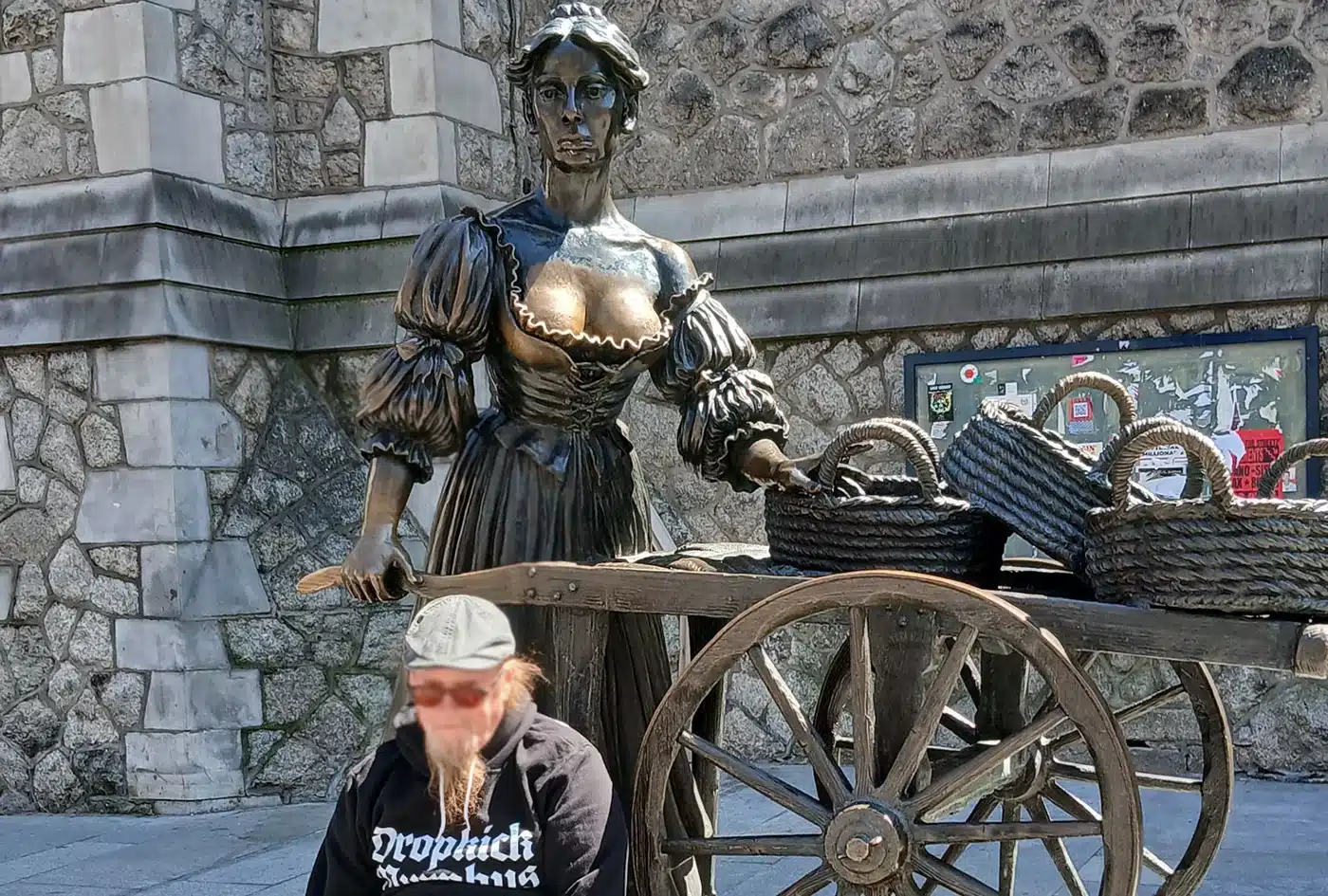
11) Inspired by the statue? Replicas are real—and here’s what to ask a maker
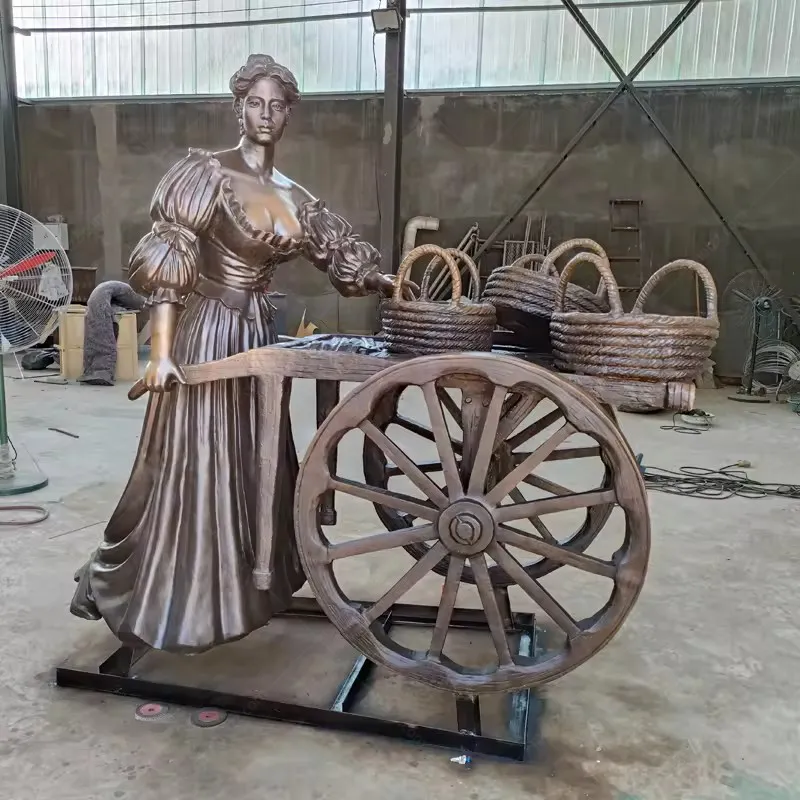
If you’re a designer, hotel operator, or property developer, it’s common to want a similar figurative piece as a focal point (especially for plazas, courtyards, or heritage-themed interiors).
A few practical questions to ask any sculpture maker (without getting lost in art jargon):
Material & process: Is it bronze (often via lost-wax casting), and how is the surface finished?
Surface longevity: What does maintenance look like outdoors (waxing schedule, cleaning guidance, what to avoid)?
Engineering & installation: How will it be anchored, and what’s the plan for safety in a public space?
Customization: Can you adjust size, details, or patina tone to fit the site?
Logistics: How is crating and delivery handled for large pieces, and what insurance is included?
If you want a concrete reference point for a replica listing, here’s Meizz’s page for Meizz Sculpture Factory’s Molly Malone statue replica.
A quick wrap-up before you go
The Molly Malone statue is easy to “tick off” in five minutes—but it’s more interesting when you know what you’re looking at: a late-20th-century artwork that became a city symbol, a tourist ritual, and a conversation about how we treat public art.