Crane sculpture meaning: what does it symbolize?
Across cultures, cranes are repeatedly used to express a small set of big ideas: longevity, peace, fidelity, and grace.
In East Asia in particular—especially around the red-crowned crane—the bird is closely associated with longevity and peace. Japan Experience’s overview of the red-crowned crane describes it as a regional symbol of “longevity and peace” across China, Japan, and Korea.The Majestic Red-Crowned Crane: Symbol of Longevity and Peace (Japan Experience)
In Chinese cultural symbolism, cranes also connect to transcendence and “heavenward” imagery—partly because cranes are depicted as divine birds traveling between worlds.Cranes in Chinese mythology (Wikipedia)
And in Japan, the orizuru (paper crane) became a global icon of hope and peace through the story of Sadako Sasaki and the Children’s Peace Monument in Hiroshima.Paper Cranes and Children’s Peace Monument (Hiroshima City)
Key Takeaway: Crane statue symbolism tends to be consistently positive—longevity, peace, fidelity, and calm—because the bird’s real-life behavior (pair bonding, deliberate movement, long migrations) makes the metaphor feel earned.
How crane sculptures “communicate”: pose, scale, and placement

If you’ve ever compared two crane sculptures that “should” feel similar but don’t, it’s usually the design decisions—not just the material—that change the meaning.
Pose is the first layer of meaning
Standing, alert: reads as watchful and architectural (great for formal gardens and entries).
Head lowered: feels intimate and contemplative (perfect near water).
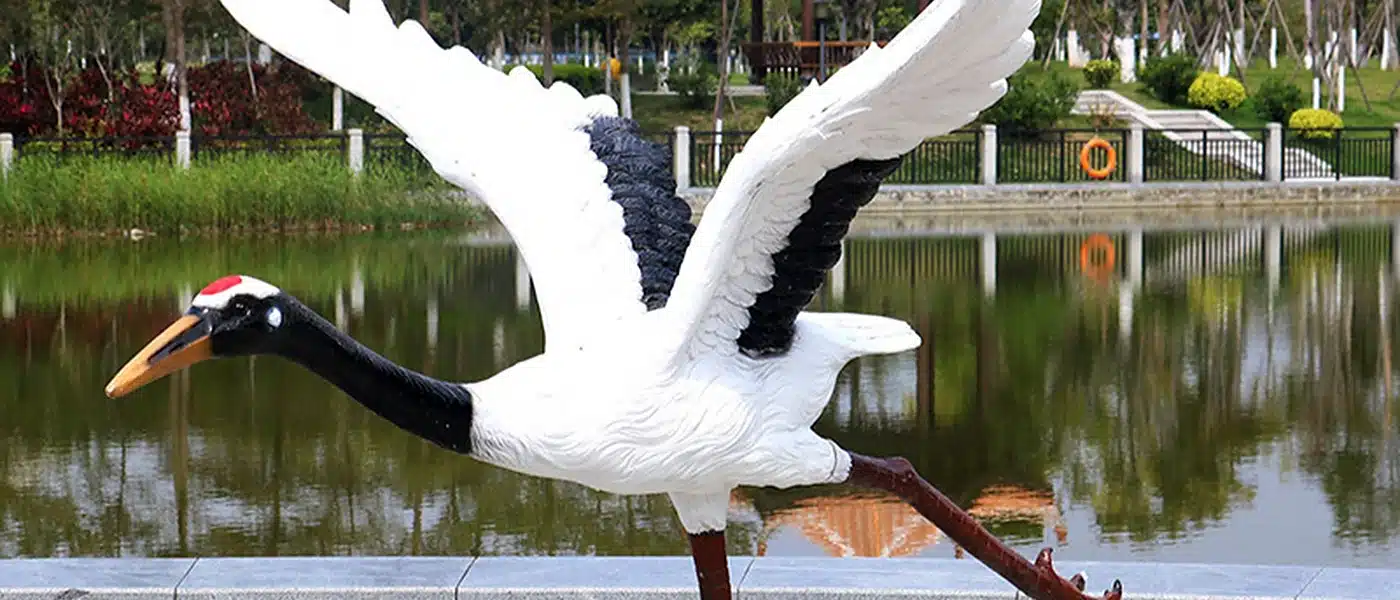
Wings open: adds drama and motion (often best at large scale).
Scale changes the emotional temperature
A small crane figure can feel like a quiet accent. A life-size or larger-than-life crane becomes a character in the landscape—something you navigate around.
Placement makes the metaphor visible
Cranes are water-edge birds. Place a crane sculpture near a pond or reflecting pool and it feels inevitable. Put it in a plaza and it becomes a calm vertical line against the geometry of buildings.
If you want practical inspiration for placing bird sculptures in outdoor settings, Meizz Statue Company shares ideas in its guide on decorating a garden with bronze crane statues.
Choosing materials: bronze vs stainless steel vs marble vs fiberglass/FRP
A crane form is all about line, surface, and light. Material choice is how you control those three things—plus what it’ll take to keep the sculpture looking good in real weather.
Bronze crane sculptures
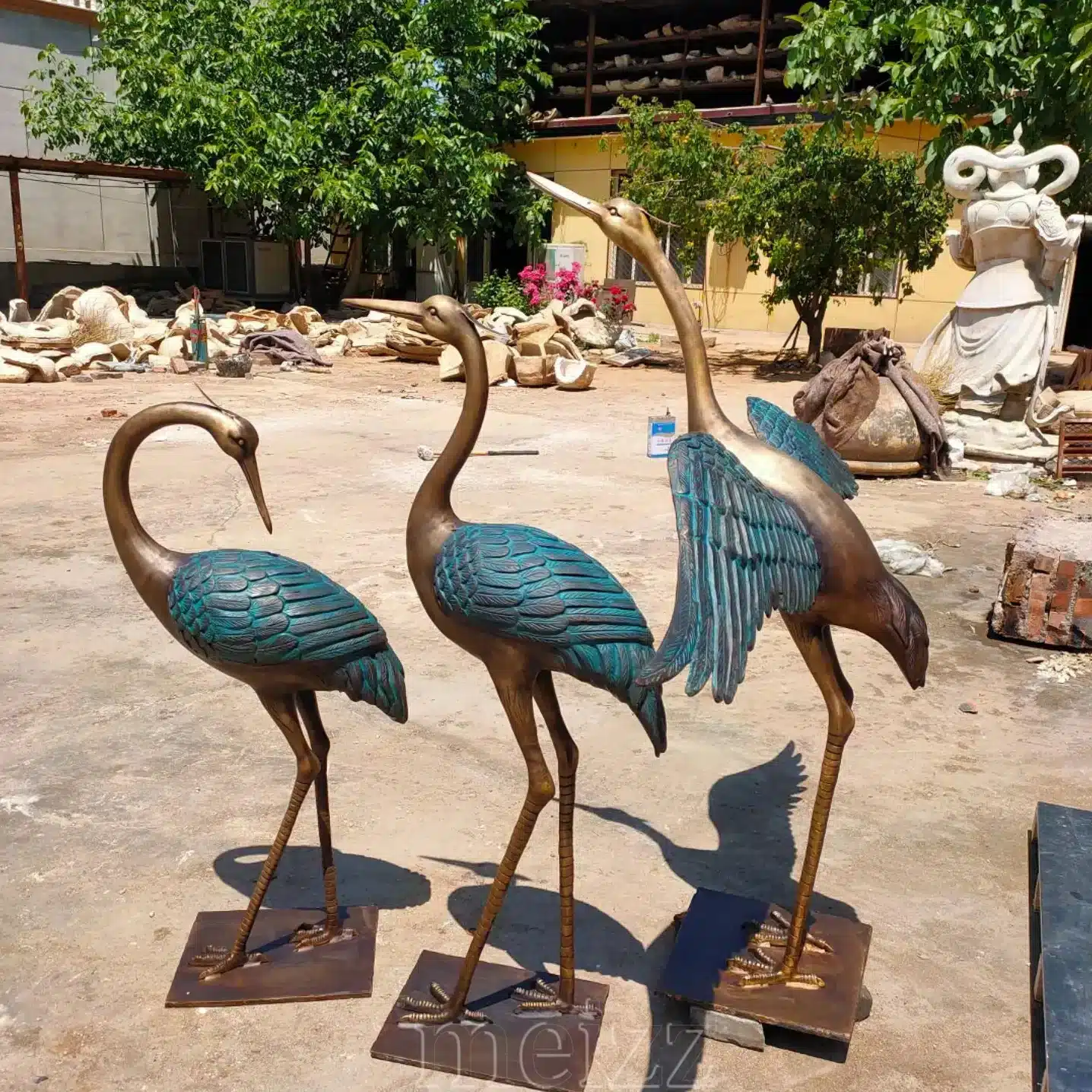
Bronze is the classic choice when you want crisp detail (feather texture, beak definition) and a surface that can age beautifully.
Pros
Detail-friendly: the lost-wax process can preserve fine texture.
Patina character: bronze naturally develops patina that many collectors find desirable.
Proven longevity outdoors with appropriate care.
Cons
Maintenance expectations: periodic cleaning and protective coatings (waxing is common).
Higher cost compared with many fabricated metals.
For a commission-style view of how bronze pieces are made (and why surface work matters), see Meizz’s step-by-step bronze casting process.
Stainless steel crane sculptures
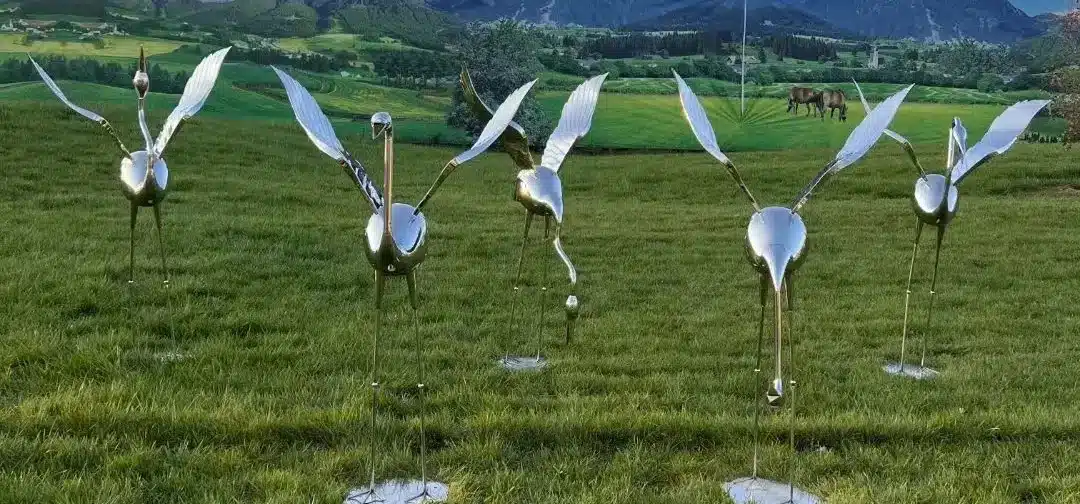
Stainless steel is the modernist’s crane material: crisp silhouettes, mirror highlights, and a sense of lightness even at large scale.
Pros
Corrosion resistance for outdoor use.
Visually consistent aging (especially with brushed finishes).
Strong for its thickness, making slender forms feasible.
Cons
Finish is the whole game: scratches, weld marks, and uneven polishing show quickly on reflective surfaces.
Fabrication labor can be intensive (welding + grinding + polishing).
Marble crane sculptures
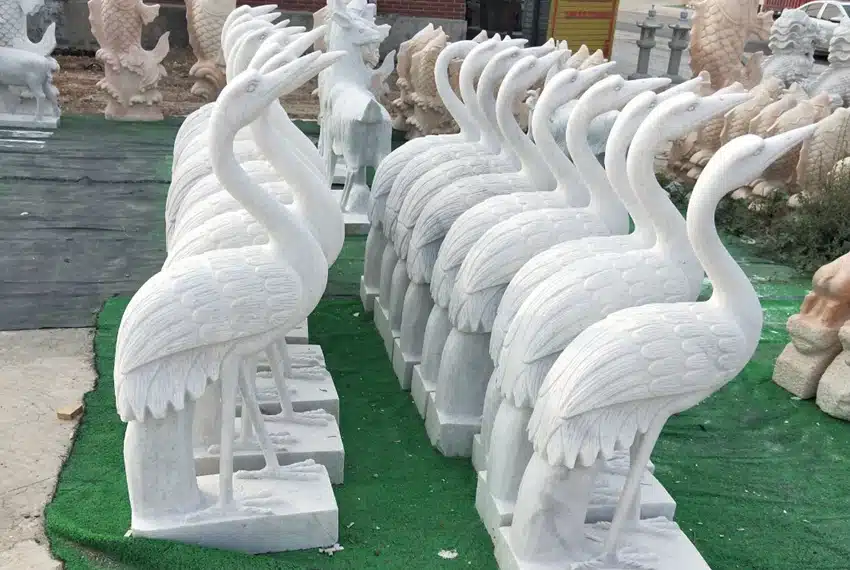
Marble is less about shine and more about presence: weight, softness, and a surface that holds light differently than metal.
Pros
Timeless, classical feel
Carved continuity: the surface can look calm and unbroken—great for meditative settings.
Cons
Outdoor sensitivity: marble and limestone are vulnerable to acid precipitation;
Logistics: transport, footing, and installation can be more demanding.
Fiberglass/FRP crane sculptures
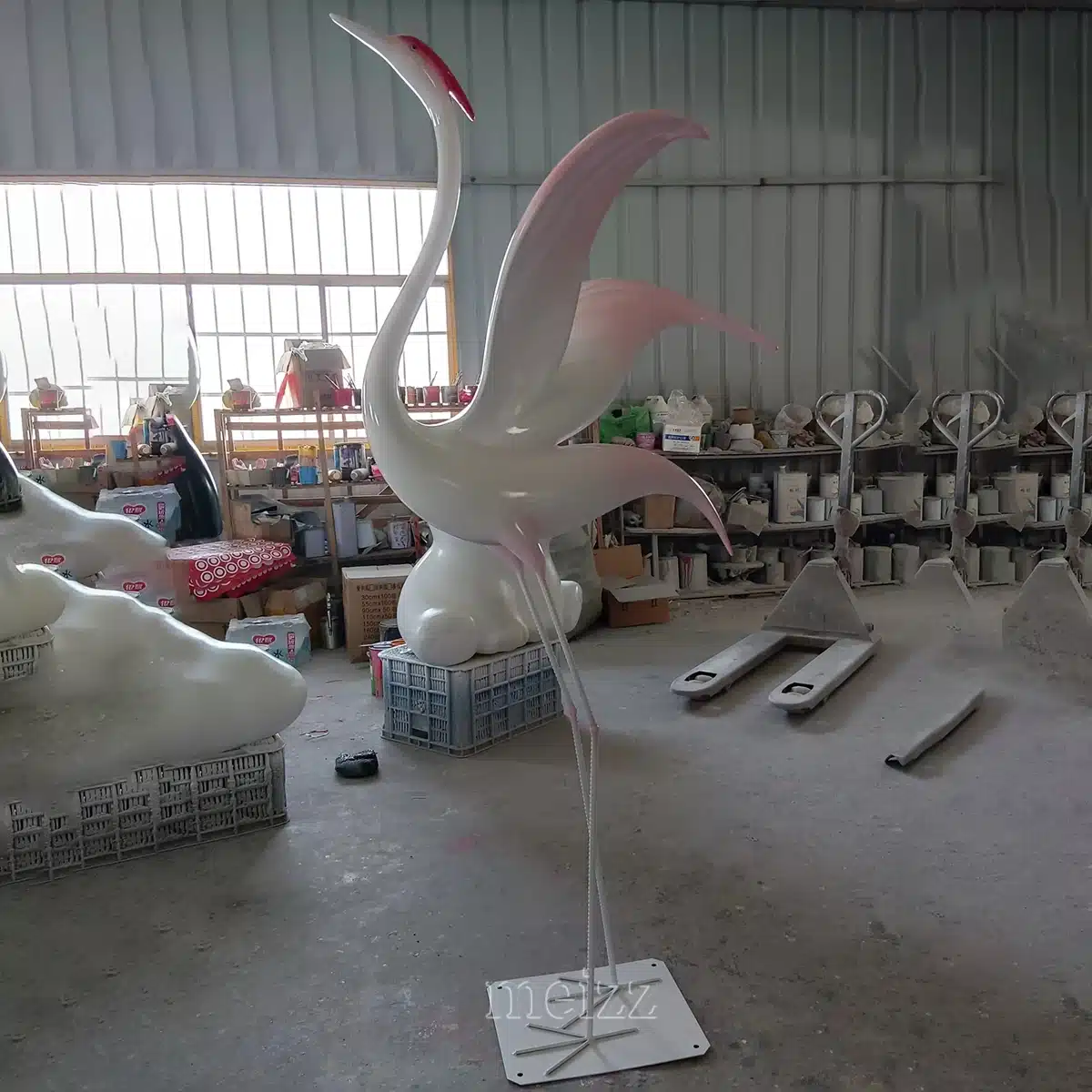
Fiberglass/FRP (fiber-reinforced plastic) is often the practical answer when you want large scale without the mass.
Pros
Lightweight: easier to ship and install.
Cost-effective at scale.
Flexible finishes: can be painted to mimic metal or stone.
Cons
Surface durability depends on coatings (UV and weather exposure matter).
Perceived value varies: for some buyers, composites don’t carry the same “heritage” weight as bronze or carved stone.
Pro Tip: For outdoor placement, decide upfront whether you want the surface to patina gracefully (bronze) or stay visually consistent (stainless). That single preference usually narrows the choice fast.
How crane sculptures are made (by material)
Even if you’re “just” an art lover, understanding the making process changes how you see the finished piece. You start noticing what is hard to do—and what is intentional.
Bronze crane sculptures: lost-wax casting
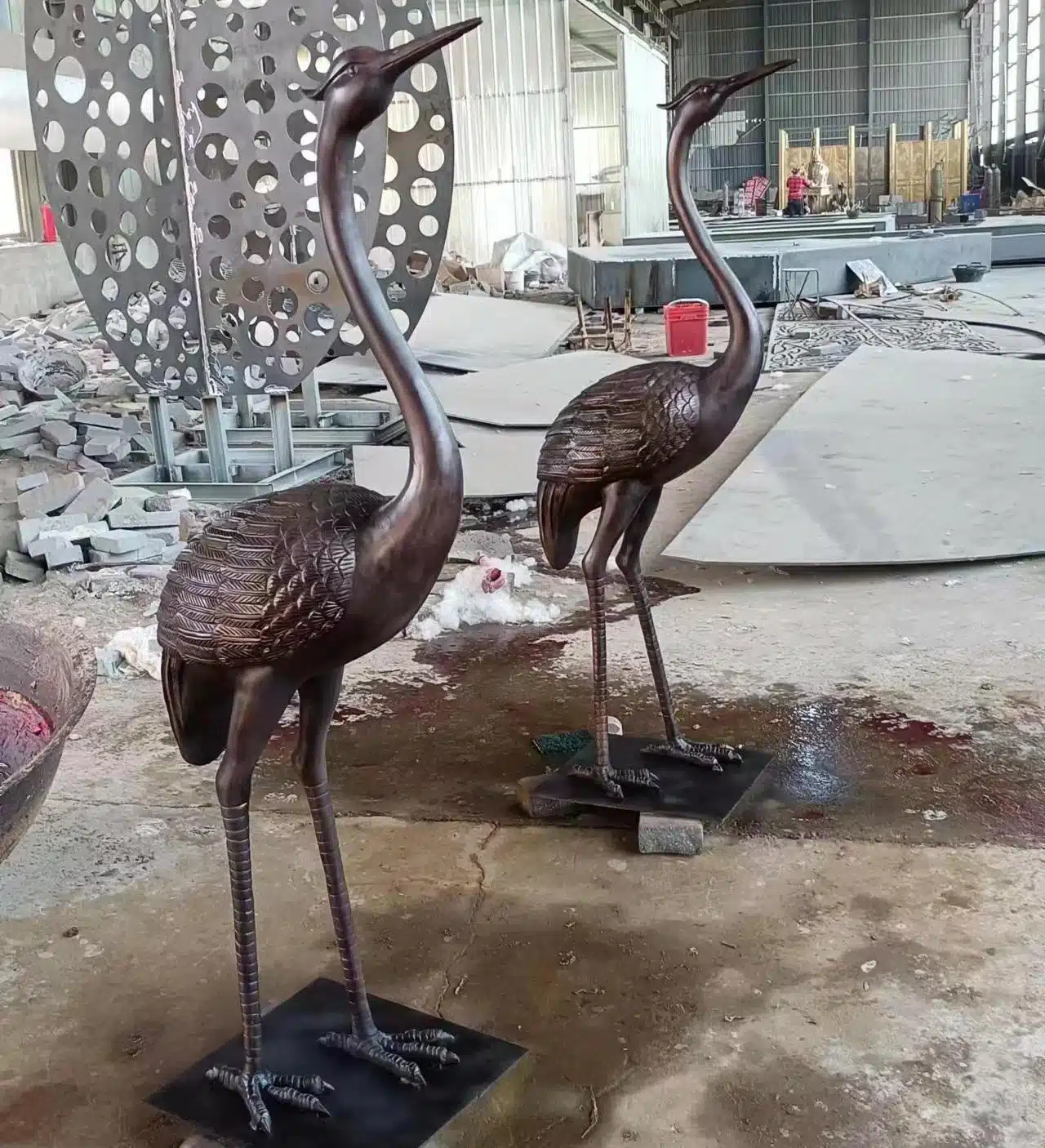
Most fine-art bronze sculpture is produced with variants of lost-wax casting: an original model becomes a mold; wax creates a precise replica; the wax is replaced by metal; then the surface is finished.
In buyer-friendly terms, the steps often include:
- Original model (clay or wax)
- Mold-making (rubber/silicone + rigid support shell)
- Wax positive (a hollow wax version preserving detail)
- Investment + burnout (wax is removed)
- Pour molten bronze into the cavity
- Chasing + welding (clean seams, assemble large sections)
- Patina + protective wax/seal
Meizz also outlines this process specifically for custom commissions, including patina and packing/shipping considerations.How Custom Bronze Statues Are Made: Step-by-Step Casting Process (Meizz)
Stainless steel crane sculptures: fabrication, welding, and polishing
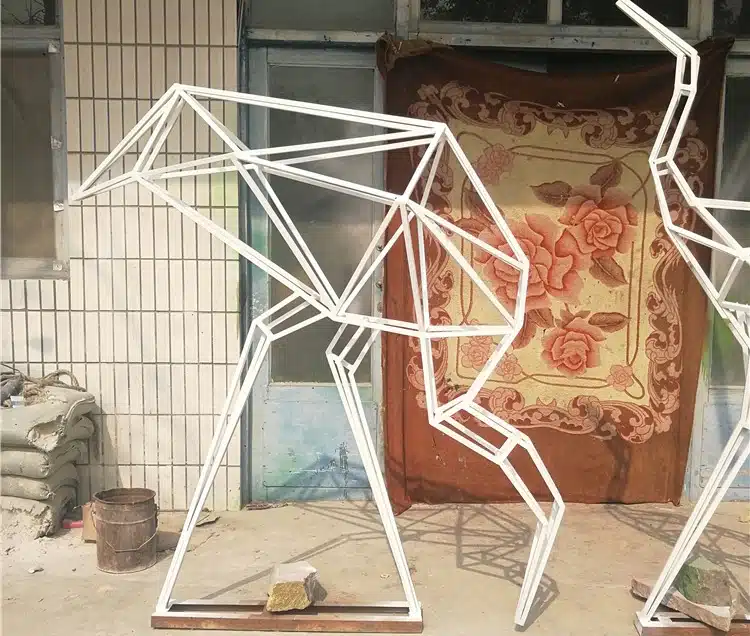
Large stainless sculptures are often fabricated rather than cast: sheets or plates are cut, shaped, welded, then ground and polished.
3D Modeling & Framing: A 1:1 prototype is made from a 3D design. An internal rust-proof metal skeleton is laser-cut to ensure structural strength.
Manual Forging: Master craftsmen hand-forge premium 304/316 stainless steel, shaping the sheets into smooth curves and sharp edges.
Seamless Welding: Argon arc welding provides full-penetration joints. Multiple grinding stages remove all seams for a continuous, integrated look.
8K Mirror Polishing: The surface is polished in six to eight stages to achieve an 8K mirror finish (reflectivity $\ge 95\%$). This creates a dynamic, reflective surface that interacts with the surrounding light and environment.
Marble crane sculptures: pointing, carving, and refinement
Marble sculpture is subtractive: the artist (or carving team) removes material to reveal the form. A common technique is “pointing,” transferring measurements from a model to the stone.
Premium Material Selection: We strictly select high-quality natural marble blocks to ensure pure color, beautiful veins, and no internal cracks.
Roughing & Shaping: Using traditional pointing machines or 3D positioning, we perform initial cutting to remove excess material and accurately outline the sculpture’s 3D silhouette.
Hand Carving: Master craftsmen use specialized chisels of various sizes to intricately hand-carve complex details like textures, facial expressions, and fabric folds.
Sanding & Polishing: Through multiple stages of wet sanding from coarse to fine, we manually remove carving marks to reveal the marble’s unique warm luster and delicate texture.
Fiberglass/FRP crane sculptures: molds, lay-up, and finishing
FRP sculptures typically begin with a prototype and molds; layers of fiberglass mat and resin are built up, then the surface is finished with coatings/paint.
1:1 Clay Modeling: Master artisans craft a precise 1:1 clay model, perfectly capturing the crane’s elegant posture, slender leg structure, and dynamic wingspan.
High-Fidelity Molding: A precision silicone mold is created from the original clay model, faithfully reproducing every delicate feather texture and vivid facial expression of the crane.
FRP Casting: Multiple layers of premium fiberglass and weather-resistant resin are hand-laid, ensuring a lightweight structure with exceptional outdoor durability and anti-aging properties.
Polishing & Fine Coloring: After rigorous hand-sanding, automotive-grade paint (or custom faux bronze/stone coatings) and multiple clear protective coats are applied to create a flawless, weather-resistant finish.
Famous and visitable crane sculptures around the world
Online “famous crane sculpture” lists can repeat unverified attributions. Here are several well-documented, crane-bird-focused works or landmarks with clear public references:
1) Children’s Peace Monument (the “Tower of a Thousand Cranes”) — Hiroshima, Japan
A landmark memorial where the origami crane became a global peace symbol, tied to Sadako Sasaki’s story and the ongoing tradition of paper crane offerings.Paper Cranes and Children’s Peace Monument (Hiroshima City)
2) World’s Largest Sandhill Crane (“Sandy”) — Steele, North Dakota, USA
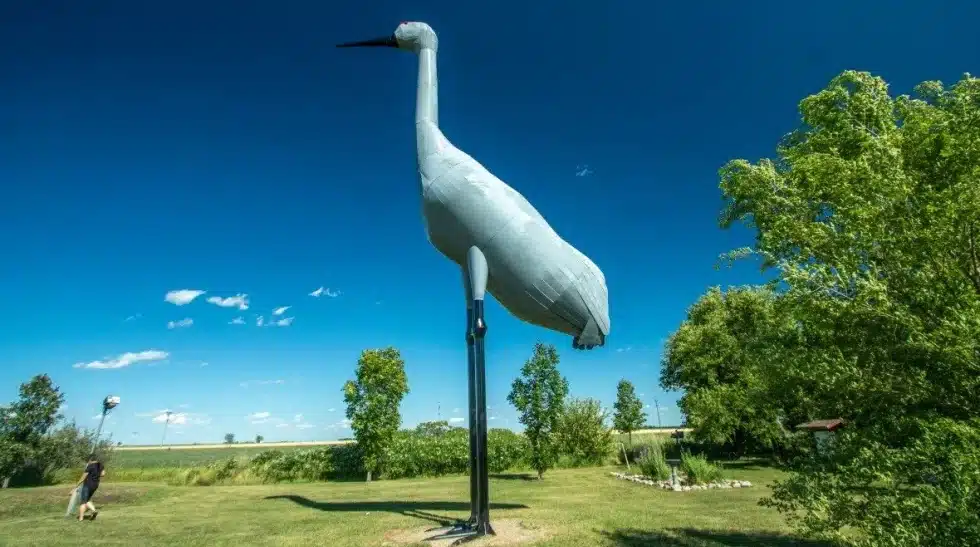
A giant roadside crane sculpture listed by North Dakota Tourism as approximately 40 feet high.World’s Largest Sandhill Crane (North Dakota Tourism)
3) Crane Statue (Garden of Time) — Williamsburg Memorial Park, Virginia, USA
A 15-foot marble crane sculpted in Carrara, Italy by Bernard Zuckerman, described by the park as a symbolic centerpiece directing the viewer “toward the heavens.”Our Crane Statue (Williamsburg Memorial Park)
4) “Crane” (bronze public sculpture) — Steamboat Springs, Colorado, USA
A bronze sculpture by Jack Stevens, featured in the Colorado Crane Conservation Coalition’s public art tour.Crane Art Tour (Colorado Crane Conservation Coalition)
5) Golden Crane statue — Parkview Square, Singapore
A prominent golden crane statue at Parkview Square, widely photographed and described as a signature public artwork in the plaza.Most popular public art in Singapore (Let’s Explore Singapore)
⚠️ Quick credibility filter: When you’re researching a specific artwork, look for a city/parks record, an official museum note, or an artist’s official page. That’s the fastest way to avoid misattributions.
Caring for an outdoor crane sculpture (so it stays beautiful)
Outdoor sculpture care is less about perfection and more about consistency:
Bronze: many owners choose periodic cleaning and re-waxing to slow oxidation and keep the surface intentional.
Stainless steel: routine washing is often enough, but high-polish surfaces show fingerprints and scuffs.
Marble: minimize standing water, be mindful of pollution/acid rain exposure, and avoid harsh acids.
FRP: keep coatings healthy; UV protection and timely touch-ups matter.
Next steps: explore styles (or commission your own)
If you’re collecting crane sculpture ideas, browsing real-world variations helps—different poses, surfaces, and scales create completely different moods.
To see a range of crane designs and materials, explore Meizz Statue Company’s Crane Statues collection. If you already have a specific location in mind (pond edge, entry path, or public plaza), a quick design consultation can help you choose a pose, size, and material that fits the setting.
One last note on crane sculpture meaning: for a piece to feel convincing, the symbolism is rarely “added on.” It comes from alignment—a pose that matches the site, and a material that matches the climate. The metaphor feels real because the object does.