Choosing the Right Natural Marble for Marble Busts
For portrait sculpture, material choice is as critical as carving technique. The stone directly affects facial precision, surface refinement, and the final emotional expression of a bust. Across centuries of sculptural practice, three material attributes consistently define suitability for portrait work: grain fineness, structural homogeneity, and optical translucency.
European sculptors historically favored Carrara-family marbles for these reasons—fine calcite crystals, relatively uniform structure, and a soft light diffusion that enhances facial realism. These same principles guide material selection today, even when sourcing beyond Europe.
Why Meizz Factory Selects Hanbaiyu Marble
At Meizz Sculpture Factory, we primarily work with natural Hanbaiyu marble from Sichuan, China, a material long respected in traditional Chinese sculpture and architectural ornamentation. In both physical properties and carving performance, high-quality Hanbaiyu aligns closely with the requirements of fine portrait busts.
Key characteristics of Sichuan Hanbaiyu marble include:
- Fine, compact grain structure
The dense and uniform crystal composition allows for clean chiseling and precise control—ideal for delicate features such as eyelids, lips, and subtle facial transitions. - High homogeneity and carving stability
Compared with heavily veined decorative marbles, premium Hanbaiyu shows minimal internal disruption, reducing the risk of unexpected fractures during detailed carving stages. - Soft white tonality with gentle translucency
Hanbaiyu’s natural milky-white appearance reflects light evenly, producing a calm, skin-like visual effect rather than sharp contrast. This optical softness enhances realism, especially in classical and contemporary portrait busts. - Balanced strength and workability
The stone is strong enough for structural integrity while remaining responsive to both hand carving and modern finishing techniques, making it suitable for life-size and enlarged bust sculptures.
Why It Works Especially Well for Busts
For portrait busts, excessive veining or dramatic color contrast can distract from expression and likeness. Hanbaiyu’s restrained visual character keeps attention on form rather than pattern, allowing facial anatomy, emotion, and craftsmanship to take center stage.
How to decide in practice? If your priority is micro-detail and even tonality—eyelids, nasolabial folds, and hair breaks that need to read cleanly—select the finest, most homogeneous block you can source (often Statuario or select Carrara). Choose Calacatta only when a more dramatic, decorative look aligns with your display goals; bold veining can overpower facial modeling.
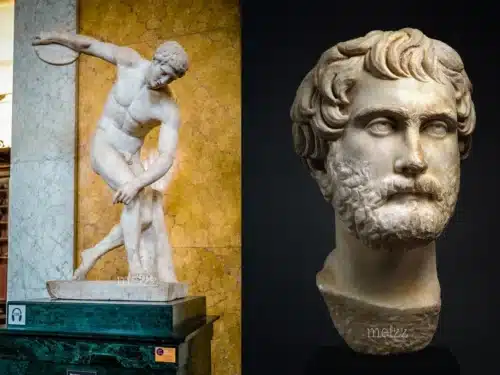
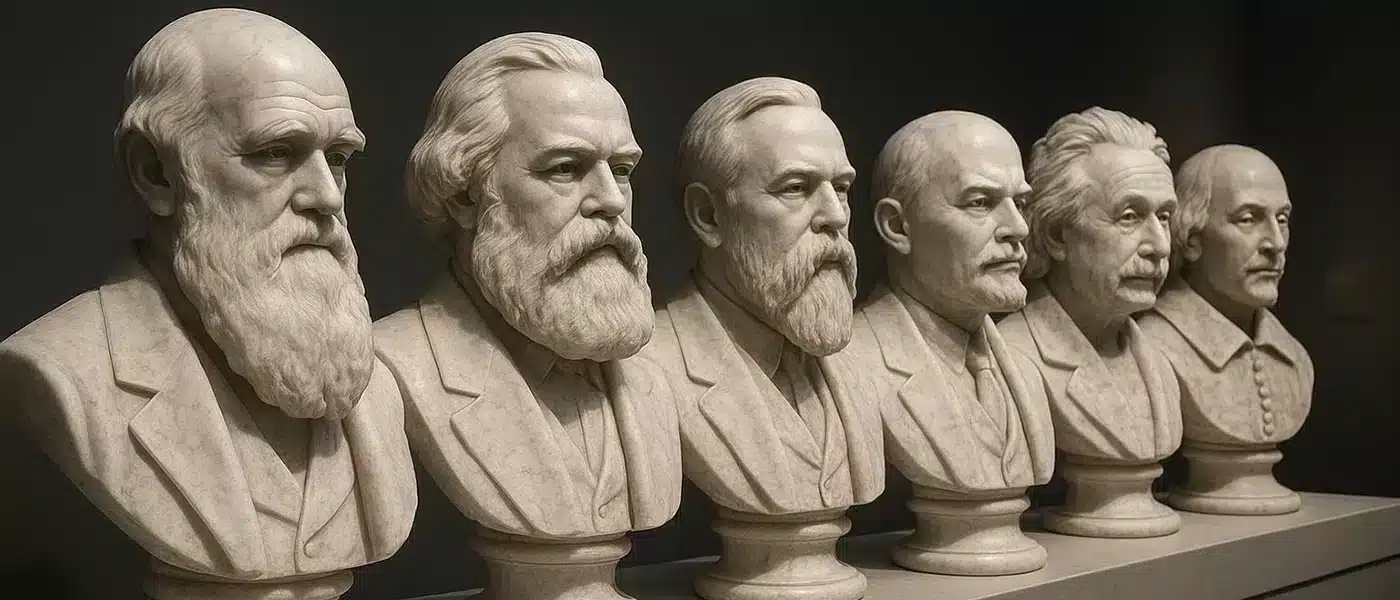
Admire the marble busts produced by the Meizz factory.

In essence, while sculptural traditions may differ across cultures, the material principles remain universal. Fine grain, structural purity, and luminous surface quality—these are exactly why Sichuan Hanbaiyu continues to be one of Meizz’s preferred stones for marble bust sculpture.
From Block to Bust: A Hand-Carving Workflow that Respects the Stone

Traditional hand processes produce the tactile surfaces and crisp transitions we associate with great portrait busts. The following sequence aligns with museum-education resources and studio practice; variations exist, but the order of tools is remarkably stable.
Model and measure. Start with a clay or plaster model. Transfer key points to the block using calipers or a pointing system. This step is your insurance against drifting proportions.
Roughing (point and pitching tools). Remove mass, working from the outside in. Keep blows controlled and avoid driving fractures along veins. Take oblique strikes to reduce chatter.
Shaping (tooth/claw chisels). Establish planes and curvature. Read the stone’s grain and veining; if it “talks back” with micro-chips, step down your force and switch angles.
Refining (flat chisels). Clean tool marks and tighten edges around eyes, lips, and hair masses. Reserve the highest-risk details (inner canthus, nostril rims) for later.
Drilling and undercuts. Use hand or low-speed drills for hair locks or deep undercuts. Keep heat low and clear slurry to prevent thermal stress and staining.
Rasps and rifflers. Bridge between chisels and abrasives, especially where convex and concave transitions meet.
Abrasives and wet sanding. Progress from coarse to very fine grits, with water to suppress dust and carry away swarf. Avoid skipping grits; each stage should fully remove marks from the last.
Final polish. Many studios employ fine powders such as pumice or tin oxide to bring up a controlled luster (more on conservation cautions below). Test finishes on sacrificial areas before committing.
Risk controls you’ll thank yourself for later
Keep edges supported while refining thin features; leave micro-bridges until the end.
Work in good, raking light so tool marks and plane errors are obvious.
Maintain even moisture during wet sanding to avoid patchy “blush” or differential sheen.
Finishes and Conservation: Shine without Compromise
Polishing is where optics, craft, and conservation meet. Historically and in contemporary studios, sculptors step through abrasives (emery, pumice) and, when a high gloss is desired, may finish with very fine powders such as tin oxide.
That said, coatings and “quick fixes” can saddle a bust with long-term problems. Government conservation guidance warns that waxes and non-reversible coatings on indoor marble may yellow, trap dirt, and alter the reading of form—problems that later require intervention. The U.S. General Services Administration summarizes gentle, reversible approaches and cautions against aggressive cleaners for historic marble: methods of cleaning dirt on marble.
Practical stance for studios and collectors
Treat high-luster finishes as an aesthetic decision, not a default. Many portrait busts benefit from a restrained sheen that preserves surface modeling.
Before applying any coating, consult a conservator—especially for historic works or institutional acquisitions. Aim for minimal, reversible treatments and full documentation.
Routine care: dry dusting with soft brushes; escalate only as needed with a mild, non-ionic detergent in water on sound, test-cleaned areas; rinse and dry thoroughly.
Likeness Matters: Reference Protocols for Six Icons
How do you make sure a portrait reads as the person—and not as a generic face with a famous hairstyle? Use a protocol: pick a specific age range, triangulate multiple references, and prioritize bone structure over costume.
Charles Darwin. Favor late-life photographs (1870s–1880s): broad brow, deep-set eyes, and the weighty beard that softens the jawline. For scholarship-grade photographic references, consult the catalog compiled by historians: Complete Photographs of Darwin.
Karl Marx. Build from period photographs with the pronounced supraorbital ridge and full beard; keep the cheek volume under control so the beard doesn’t bulk the face excessively.
Friedrich Engels. Victorian grooming with a neater beard/moustache than Marx; maintain the more tapered jaw and gentlemanly bearing.
Vladimir Lenin. Receding hairline, strong brow, and goatee; lock in the eye depth and stern mouth to avoid a softened likeness.
Albert Einstein. Mid-to-late career references (1940s–50s) capture the tousled hair, lined forehead, and an alert but gentle gaze—watch the nasolabial fold depth.
William Shakespeare. Use the Chandos portrait and the Stratford funerary bust as cues, but don’t copy stylization; set classical proportions and let the Elizabethan collar read as a framing device rather than the main event.
Tip: Think of your reference set like a compass with three points—front, three-quarter, and profile—so every cut you make lines up across views.
Display and Lighting for Natural Marble Busts
Display decisions can either flatter or flatten marble. For museums and serious collectors, adopt lighting and environmental practices that reveal form while staying within conservation norms.
Light and UV. Conservation authorities class marble among low-sensitivity materials; many institutions target about 300 lux for stone displays, keeping UV as low as practicable (ideally near 0–10 µW/lm).
Color and modeling. Aim for high color rendering (CRI ≥ 90) and a neutral to cool white (roughly 3500–4500K) to avoid yellowing the marble’s appearance. Use a primary accent at roughly 30° to model relief without harsh glare, then blend with softer ambient to keep veining and planes legible.
Mounts and plinths. Keep supports stable and reversible. A low, broad plinth helps manage center of gravity; vibration isolation is essential in high-traffic spaces. Avoid off-gassing materials near the stone and document all contact points.
Environment. Favor stability over rigid numbers—roughly 45–55% RH (40–60% acceptable) with minimal daily fluctuation and temperatures under ~20°C where feasible. Keep heat sources and damp microclimates away from the display envelope.
Commissioning and Care in Practice
Commissioning a portrait bust—benefits from a disciplined scope and schedule.
Scope and schedule. Define the exact age/era, pose, and scale; agree on a reference set and approval points (model review, rough-out check, pre-polish sign-off). Build in time for stone selection and mockups.
Pricing factors. Expect costs to track artist experience, marble grade (Statuario commands premiums), size, and the degree of hand finishing vs. hybrid roughing. Treat quotes as ranges until a specific block is selected and assessed.
Maintenance rhythm
Private settings: quarterly dry dusting; annual condition check under raking light; avoid household cleaners. If in doubt, pause and consult a conservator.
Institutional settings: integrate busts into preventive conservation plans; maintain lighting logs (lux-hours), RH/temperature charting, and treatment records.
Conclusion
At Meizz Sculpture Factory, natural marble busts are approached with patience and precision—from careful stone selection to final placement. We choose marble for portrait fidelity rather than visual drama, sequence every carving stage deliberately, and polish with restraint to preserve surface clarity and form. When conservation or long-term care questions arise, we work with professional conservators, knowing that thoughtful decisions today help preserve a sculpture’s presence and expression for decades to come.