What is a geometric bear sculpture?
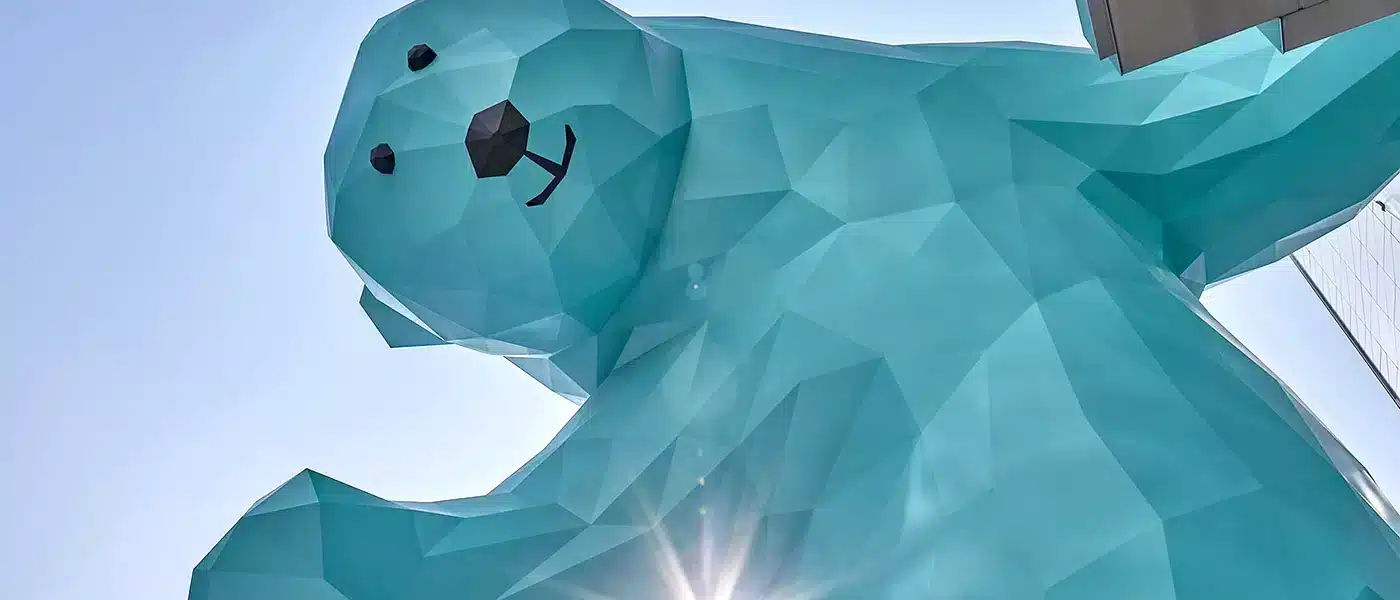
A geometric bear sculpture simplifies the bear’s form into crisp planes and angular silhouettes—think facets that catch light rather than smooth curves. In digital art, this style is often called “low‑poly,” a term from 3D modeling where objects use fewer polygons for speed and clarity. In physical sculpture, the same idea creates striking facets that play with highlight and shadow, giving a contemporary feel while keeping the bear instantly recognizable.

Materials at a glance
Choosing the right material comes down to where you’ll display the sculpture and how much maintenance you’re comfortable with.
Material | Typical Uses | Outdoor Suitability | Notes |
|---|---|---|---|
Resin | Desktop to mid-size decor | Limited; avoid prolonged UV without clear coat | Lightweight, many finishes; best for indoor settings. Reference size tiers and indoor uses in the Giant Sculptures guide (2026 reference context). |
Fiberglass (FRP) | Mid-size to large; indoor/outdoor | Good with UV-resistant paint or gel coat | Weatherable with periodic inspection and recoating; practical care notes from fibreglass and resin care resources. |
Stainless steel 304 | Mid/large; indoor/outdoor | Good in mild inland conditions | Cost-effective; rinse more often in polluted areas. 304 is adequate inland; see manufacturer-grade summaries for details. |
Stainless steel 316 | Large outdoor incl. coastal/poolside | Excellent chloride resistance | “Marine grade” thanks to molybdenum; preferred near salt or chlorinated splash. |
Bronze | Mid/large; indoor/outdoor | Good with periodic waxing | Heritage look; follow conservation-style care using thin wax coats after gentle cleaning. |
Ceramic | Small indoor decor | Not recommended outdoors | Brittle; display away from high-traffic edges. |
Bottom line: small indoor pieces are often resin; durable outdoor statements typically use stainless steel (304 inland, 316 for coastal or chlorinated environments). Bronze offers timeless character with a bit more care; fiberglass can bridge indoor/outdoor when properly coated.
How to choose a geometric bear sculpture size and scale

At Meizz Sculpture Factory, we commonly group sculpture sizes into clear, practical tiers.As a starting point: desktop/tabletop pieces run about 10–30 cm tall; mid-size indoor floor pieces often sit around 50–135 cm; “life‑size” or larger outdoor works span roughly 120–200+ cm.
A quick measuring routine can prevent surprises.
Map your footprint. Tape out the base on the floor or plinth and take a few steps back to judge traffic flow.
Check height against sightlines. For indoor pieces, confirm it clears furniture and doesn’t block art or TV viewing.
Validate wall and door clearances. Make sure installation and future moves won’t snag corners or scratch finishes.
Assess load-bearing capacity. Shelves, consoles, and outdoor pads must safely handle weight—especially stone/metal.
Photograph the mock‑up. Looking through your phone adds distance and helps you spot scale issues before buying.
Tip: For open‑plan rooms, a mid‑size floor sculpture around 80–120 cm often reads as a focal point without overwhelming the space. For gardens, a piece near one‑third the height of nearby hedges feels balanced.
Indoor placement ideas
Living room: A small geometric bear statue on a console or bookshelf draws the eye without clutter. Choose matte resin for a soft, contemporary look, or a mirror‑polished metal finish for dramatic reflections.
Entry and hallway: A mid‑size bear on a sturdy pedestal can anchor an entry, but leave at least 36 inches of passage clearance. Keep it away from doors that swing inward to avoid bumps.
Office and studio: A desktop resin bear figurine adds personality while staying practical. Place it away from direct sunlight and HVAC vents to reduce fading and heat stress.
Children’s or high‑traffic areas: Favor rounded facets and stable bases. If little hands will touch it, avoid delicate coatings and ensure the piece can’t tip.
Outdoor placement and installation basics

For outdoor placements, think like a builder: solid base, reliable anchoring, and site‑appropriate materials. A common approach is a reinforced concrete pad or plinth sized to the sculpture’s footprint, with pre‑embedded anchors or a bolt‑down base plate. In public or windy locations, plan for tamper‑resistant fixings, sufficient bolt count, and attention to wind loads. Municipal installations may require permits and engineering review for bases and anchoring, with wind design guided by standards such as ASCE 7 (consult local codes and licensed professionals).
Care and maintenance by material
Well‑chosen care extends a sculpture’s life and keeps finishes looking fresh.
Stainless steel
Wipe with mild neutral detergent and water, rinse, and dry. In coastal or industrial areas, increase frequency and avoid chlorinated or abrasive cleaners that can damage finishes, especially mirror polish. A seasonal deep clean and optional non‑abrasive polish or wax help preserve luster.
Fiberglass and resin
Dust regularly with a soft cloth. Wash with mild soap and water; avoid solvents, bleach, ammonia, and abrasives. For outdoor FRP, consider a UV‑protective clear coat and schedule inspections for chips or hairline cracks. Keep indoor pieces out of prolonged direct sun or heat.
Bronze
After gentle washing with mild soap and low‑pressure water, apply a thin coat of conservation‑grade wax and buff lightly as appropriate. If you see green powdery corrosion or flaking, consult a professional conservator.
Buying checklist and quick decision flow
Start with environment: indoor shelf or console? A resin or small fiberglass piece will be light, affordable, and easy to place. Planning a statement in a foyer or lobby? Mid‑size fiberglass or metal works well. Installing outdoors long‑term? Stainless steel is the default—304 inland, 316 for coastal or chlorinated splash zones. Next, confirm size with the 5‑step measuring routine, verify your base and load capacity, and choose a finish you can maintain (mirror polish shows fingerprints; matte hides them). Finally, review access and safety: stable footing, no sharp points where people brush past, and secure anchoring if anyone might climb or push.
FAQs
Q: What’s the difference between a geometric bear sculpture and a realistic bear statue? A: Geometric or “low‑poly” bears are intentionally faceted and angular rather than smooth and lifelike. The look comes from simplifying complex forms into planes—a 3D‑modeling idea that translates beautifully into physical sculpture.
Q: Which stainless steel grade should I choose outdoors? A: In mild inland environments, 304 is a solid choice. Near the coast, road salt, or pools, 316’s added molybdenum offers better chloride resistance and is widely recommended by manufacturers and materials guides.
Q: How big should an outdoor geometric bear be for a medium garden? A: Many gardens look balanced with a piece roughly one‑third the height of nearby hedges or fences. In practice, that often means 120–180 cm for a focal point.
Choosing a geometric bear sculpture should be fun, not stressful. Here’s the deal: match the material to the environment, pick a size that complements your sightlines, plan a stable base, and adopt a light maintenance routine. Do that, and your geometric bear—whether a desktop accent or a plaza‑scale statement—will look great for years to come.
Related Posts
- The 5 Most Influential Polar Bear Sculptures (1920s–Present)
- From Denver to Madrid: 10 Most Iconic Bear Statues Around the World
- Field Notes: Installing a Fishing Bear Statue by the Water
- How to Make Bear Statues Stand Out in Your Garden
- Where is a suitable place to display a Paddington Bear bronze statue?
- Famous Life Size Bear Sculpture in The World
- Choosing the Best Material for a Reading Bear Statue