
The Meaning Behind the Bronze Crane
Garden statuary has decorated Western landscapes for centuries — from classical Greek figures to Victorian stone animals. But in recent years, more homeowners across the US and Europe have been drawn to something quieter, more contemplative: the crane.
In East Asian culture, the crane carries centuries of symbolic weight. It represents longevity, good fortune, and grace — qualities that feel just as relevant in a Connecticut backyard or a Provence garden as they do in Kyoto. You don’t need to know the full history to feel what a crane statue brings to a space. Most people sense it immediately: a stillness, an elegance, a sense that this corner of the garden means something.
A bronze crane statue is not an impulse purchase. It is a considered addition — one that rewards you every time you step outside.
Placement Guide: Finding the Right Spot
1. Water Features — Ponds and Fountains

There is something almost inevitable about a crane standing near water. In the wild, this is exactly where you would find one — perfectly still, watching the surface with patient attention. That instinct translates directly into garden design.
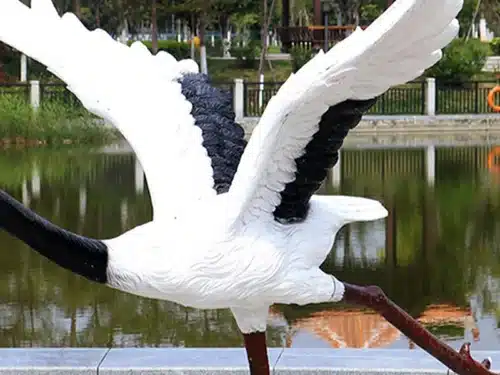
Place a bronze crane at the edge of a garden pond and the effect is immediate. The statue grounds the water feature, giving it a focal point it might otherwise lack. On calm days, the reflection doubles the visual impact. If you have a fountain, consider a crane spitter — a style where water flows gently from the bird’s beak. The soft sound adds another dimension to the space, one you notice even before you see the statue itself.
Surround the base with water lilies, tall reeds, or ornamental grasses. These plants soften the transition between the metal and the water, making the whole scene feel less arranged and more discovered. That is the effect worth chasing — a corner of your garden that looks like it came together naturally, even though every element was chosen with care.
One practical note: odd numbers work better than even ones. Three cranes grouped around a pond create a more dynamic composition than two. Try one standing tall, one with its neck curved downward, and one with wings slightly open. The variation keeps the eye moving.
2. Garden Entrance — Gates and Archways

First impressions in a garden matter more than people realize. The entrance sets an expectation. Everything beyond it is colored by what a visitor sees when they first arrive.
A pair of bronze cranes flanking a gate or archway makes a statement without shouting. They frame the entry with quiet authority. Unlike stone lions or classical urns, cranes carry a lightness — their long legs and slender necks give the entrance an airy, elegant quality that heavier ornaments cannot achieve.
Face them toward each other for a welcoming feel, or have both looking outward for something more dramatic. Either works. What matters is that they are balanced — same height, similar scale, positioned symmetrically so the entry feels intentional.
After dark, low-voltage spotlights placed at the base of each statue change the entrance entirely. The bronze catches the light differently at night, the shadows lengthen, and what felt graceful during the day becomes genuinely striking after sunset. Solar-powered stake lights work well here and require no wiring.
If you have a climbing rose or wisteria growing over the arch, let it. The contrast between the organic softness of the flowers and the solid permanence of the bronze is one of those combinations that looks better than either element alone.
3. Flower Beds and Garden Paths

A bronze crane standing among flowers does not compete with them. It anchors them. Without a focal point, even a well-planted flower bed can feel like it lacks direction. The statue gives the eye somewhere to land.
For flower beds, consider placing the crane slightly off-center rather than in the middle. This feels more natural and gives the surrounding plants room to frame it from different angles. Choose flowers with some height variation — shorter groundcovers at the front, taller blooms behind. The crane should rise above the mid-level plants so it remains visible as the season progresses and things fill in.
Color contrast works in your favor here. Bronze has warm undertones — amber, gold, a hint of red. It looks particularly strong against purple salvias, blue agapanthus, or deep burgundy dahlias. White flowers create a softer, more classical pairing. Bright yellows bring out the warmth in the metal.
Along a path, cranes serve a different purpose. They become guides. Place one at a turn in the walkway and it draws visitors forward, creating a small moment of discovery. Alternate sides as you go — left, then right further along — and the path develops a rhythm. The garden starts to feel curated rather than planted.
A simple stone or brick pedestal lifts the statue above the surrounding plants and protects it from soil moisture. It also gives the piece a more considered, gallery-like presence without feeling overly formal.
4. Zen and Meditation Corners

Not every garden needs a destination. Some gardens need a place to stop.
A shaded corner — under a mature tree, beside a stone wall, at the far end of a long lawn — can become the most used spot in your outdoor space if you give it the right elements. A bronze crane is one of them.
The approach here is restraint. Choose one statue rather than a group. Let it stand alone against a simple backdrop: a panel of bamboo, a section of smooth timber fencing, a bed of dark gravel or moss. The less competing with it, the stronger its presence.
Ground the space with a few flat stepping stones leading toward it — not a formal path, just enough to suggest intention. Add a low stone lantern to one side. A simple wooden bench facing the statue completes the scene. You now have somewhere to sit that feels separate from the rest of the garden, a place where the pace slows down.
This kind of corner has real value in a busy household. It requires almost no maintenance once established. The crane needs nothing from you. The bamboo grows quietly. The gravel stays put. What you get in return is a space that consistently delivers a feeling — calm, unhurried, slightly removed from everything else.
For those drawn to Japanese garden aesthetics, this placement style fits naturally within the principles of ma — the appreciation of empty space as an element in itself. The crane does not fill the corner. It completes it.
5. Patio and Seating Areas

The patio is where most people actually spend their outdoor time. It makes sense to bring the same care to this space that you bring to the planted areas of your garden.
A full-size bronze crane placed beside outdoor seating adds a sculptural element that patio furniture alone cannot provide. Position it near the edge of the seating area rather than in the middle — you want it to be part of the atmosphere, not an obstacle. A crane standing at the corner of a patio, slightly behind a chair, creates a background element that guests notice gradually rather than immediately. That slow noticing is more satisfying.
For smaller patios, balconies, or apartment terraces, Meizz produces tabletop crane sculptures that carry the same craftsmanship as the larger pieces. A small bronze crane on an outdoor dining table or beside a potted olive tree brings the same quality of presence at a fraction of the footprint. These smaller pieces also make thoughtful gifts — the kind that look considered rather than convenient.
Pair any crane statue with outdoor lanterns for evening use. The warm glow of a lantern beside a bronze surface creates a quality of light that string lights or floodlights cannot replicate. It feels older, more deliberate. Guests tend to linger longer in spaces that feel this way.
Pairing and Grouping

Single statues make statements. Groups tell stories.
When you place two cranes together, the dynamic between them becomes part of the composition. Position them facing each other and the relationship reads as conversation, connection, reunion. Turn them side by side, looking in the same direction, and they become companions — two figures sharing the same view. Both arrangements work. The choice depends on the mood you want the space to carry.
In Chinese tradition, paired cranes symbolize lasting partnership and mutual loyalty. For Western gardens, this translates easily into an aesthetic principle: two balanced elements create harmony. This is why crane pairs work so well at entrances, on either side of a garden bench, or flanking a garden gate.
For larger spaces, three cranes grouped near a water feature create a composition with genuine depth. Vary the poses — one standing tall, one in a feeding position, one with wings partially raised. The variety makes the grouping feel observed rather than arranged, as if you caught three birds mid-moment rather than placed them there yourself.
When mixing crane statues with other garden ornaments, consider scale and material first. Bronze pairs naturally with stone — both have weight and permanence. Avoid mixing bronze with brightly painted resin pieces, which will draw attention away from the metal’s quieter qualities.
Choosing the Right Style

Meizz produces bronze crane statues across a range of styles, and the right choice depends less on personal taste alone than on the garden context around it.
For traditional or cottage gardens — herbaceous borders, climbing roses, gravel paths — a realistic crane with fine feather detail fits naturally. The craftsmanship reads well against organic, textured surroundings. These statues reward close inspection. The closer you look, the more you find.
For modern gardens — clean lines, architectural planting, minimal ornamentation — a more abstract or fluid crane silhouette works better. Smooth contours and simplified forms hold their own against the strong geometry of contemporary outdoor design without competing with it.
Asian-inspired gardens, increasingly popular across the US and Europe, suit either style depending on how closely the design follows traditional principles. A highly realistic crane beside a stone lantern and raked gravel is classically Japanese in feeling. A more sculptural, abstracted piece beside ornamental grasses and a still-water basin feels more contemporary while retaining the cultural reference.
If you are unsure, the most versatile choice is a standing crane in a naturalistic pose with moderate detail — not so realistic that it demands a specific context, not so abstract that it loses the quality of stillness that makes crane statues worth having in the first place.
Care and Maintenance
One of the practical advantages of bronze over other sculpture materials is how little it asks of you.
Bronze does not rust. It does not crack in frost. It does not fade in sunlight. Left outdoors year-round, it will slowly develop a patina — a natural oxidation process that turns the surface from warm gold-brown toward deeper greens and browns over time. Many collectors and garden designers consider a well-developed patina one of bronze’s most appealing qualities. It makes a piece look genuinely aged, as if it has been part of the garden for generations.
If you prefer to maintain the original finish, occasional cleaning is straightforward. Wipe the surface with a soft cloth and mild soapy water, rinse thoroughly, and dry completely. Avoid abrasive cleaners or wire brushes, which will scratch the surface. A coat of paste wax applied once or twice a year — the same kind used on cars — slows the patina process and adds a subtle sheen.
In regions with particularly harsh winters, moving large statues into a garage or shed during the coldest months will extend the finish’s life, though it is not strictly necessary for the bronze itself. Smaller tabletop pieces should always be brought indoors when temperatures drop significantly.
Meizz statues are cast using high-quality bronze alloy and finished by hand. With basic care, a piece bought today will still be in excellent condition in twenty or thirty years — long enough to become a genuine fixture of your garden rather than just a decoration.
Frequently Asked Questions
Q:Will a bronze crane statue look out of place in a Western garden?
A:Not at all. The crane’s elegant form and neutral color palette adapt naturally to almost any garden style. Many of our customers across the US and Europe use crane statues in gardens that have no other Asian influences — the statues work as sculptural elements first, cultural references second.
Q:How heavy are your bronze crane statues?
A:This varies by size. Tabletop pieces typically weigh between 2 and 5 pounds. Medium outdoor statues range from 10 to 25 pounds. Larger statement pieces can exceed 50 pounds. All product listings include exact weight specifications.
Q:Do I need a special base or plinth?
A:Most Meizz outdoor cranes come with an integrated base suitable for placement directly on soil, gravel, or paving. For flower bed placement, a flat stone or brick underneath helps keep the statue level and protects against soil movement over time.
Q:How long does shipping take to the US and Europe?
A:We ship internationally from our foundry in China. Standard delivery to the US and major European countries typically takes 2 to 4 weeks. Expedited options are available. Contact us directly for freight quotes on larger pieces.
Q:Can I request a custom size or pose?
A:Yes. Custom commissions are a significant part of what we do at Meizz. If you have a specific size, pose, or finish in mind, reach out with your requirements and we will provide a quote and timeline.