Custom bronze statues have been used for centuries in art, architecture, and public spaces. From religious sculptures and animal statues to monuments and garden artworks, bronze remains one of the most durable and prestigious sculpture materials.
If you are considering ordering a custom bronze statue, understanding how it is made helps you evaluate quality, timeline, and craftsmanship. In this guide, we explain the step-by-step bronze casting process, from initial design to final installation.
Step 1: Concept Design and Reference Preparation
Every custom bronze statues starts with an idea.
Clients usually provide:
- Reference photos
- Drawings or sketches
- Size requirements
- Installation environment (indoor or outdoor)
At this stage, sculptors analyze proportions, posture, surface details, and artistic style. For large outdoor projects, structural stability and long-term durability are also considered.
👉 This step determines whether the final statue looks natural, balanced, and expressive.
Step 2: Clay Model Creation for Custom Bronze Statues
Once the design is approved, artists create a full clay model.
- Clay is commonly used for detailed sculpting.
- Wax is preferred when the design requires fine textures.
The sculptor carefully refines:
- Facial expressions
- Muscle structure
- Fabric folds
- Surface texture
This model becomes the foundation for all future casting steps.


Step 3: Mold Making (Silicone & Plaster Mold)
After the original model is finished, molds are made to capture every detail.
Typical mold layers include:
- Silicone mold (captures fine details)
- Fiberglass or plaster shell (provides strength)
For large statues, the model is divided into sections to ensure accurate casting and easier assembly later.
Step 4: Wax Replicas and Assembly
Molten wax is poured into the molds to create hollow wax replicas.
These wax sections are:
- Trimmed
- Assembled
- Corrected for seams or imperfections
This step allows artists to adjust details before casting in bronze, ensuring the final sculpture matches the original design precisely.

Step 5: Custom Bronze Statues Lost Wax Casting (Bronze Pouring)
The wax model is coated with ceramic materials and heated in a kiln.
As the wax melts away, it leaves a hollow cavity.
Molten bronze (typically at over 1,000°C) is then poured into the mold.
This traditional method is known as lost wax casting, and it is the most reliable technique for producing high-quality bronze sculptures.
Step 6: Welding and Structural Assembly
After cooling, bronze sections are removed from molds.
For large bronze sculptures such bronze deer statue :
- Multiple bronze parts are welded together
- Internal steel structures are added for support
Professional welding ensures strength without affecting surface appearance.
Step 7: Surface Finishing and Chasing
This is where craftsmanship truly shows.
Artists carefully:
- Grind weld marks
- Refine textures
- Restore fine details
The surface is hand-finished to achieve a smooth, natural, or intentionally rough artistic effect depending on the design.


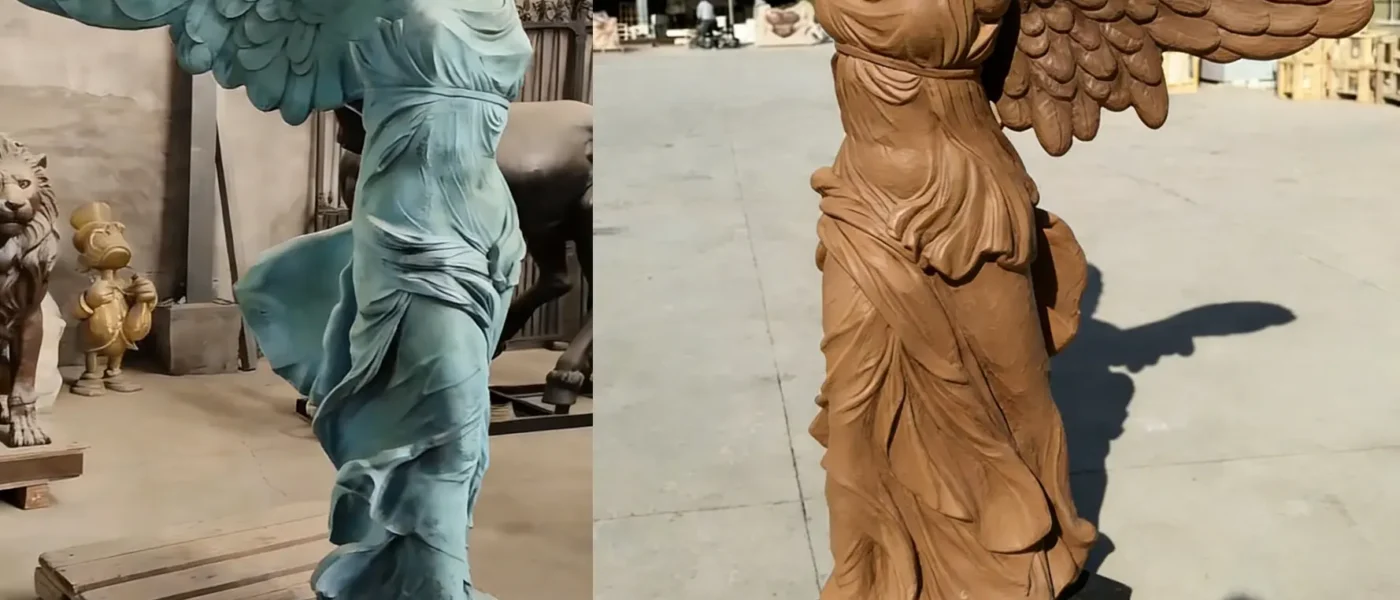
Step 8: Patina Coloring and Protection
Patina gives bronze statues their final color.
Common patina finishes include:
- Classic brown
- Antique green
- Dark black
- Custom tones
After coloring, a protective wax or sealant is applied to enhance durability, especially for outdoor bronze statues.

Step 9: Quality Inspection and Packing
Before delivery, the statue is carefully inspected for:
- Structural safety
- Surface consistency
- Color accuracy
For international shipping, professional packing is used to prevent damage during transportation.

How Long Does It Take to Make a Custom Bronze Statue?
Production time depends on:
- Size
- Complexity
- Quantity
Typical timelines:
- Small statues: 30–45 days
- Life-size statues: 45–60 days
- Large monuments: 60–90 days
Why Choose Bronze for Custom Sculptures?
Bronze sculptures offer:
- Exceptional durability
- Strong resistance to weather
- Timeless artistic value
- Low maintenance requirements
This makes bronze ideal for gardens, public spaces, churches, and architectural projects.
Final Thoughts
Understanding the bronze casting process helps you choose the right sculpture manufacturer and ensures the quality of your investment.
If you are planning a custom bronze statue project, working with an experienced sculpture foundry ensures every detail—from design to finishing—is handled professionally.
Life Size Running Horse Sculpture
FAQ – Custom Bronze Statue
Our custom bronze statues are made from high-quality bronze alloys using traditional casting techniques. Bronze is valued for its durability, ability to capture fine details, and long-term resistance to corrosion, making it ideal for both indoor and outdoor sculptures.
Production time depends on the size and complexity of the sculpture. Small bronze statues typically take 30–45 days, life-size statues take around 45–60 days, and large-scale monuments may require 60–90 days or more.
Yes, bronze statues can be fully customized in size, pose, proportions, and design details. Clients may provide drawings, reference photos, or concept ideas, and adjustments can be made throughout the production process.
Yes, bronze statues are highly suitable for outdoor environments. With professional patina treatment and protective coatings, bronze sculptures can withstand rain, sunlight, and temperature changes for decades with minimal maintenance.
Bronze statues can be finished in a variety of patinas, including classic brown, antique green, black, or other customized colors. Protective wax or clear coatings are applied to enhance durability and preserve the surface appearance.
Each bronze statue is carefully packed in a reinforced wooden crate with internal padding and protective materials to ensure safe transportation, especially for international shipping.
Yes, international shipping is available. We can arrange sea freight or air freight according to project requirements and ensure the sculpture is delivered safely to the destination.
Yes, installation guidance is provided for all bronze statues. For large or complex installations, detailed instructions and technical support can be offered to assist with proper setup.