Key Takeaways
Phoenix sculptures stand for starting over and hope. They remind us that good things can come after hard times. In many cultures, the phoenix means peace and balance. It is often shown with the dragon to show how opposites connect. Artists use old materials in phoenix sculptures to show change. They want to show that something pretty can come from the past. The phoenix is a strong sign that people can change. It helps people feel brave about their own new starts. Seeing a phoenix sculpture can make people feel strong and tough. It helps people believe they can get through hard things.
Phoenix Sculpture Symbolism

Rebirth and Immortality
Artists use the Phoenix Sculpture to show rebirth and immortality. The phoenix is a bird that dies in fire. It comes back to life from its ashes. This shows how life can begin again after it ends. Egypt and Greece have their own phoenix stories. In Egypt, the Bennu bird is linked to the sun god Ra. It stands for new beginnings every day. In Greece, the phoenix lives for many years before it is reborn. This shows the never-ending cycle of life and death.
The Phoenix Sculpture tells people that hope can come back. It stands for strength and the power to start over.
Art historians say the phoenix means deep feelings and big changes. The sculpture helps people think about their own hard times and wins. The idea of rising from destruction speaks to anyone who faces problems.
Common symbolic meanings of Phoenix Sculpture:
Rebirth and renewal
Immortality
Hope after hardship
Harmony and Prosperity
The Phoenix Sculpture also means harmony and prosperity. In Chinese culture, the phoenix is called Fenghuang. It often appears with the dragon. The dragon and phoenix together show yin and yang. This means balance between opposites. The phoenix brings female energy, grace, and beauty. The dragon brings power and wisdom. When both are in a sculpture, it shows perfect balance.
Element | Symbolism | Role in Harmony |
|---|---|---|
Dragon | Power, protection, wisdom | Stands for male energy and strength |
Phoenix | Rebirth, immortality, grace | Stands for female energy and renewal |
Yin and Yang | Balance of opposites | Shows harmony between different forces |
In Asia, people see the phoenix as good luck and a bright future. Seeing a phoenix means a wise leader will come and peace will start. The Fenghuang only appears during peaceful and rich times. Its image brings hope for a better life.
The Phoenix Sculpture can bring harmony to a home.
It can help people feel calm and balanced.
Many think it brings wealth and new chances.
Renewal and Transformation
The Phoenix Sculpture shows renewal and transformation. The phoenix story comes from places like Egypt, Greece, China, and India. Each culture uses the phoenix to talk about change and new starts. In art, the phoenix often looks like it is rising from flames or shining. This shows how people can change and become stronger after hard times.
Modern artists use the Phoenix Sculpture to talk about memory, hope, and starting over. Some sculptures use bright lights and layers to look like fire and ashes. These features remind people they can always start again.
The phoenix stands for success after struggle.
Its image helps people believe they can change.
The sculpture gives hope to those who want to heal and move forward.
The Phoenix Sculpture connects life, death, and renewal. It helps people remember every ending can lead to a new start.
Mythology and Cultural Roots 

Ancient Origins of the Phoenix
The phoenix story started long ago. Many cultures talked about a magical bird. This bird could live, die, and come back.
Egyptian stories told about the Bennu bird. It was linked to the sun god Ra. The Bennu bird meant rebirth.
Greek tales described a bird with red and purple feathers. Herodotus wrote about the phoenix. He said it lived for 500 years. Then it burned and came back to life.
In Persia, the Simurgh was like the phoenix. It showed wisdom and immortality.
Roman writers such as Ovid wrote about the phoenix. They connected it to living forever.
Early Christians saw the phoenix as a sign of resurrection. They compared it to Jesus’s story.
These stories spread to many places. They changed how people thought about the phoenix in art and beliefs.
Phoenix in Chinese and Feng Shui Traditions
In China, the phoenix is called Fenghuang. It stands for harmony, virtue, and peace. Artists show the phoenix with bright feathers. The bird’s picture is in art, buildings, and Feng Shui. People think the phoenix brings luck and a new time of peace.
Aspect | Description |
|---|---|
Symbol of Virtue | Means harmony, trust, and peace. |
Feng Shui Placement | Put the phoenix in the southwest to help love and luck. |
Marital Harmony | With the dragon, it shows balance in relationships. |
Positive Energy | Works best in clean, bright places. |
Directional Influence | Southwest helps love, east helps health. |
Phoenix Sculpture was important in old Chinese art. It was special in the southern kingdoms. These sculptures showed beliefs in living forever and the spirit world. In Feng Shui, people put phoenix figures in homes. They hope for harmony and good energy.
Phoenix in Christian and Japanese Art
Christian art shows the phoenix rising from fire. This means resurrection and hope. Artists used the phoenix on funeral stones, church windows, and paintings. The bird’s bright colors and flames remind people of new life after death.
Symbolism | Description |
|---|---|
Resurrection | Means hope to rise again after death. |
Immortality | Stands for living forever. |
Artistic Depiction | Seen in churches, paintings, and stained glass. |
In Japan, the phoenix is called Hō-ō. It came during the Asuka period. It became popular in the Nara period. Artists put the phoenix on cloth, mirrors, and temple ceilings. Japanese art shows the phoenix with cherry blossoms and peonies. This mixes local beauty with the bird’s strong meaning. The phoenix in Japan means peace. It appears when there is harmony.
The phoenix links art, spirituality, and culture. Its story brings people together from different times and places.
Phoenix Sculpture in Art
Common Visual Elements
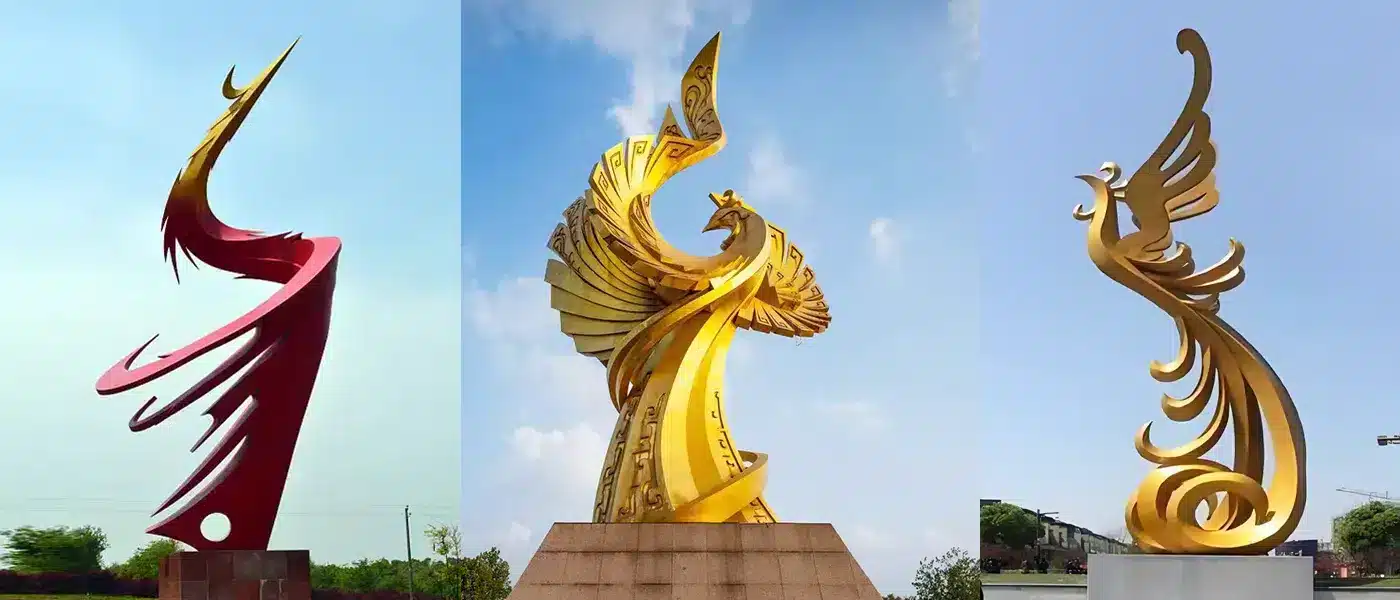
Artists show the phoenix with big wings and fiery feathers. The bird sometimes rises from ashes or sits in fire. Sculptors use bright colors and bold poses to show movement. Some add dragons or flowers to give more meaning. These choices help people see the phoenix as hope and new starts.
Materials and Techniques
Many artists pick special materials for a Phoenix Sculpture. Some use old chains, steel beams, pipes, or hard hats. These things stand for change and new life, like the phoenix story. Using building scraps also talks about city growth and waste. Artists weld, bend, and layer metal to make the sculpture look strong and alive.
Artists make old things into something pretty. This is like the phoenix coming back from ashes.
Interpreting Symbolism in Sculpture
Art critics use different ways to find meaning in phoenix sculptures:
They check the culture and history behind the art.
Critics look at the materials, like old building parts, for hidden ideas.
They notice the sculpture’s size and how it is lit.
Critics think about what the phoenix means in places like China, such as hope and new life.
People see their own ideas in each sculpture. Symbols can mean many things. A person’s background and beliefs change what they see. One person may see power, another may see calm. This makes every Phoenix Sculpture special for each viewer.
Cultural Significance Today

Modern Phoenix Sculpture
Modern artists make phoenix sculptures about feelings and personal stories. They do not always use old myths. Many artists use the phoenix to show change and new beginnings. People today live in a fast-changing world. The phoenix helps them remember that every end can be a new start.
Artists pick bright colors and bold shapes to show hope.
Some sculptures use recycled things to show growth.
The phoenix often stands for personal change and strength.
Artworks like “Phoenix Graveyard 2” show a phoenix rising from ruins. This image tells a story of hope after loss. The sculpture reminds people that new life can come after hard times.
Personal and Collective Inspiration
Phoenix sculptures inspire artists and whole communities. Many artists say working with the phoenix makes them braver and more honest.
“Most of my art is about crossing lines and borders. I became more brave with my own art. I was already trying to be honest and open with my work. But it gave me extra strength to be brave, because I was scared to be myself.”
People also feel close to their city and land through their art.
“I feel very close to the land here. I like to sit in the mountains and look at the city. I meditate and think. I always felt I was born with this gift. I did not see my art as a talent, but as a gift with a purpose. I felt I should inspire people around me. I would let them down if I did not try. Everything I do is for my community and city. The city is deep in my heart and soul. I feel lucky the city gives back to me and supports me.”
Enduring Symbol in Contemporary Art
Phoenix Sculpture is still popular in galleries and shows. The Throckmorton Fine Art Gallery has over sixty jade phoenix carvings. These works show the phoenix as a sign of virtue, peace, and harmony in Chinese culture. The exhibit covers many years, showing people have loved the phoenix for a long time.
Example | Symbolic Focus | Cultural Impact |
|---|---|---|
Jean Grey’s Dark Phoenix Saga | Life and destructive power | Shows two sides of the phoenix myth |
Phoenix Force in X-Men | Regeneration and retelling | Shows the phoenix is still important |
Jade Phoenix Carvings | Hope and harmony | Shows the phoenix is loved in Chinese art |
The legend of the phoenix still brings hope and joy. Artists and viewers see the phoenix as a sign that good things can happen after hard times.
Phoenix sculptures show big ideas like rebirth and immortality. They also stand for harmony and transformation. These meanings have shaped art and culture for a long time. Today, the phoenix still inspires many people in different ways:
The phoenix means new beginnings and hope.
Its picture helps people remember to stay strong and change.
Artists often make the phoenix rise from ashes. This helps people believe they can get through hard times.
People from many cultures and ages find meaning in the phoenix. Its story gives hope and helps people start fresh.
FAQ
What does a phoenix sculpture usually represent?
A phoenix sculpture stands for rebirth, hope, and strength. People think it means new beginnings after tough times. Artists want viewers to believe they can change.
Why do artists use recycled materials for phoenix sculptures?
Artists pick recycled materials to show change. Old things turn into something new, like the phoenix rising. This choice helps the earth and adds meaning to the art.
How do different cultures view the phoenix?
Cultures see the phoenix in their own ways. In China, it means harmony and luck. In Greece, it stands for living forever. Christians use it to show resurrection. Each group gives the phoenix a special story.
Where can people find phoenix sculptures today?
People see phoenix sculptures in galleries, parks, and museums. Some cities use them as famous spots. Many artists post their phoenix art online for all to enjoy.
Can a phoenix sculpture bring good luck?
Many people think a phoenix sculpture brings good luck. In Feng Shui, people put phoenix figures at home for harmony and new chances.