
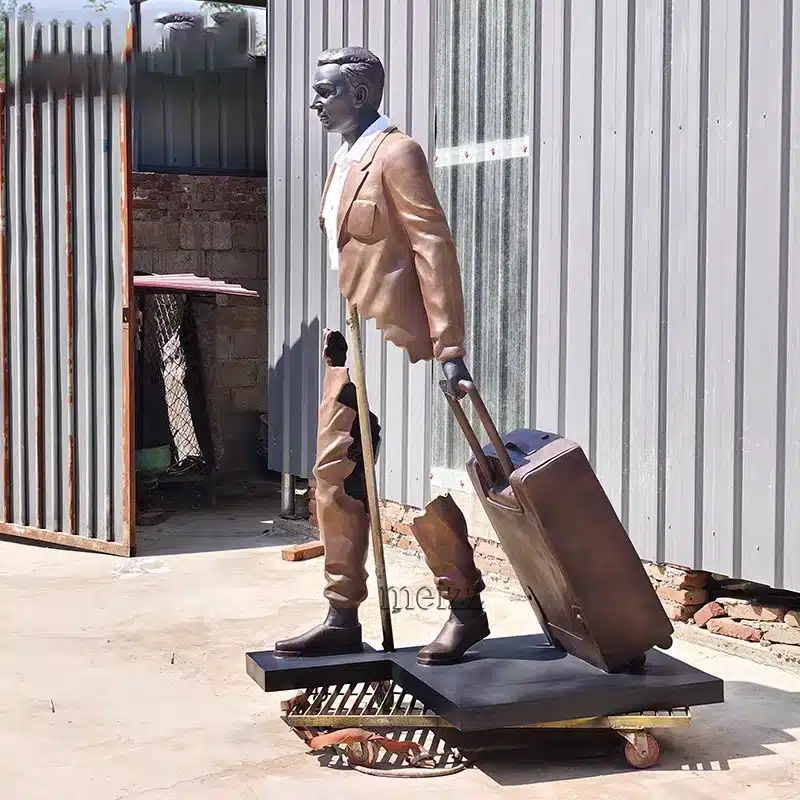
A person walks forward with a suitcase, yet a large part of the body seems to be missing. The head, arms, and legs remain connected in an almost impossible balance, creating an image that feels both realistic and mysterious. This unusual visual effect is what makes Les Voyageurs one of the most recognizable modern sculpture series.
The Les Voyageurs sculpture meaning goes beyond the idea of traveling from one place to another. Through fragmented human figures, the artwork invites viewers to think about personal identity, memories, separation, and the experiences people carry throughout life.
Created by French sculptor Bruno Catalano, these traveler figures turn an ordinary moment of walking into an artistic reflection on the human experience.
Who Created the Les Voyageurs Sculptures?
Bruno Catalano is a French sculptor known for his distinctive bronze figures with missing sections of the body. Born in Morocco in 1960, he moved to Marseille with his family as a child and later spent time working at sea. His own experiences of movement and relocation provide an important background for understanding his artistic interests.
His signature Les Voyageurs series developed from his exploration of fragmented human forms. A casting accident in 2004 created an unexpected gap in one of his works, leading him to make this visual interruption a central feature of his sculpture.
Rather than presenting complete human figures, Catalano creates silhouettes that appear suspended between movement and absence. Men, women, and children are depicted walking with their luggage, while the missing parts of their bodies leave the viewer wondering about their stories.
What Does the Missing Part of the Sculpture Represent?
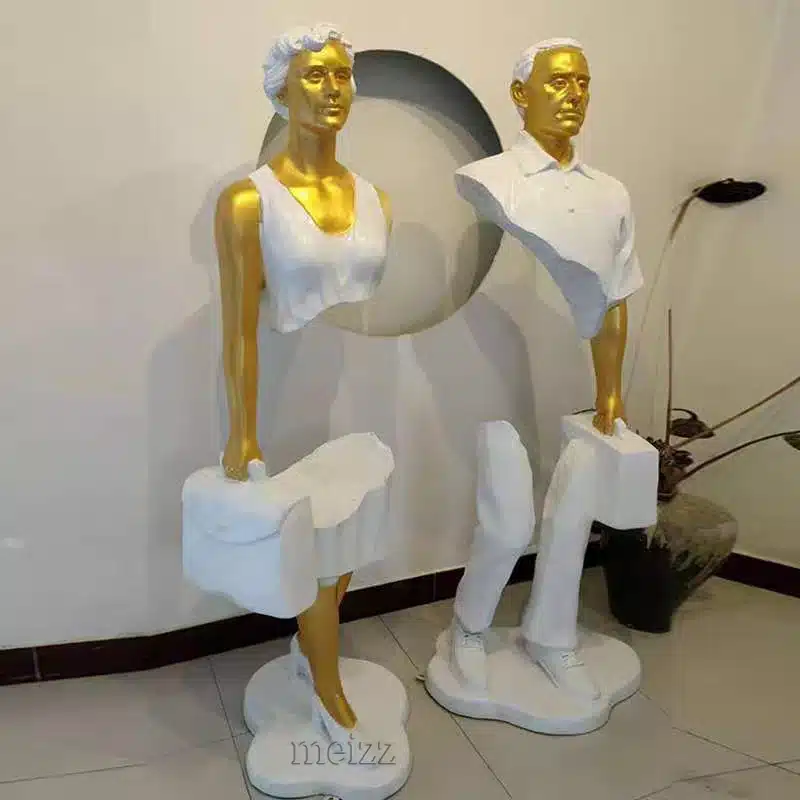
The most striking feature of a Les Voyageurs sculpture is the empty space between different parts of the human body. At first glance, the structure may seem physically impossible, but this absence is precisely what gives the artwork its expressive power.
There is no single interpretation of the missing sections. However, several ideas help explain why this visual language resonates with so many viewers.
1. The parts of ourselves we leave behind
Travel often involves leaving familiar surroundings, relationships, and routines. The missing sections can suggest the emotional distance between a person’s past and present.
2. The changing nature of personal identity
People are shaped by different places, cultures, and experiences. The fragmented figure can represent an identity that is constantly developing rather than remaining fixed.
3. Separation and human vulnerability
The incomplete body also suggests that loss and separation are part of human experience. What is absent can sometimes communicate as much as what remains visible.
The sculpture does not provide a definite answer. Instead, its open-ended form allows each viewer to connect the artwork with their own memories and experiences.
Why Do the Travelers Carry Suitcases?
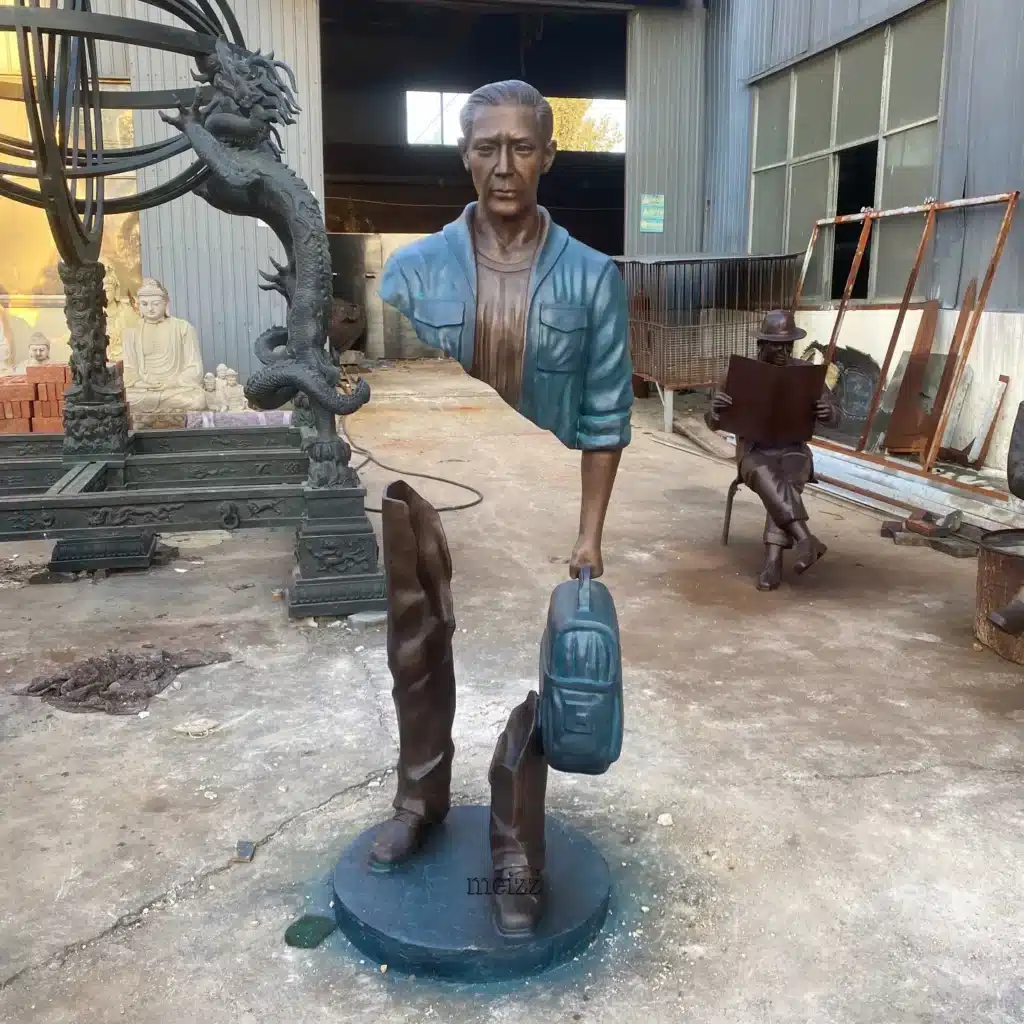
The suitcase is more than an accessory in these sculptures. It is an important visual element that connects the figure’s upper and lower body while reinforcing the theme of travel.
In everyday life, luggage carries practical belongings. In art, however, it can suggest something much more personal.
A suitcase may represent:
Memories: Experiences and relationships carried from one stage of life to another.
Personal history: The background and identity that shape each individual.
New beginnings: The decision to leave one place and move toward another.
Uncertainty: The unknown possibilities waiting at the end of a journey.
The combination of a walking figure and a suitcase creates a familiar scene, but the fragmented body transforms it into something symbolic. The traveler appears to be moving forward while remaining connected to everything that has shaped their past.
The Connection Between Travel, Identity and Personal Experience
Travel is not only about geographical distance. It can also describe emotional changes, personal growth, and the process of discovering a different version of oneself.
Someone moving to another country may experience a change in language, culture, and belonging. Another person may travel because of work, family, or the desire to explore unfamiliar places.
These experiences can change how people understand themselves and the world around them.
This is one reason fragmented traveler sculptures have such a broad appeal. Their figures are not defined by a specific destination or personal biography. Instead, they represent individuals in transition.
The missing spaces make the figures feel less like ordinary portraits and more like reflections of human experience. Viewers can imagine their own journeys within the artwork.
Why Are Fragmented Traveler Sculptures Popular in Modern Spaces?
Beyond their symbolic meaning, fragmented human figures have a distinctive visual presence.
Their unusual silhouettes create a contrast between solid material and open space. Instead of filling the entire human outline, the sculpture allows the surrounding environment to become part of its composition.
This makes fragmented traveler sculptures interesting from different viewing angles. Their appearance changes as people walk around them, and the background becomes visible through the open sections.
For contemporary interiors, art galleries, hotel entrances, and public spaces, this type of sculpture can introduce movement and visual interest without relying on complicated decorative details.
Bronze is particularly suitable for this artistic approach. Its strength supports complex forms, while different patinas can emphasize the contrast between the figure, luggage, and surrounding negative space.
For buyers exploring different designs, our collection of Traveler Statues includes traveler-themed sculptures with distinctive poses and artistic expressions.
How to Choose a Traveler Sculpture for Your Space
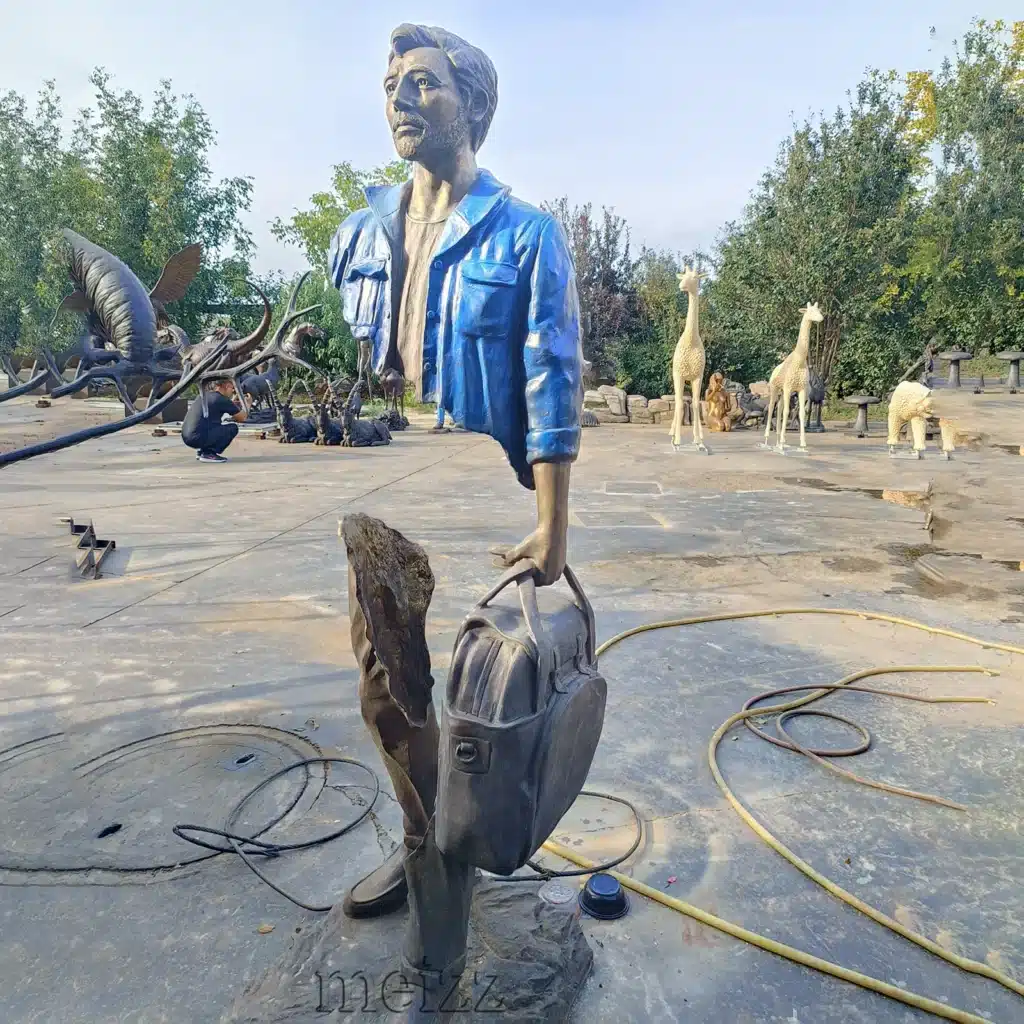
Not every traveler sculpture needs to follow the fragmented style. Some designs focus on realistic human figures, while others use simplified silhouettes, expressive poses, or detailed luggage to communicate the idea of a journey.
When selecting a sculpture, consider the following factors:
Sculpture Style
Fragmented figures create a contemporary artistic statement, while complete human figures can provide a more recognizable and narrative appearance.
Material and Finish
Bronze offers a substantial appearance and supports detailed sculptural work. Different surface treatments, including antique brown, dark bronze, and customized patinas, can change the overall visual effect.
Size and Placement
A smaller figure can work well on a console table, office desk, or display shelf. Larger sculptures are more suitable for hotel lobbies, gardens, building entrances, and public art projects.
Customization
For projects with specific design requirements, buyers may consider custom dimensions, poses, clothing details, luggage designs, and surface finishes.
At Meizz, we create different types of figure sculptures with options for customized sizes, materials, and finishes. You can also explore our Bronze Figure Sculptures for more human figure designs.
For a more traditional traveler design, take a look at our The Traveler Bronze Statue. This 58 cm figure features a contrasting two-tone finish, a marble base, and customizable dimensions and surface colors. It offers a different interpretation of the traveler theme without relying on the fragmented body structure.
If you have a particular design in mind, our custom sculpture service can help develop a sculpture based on your reference images, drawings, or project requirements.
FAQ
What is the meaning of Les Voyageurs sculptures?
Les Voyageurs sculptures explore themes of travel, identity, memory, separation, and personal transformation. Their fragmented human forms encourage viewers to consider what people leave behind and what they carry through life.
Who is the artist behind Les Voyageurs?
Bruno Catalano, a French sculptor born in Morocco in 1960, is the artist behind the famous Les Voyageurs series. He is recognized for his bronze figures with large missing sections.
Why are Bruno Catalano’s sculptures incomplete?
The incomplete forms developed from an unexpected casting accident in 2004. Catalano subsequently incorporated these gaps into his artistic language, using absence and fragmented bodies as important elements of his work.
Are traveler sculptures suitable for outdoor display?
Yes. Bronze traveler sculptures can be suitable for outdoor environments when properly cast, finished, and installed. For larger installations, buyers should also consider the base, anchoring system, and local weather conditions.
Can traveler sculptures be customized?
Yes. Depending on the design and manufacturing requirements, traveler sculptures can be customized in size, material, pose, clothing details, luggage, and surface finish. Reference images or drawings can help communicate the desired result.
A Sculpture That Leaves Room for Interpretation
The appeal of Les Voyageurs lies in the questions it raises rather than the answers it provides. A fragmented traveler may represent someone leaving home, searching for a new beginning, or carrying memories from a distant place.
Its incomplete form reminds us that every journey changes something within us. Even when parts of the past are left behind, they remain connected to the person we become.
Whether displayed in a private collection, a contemporary interior, or a public space, traveler sculptures offer more than a representation of someone walking with luggage. They turn the idea of a journey into a lasting artistic expression.