Greek and Roman statues are often grouped together under the label of “classical sculpture.” At first glance, it is easy to understand why. Both traditions feature marble figures, bronze gods, heroic athletes, mythological characters, and carefully constructed human bodies.
But Greek and Roman statues were not created with exactly the same artistic goals.
Ancient Greek sculptors often pursued ideal beauty, harmony, movement, and the perfect human form. Roman sculptors inherited many of these artistic traditions but developed a stronger interest in individuality, portraiture, political power, military achievement, and personal identity.
So, what is the difference between Greek and Roman statues?
In simple terms, Greek sculpture generally focused more on idealized beauty, while Roman sculpture often placed greater emphasis on realism, recognizable individuals, and historical or political messages.
The differences become even clearer when you compare their faces, bodies, subjects, purposes, and artistic traditions.
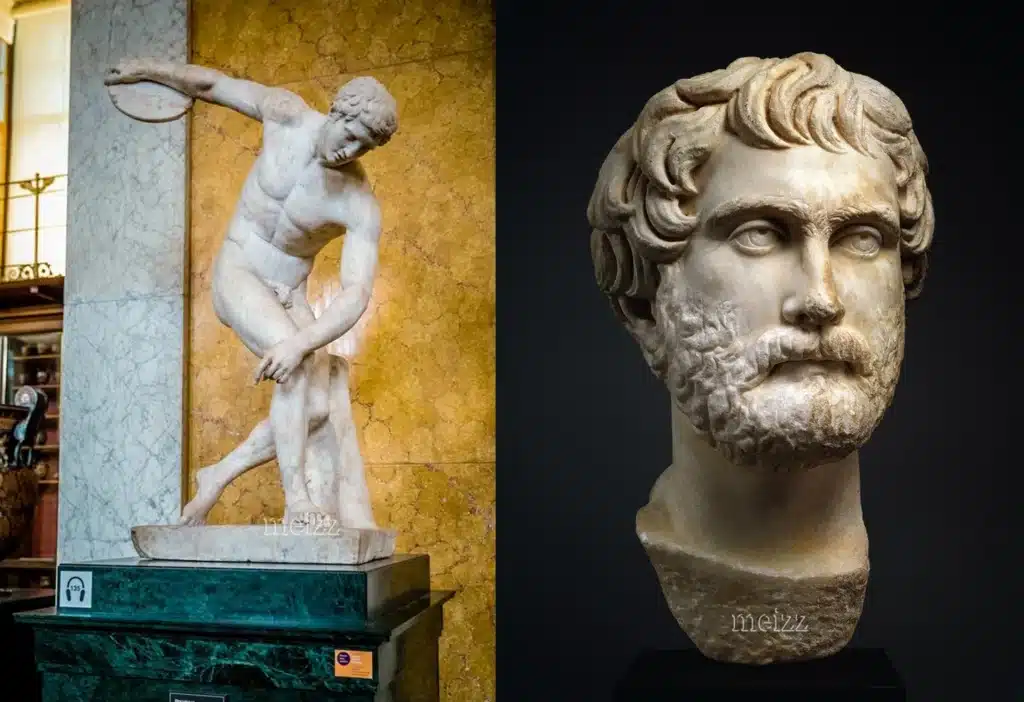
Greek vs. Roman Statues at a Glance
| Feature | Greek Statues | Roman Statues |
|---|
| Main artistic focus | Ideal beauty and harmony | Individuality and realism |
| Facial features | Youthful, balanced, and idealized | Detailed, recognizable, and expressive |
| Human body | Carefully proportioned and often athletic | More varied and sometimes highly realistic |
| Common subjects | Gods, heroes, athletes, and mythological figures | Emperors, politicians, soldiers, citizens, and gods |
| Main purpose | Religious devotion, artistic ideals, and cultural expression | Commemoration, political messaging, family memory, and public display |
| Portrait style | Often idealized | Often individualized |
| Relationship to Greek art | Developed the classical tradition | Strongly influenced by Greek sculpture |
Of course, the distinction is not always absolute. Roman artists sometimes idealized emperors, while Greek artists could also create highly individual portraits. However, these general characteristics make it easier to understand the difference between Greek and Roman statues.
Greek Statues Focused on Ideal Beauty
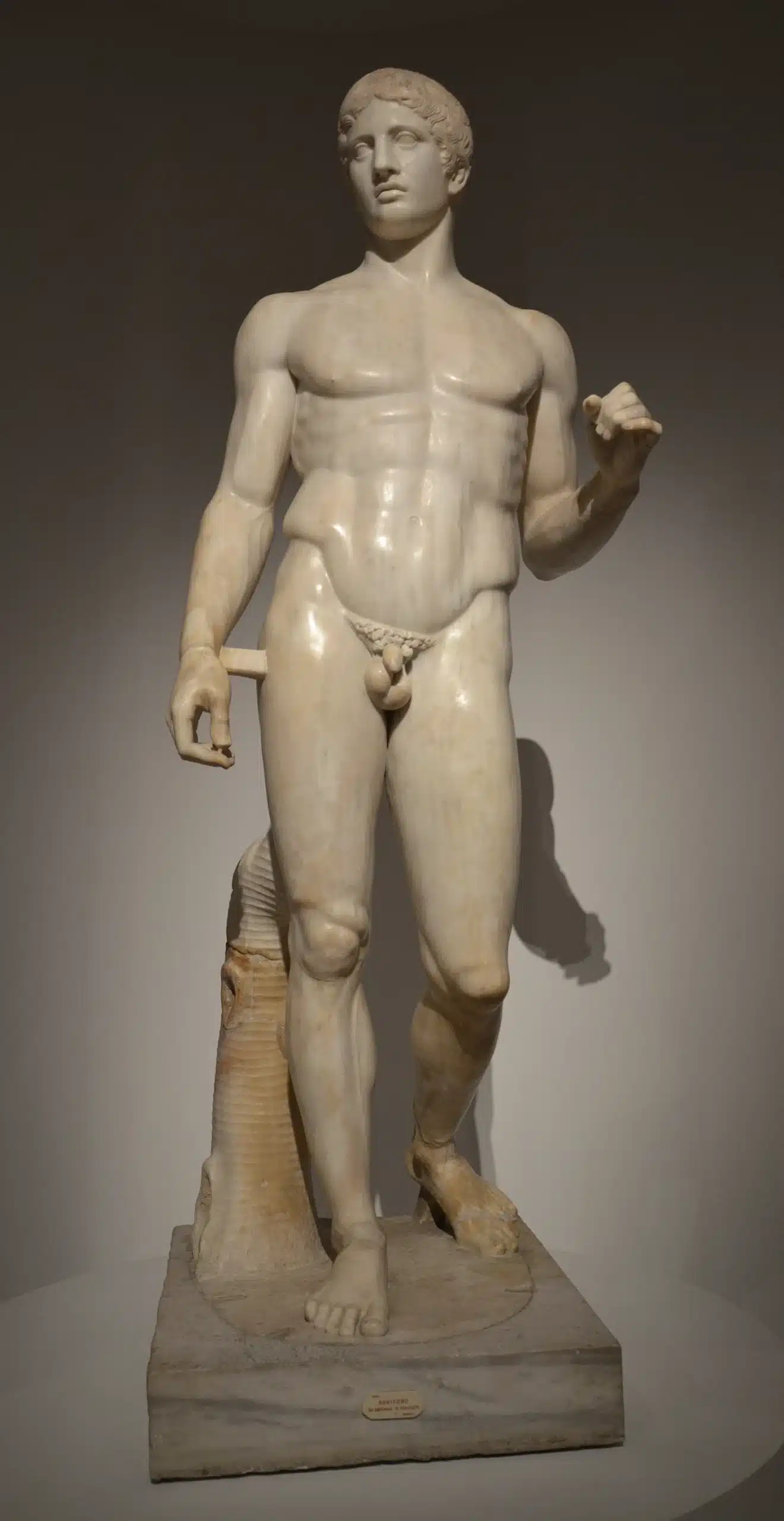
One of the most recognizable characteristics of ancient Greek sculpture is its search for an ideal version of the human figure.
Greek sculptors were deeply interested in proportion, balance, anatomy, and movement. Rather than simply reproducing the appearance of an ordinary person, many artists attempted to create a figure that represented physical and artistic perfection.
This is why Greek gods, athletes, and heroes often appear:
- Young and physically strong
- Carefully proportioned
- Calm and balanced
- Graceful even when shown in motion
- More idealized than an ordinary individual
The human body itself became an important artistic subject. Muscles, posture, weight distribution, and movement were carefully studied to create figures that looked both natural and perfectly composed.
A Greek statue was often intended to represent more than one person. An athlete could symbolize physical excellence. A god could represent power, beauty, wisdom, or divine authority. A hero could embody courage and human achievement.
This fascination with the ideal human form is especially visible in Greek male nude statues and the ideal human form, where the body became a central part of the artistic message.
Roman Statues Often Look More Realistic
If Greek sculpture frequently asked, What is the ideal human being?, Roman sculpture was often more interested in asking, Who is this particular person?
This difference is especially clear in Roman portraiture.
Roman sculptors could include recognizable details such as:
- WrinklesAging skin
- Distinct facial structures
- Individual hairstyles
- Serious expressions
- Signs of experience and age
Instead of presenting every subject as eternally young and physically perfect, Roman portrait sculptures could emphasize identity.
An older politician might look old. A military leader might appear stern and experienced. A wealthy citizen could be represented with facial characteristics that made the portrait recognizable to others.
This tradition is one reason why Roman portrait busts are often considered among the easiest examples of Roman realism.
However, Roman sculpture was not always completely realistic. Statues of emperors, for example, could combine a recognizable portrait with an idealized body inspired by Greek gods or heroic athletes.
In other words, Roman artists often mixed real identity with ideal symbolism.
That combination helped statues communicate not only what a person looked like, but also what the person represented.
Greek Gods and Roman Emperors Served Different Purposes
Another important difference between Greek and Roman sculpture can be seen in the subjects that artists chose to represent.
Greek Sculpture: Gods, Heroes, and the Human Ideal
Greek statues frequently represented figures from mythology and religion, including:
- Zeus
- Apollo
- Athena
- Aphrodite
- Hermes
- Hercules
- Mythological heroes
- Athletes and victorious competitors
These sculptures could be placed in temples, sanctuaries, public spaces, or important cultural locations.
The subject was often connected with mythology, religious belief, beauty, strength, wisdom, or heroic achievement.
Roman Sculpture: Power, Politics, and Memory
Roman sculpture also represented gods and mythological figures, many of whom were connected to Greek traditions. But Roman artists created a much larger tradition of public and private portraiture.
Roman statues commonly depicted:
- Emperors
- Military leaders
- Politicians
- Senators
- Wealthy citizens
- Family members
- Soldiers and warriors
These works could serve as public statements of authority, military success, political legitimacy, or family prestige.
A statue of an emperor was not simply decoration. Its location, clothing, pose, and symbols could all communicate messages about power.
Military sculpture also became an important part of Roman visual culture. If you are interested in this subject, you can explore Roman warrior sculptures and their historical symbolism.

How to Tell Greek and Roman Statues Apart
If you are looking at a classical sculpture and wondering whether it is Greek or Roman in style, there are several details worth examining.
Look at the Face
Greek statues often feature balanced, harmonious, and idealized facial features.
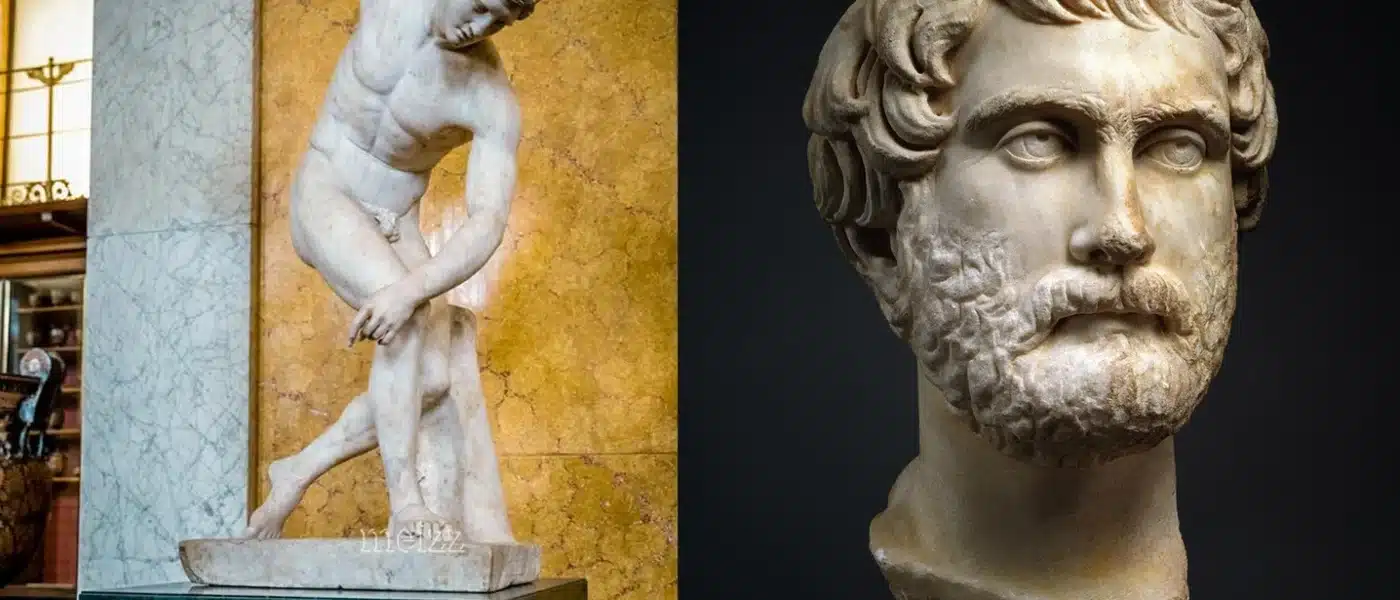
Roman statues, particularly portrait busts, may show more individual characteristics. You may notice wrinkles, a distinctive nose, a serious expression, or signs of age.
Look at the Body
Greek sculpture frequently emphasizes carefully calculated proportions and an idealized athletic form.
Roman sculpture could also use idealized bodies, especially for emperors and gods, but it generally allowed for greater variation in the representation of real people.
Look at the Subject
A statue of Apollo, Athena, Aphrodite, or an ideal athlete is strongly associated with Greek artistic traditions.
A recognizable emperor, senator, military commander, or Roman citizen is more likely to reflect Roman sculpture.
Look at the Artistic Message
Greek sculpture often communicates beauty, harmony, mythology, or the ideal human condition.
Roman sculpture may communicate power, identity, ancestry, military victory, or political authority.
These clues cannot identify every sculpture with complete certainty, but they provide a useful starting point for understanding Greek sculpture vs. Roman sculpture.
The answer is simple: Roman art was strongly influenced by Greek art.
By the time Rome became a major Mediterranean power, Greek artistic traditions had already developed an enormous cultural influence. Roman collectors admired Greek sculptures, and Greek artistic styles became part of Roman visual culture.
Roman artists adopted and adapted many Greek elements, including:
- Classical proportions
- Contrapposto poses
- Mythological subjects
- Idealized anatomy
- Marble and bronze sculpture techniques
Some Roman works were also created as versions or adaptations of earlier Greek masterpieces.
This creates an interesting situation for modern viewers. In some cases, the best-known surviving version of an earlier Greek composition may be preserved through a later Roman marble copy.
As a result, Greek and Roman sculpture should not simply be viewed as two completely separate artistic worlds.
Roman artists learned from Greek traditions, but they also transformed those traditions to suit Roman society.
That is why the two styles can look similar while still expressing different cultural priorities.
Famous Greek and Roman Statues
Studying famous examples is one of the easiest ways to understand the differences between the two traditions.
Discobolus – Greek Movement and Physical Perfection
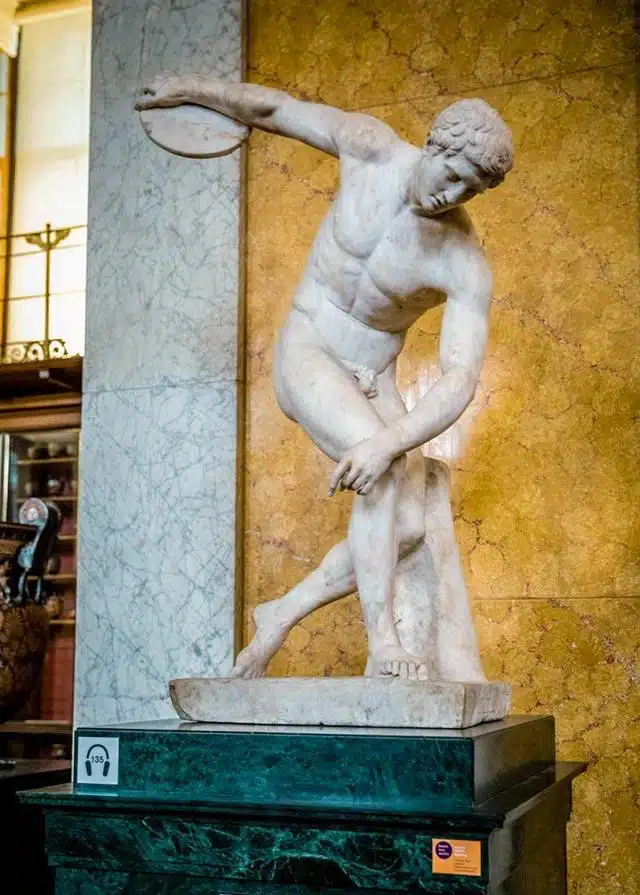
The famous Discobolus, or discus thrower, represents one of the major achievements of classical Greek sculpture.
The figure captures a moment of athletic movement, but the composition remains carefully balanced and controlled.
The body is not simply a portrait of one particular athlete. Instead, it represents an ideal combination of physical ability, proportion, and artistic harmony.
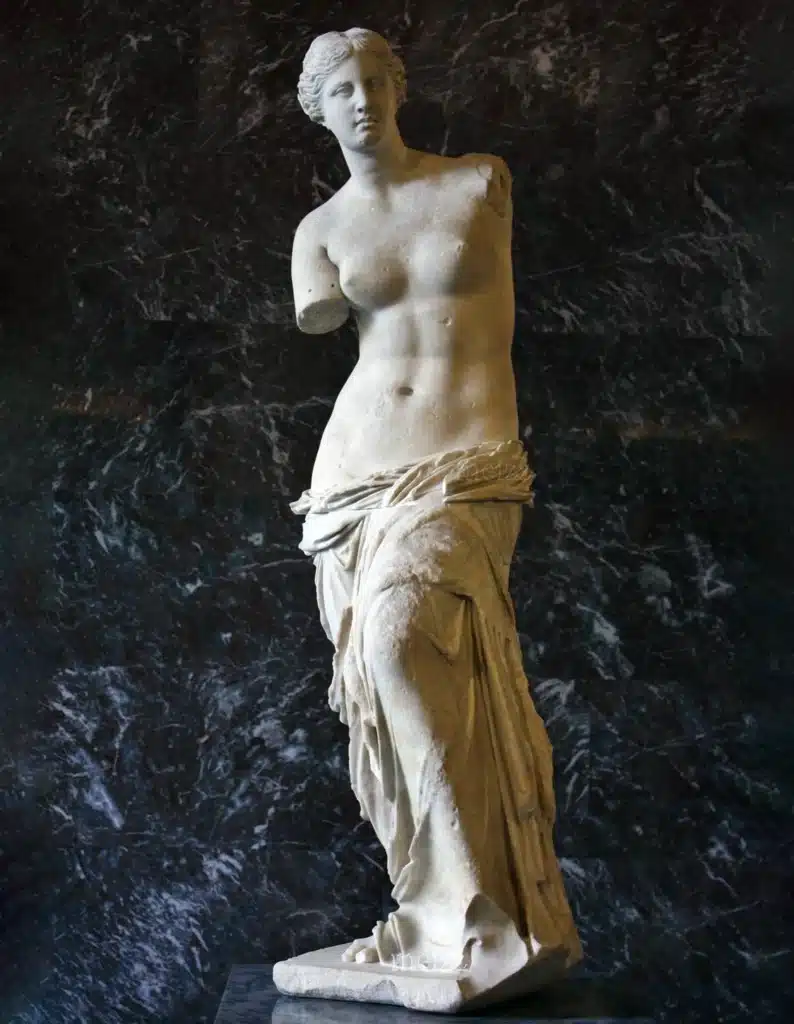
Venus de Milo – Idealized Classical Beauty
The Venus de Milo is one of the most recognizable examples of ancient classical sculpture.
Associated with Aphrodite, the Greek goddess of love and beauty, the statue represents the importance of idealized form in Greek artistic traditions.
The figure is graceful, composed, and timeless rather than focused on the appearance of a specific historical individual.
Hermes of Praxiteles – A More Human Greek God
The Hermes of Praxiteles demonstrates another important aspect of Greek sculpture: even divine figures could appear graceful, natural, and emotionally approachable.
The softer treatment of the body and relaxed composition helped move Greek sculpture toward a more natural and human representation of the gods.
If you would like to explore more important works from this tradition, you can also link here to some of the most famous Greek statues in history.
Augustus of Prima Porta – Roman Power and Symbolism
The Augustus of Prima Porta is an excellent example of how Roman sculpture could combine realism and idealization.
The face represents the emperor Augustus, but the body and pose communicate something larger than an individual portrait.
The statue presents the emperor as powerful, confident, and almost timeless. His clothing and symbolic details reinforce ideas of military authority and political legitimacy.
This is an important feature of Roman art: a sculpture could represent a real person while also functioning as a carefully designed public message.
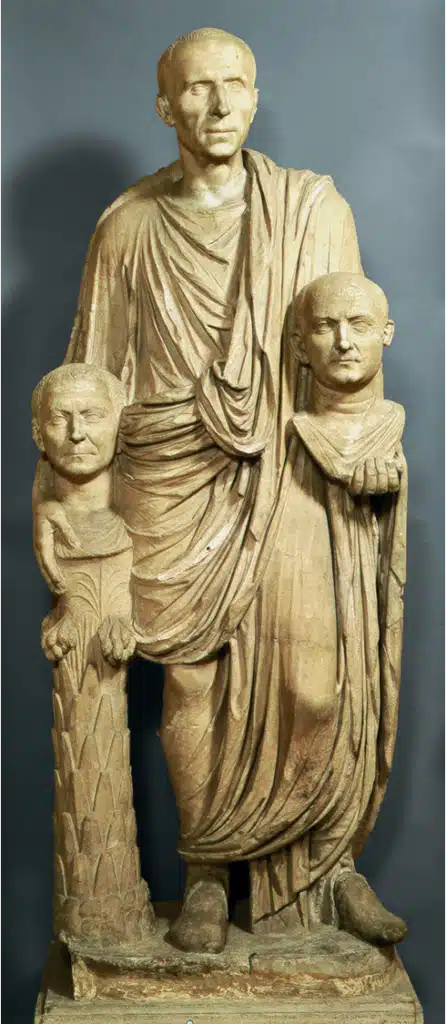
Roman Portrait Busts – Identity Matters
Roman portrait busts provide another clear contrast with the idealized traditions of Greek sculpture.
Many Roman portraits focused on the face, allowing artists to emphasize age, personality, experience, and family identity.
For Roman society, remembering and displaying ancestors could carry significant cultural importance.
These portraits were not only works of art. They could also be connected to family history, social status, and public reputation.
Greek vs. Roman Statues in Modern Sculpture
Although ancient Greece and Rome disappeared thousands of years ago, classical sculpture continues to influence modern art, architecture, and decorative design.
Today, Greek and Roman style sculptures can be found in:
Private gardens
Luxury villas
Hotels and resorts
Museums
Universities
Public buildings
Landscape projects
Interior spaces
Architectural entrances
A classical statue can introduce a sense of history and permanence to a modern environment.
Greek-inspired sculptures are often chosen for spaces that emphasize beauty, mythology, balance, and artistic elegance. Roman-inspired sculptures may be selected for projects that require a stronger sense of history, authority, military symbolism, or imperial character.
Modern reproductions also allow collectors, designers, architects, and property owners to bring classical forms into contemporary spaces.
For those looking for decorative reproductions and custom classical designs, you can explore our collection of classical Greek and Roman statues inspired by ancient mythology, historical figures, and traditional European sculpture.
How Greek and Roman Sculpture Influenced the Renaissance
The influence of Greek and Roman sculpture did not disappear with the ancient world. During the Renaissance, European artists looked back to classical art for inspiration, studying ancient statues, human anatomy, proportion, and the relationship between movement and the human body.
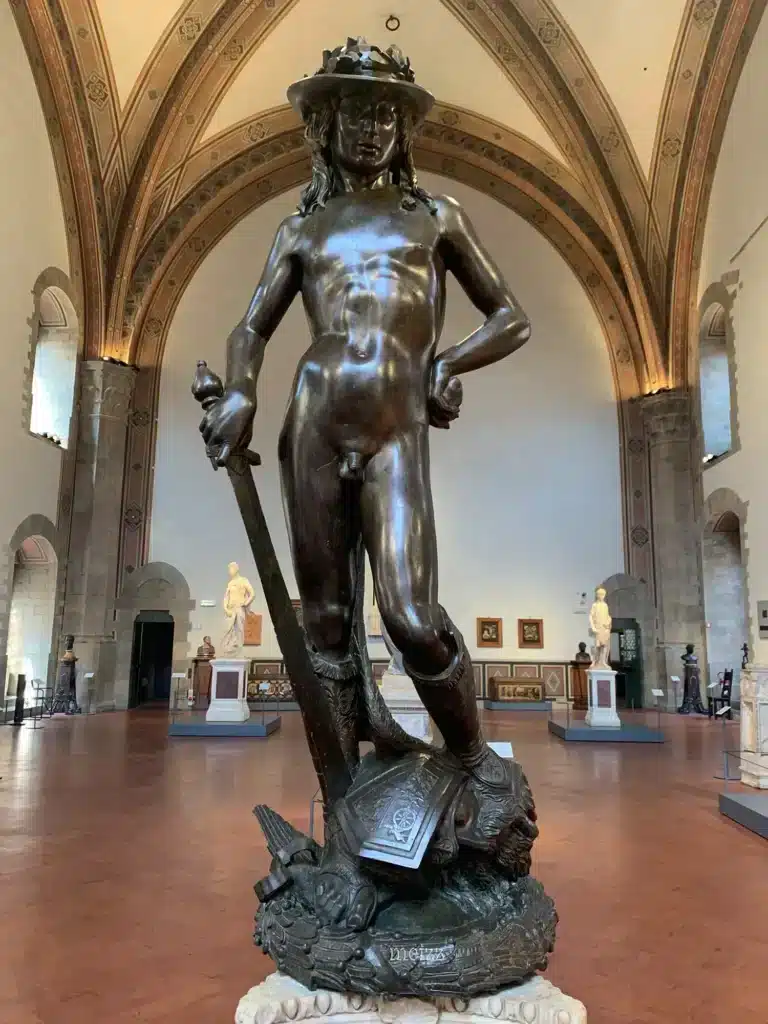
One of the most important artists to revive the classical tradition was Donatello. His famous bronze David reflects the Renaissance interest in the human figure while also showing how artists moved beyond simply copying ancient Greek and Roman models.
Unlike many ancient Greek statues that focused on idealized athletic beauty or Roman statues that emphasized identity and political authority, Donatello’s David presents a biblical hero through a new artistic language. The sculpture combines classical influences with Renaissance ideas about individuality, naturalism, and human emotion.
To learn more about this important Renaissance masterpiece, read our detailed guide to Donatello’s David and the history behind the famous bronze sculpture.
Greek vs. Roman Statues: Which Style Do You Prefer?
The choice between Greek and Roman sculpture often depends on the feeling you want a statue to create.
You may prefer Greek-style statues if you are drawn to:
- Mythology
- Ideal beauty
- Graceful human figures
- Gods and goddesses
- Classical architecture
- Harmonious compositions
You may prefer Roman-style statues if you are interested in:
- Historical figures
- Emperors
- Warriors
- Military symbolism
- Portraiture
- Ancient Roman history
Both styles continue to influence sculpture today because they represent two different but closely connected ideas about humanity.
Greek artists explored what the ideal human form could be.
Roman artists increasingly explored who a person was and what that person represented.
Together, they created one of the most influential artistic traditions in the history of sculpture.
For more designs inspired by this artistic heritage, discover Greek and Roman statues inspired by classical sculpture, including mythological figures, historical reproductions, warriors, gods, and decorative classical sculptures.
FAQ About Greek and Roman Statues
What is the main difference between Greek and Roman statues?
The main difference is that Greek sculpture often emphasized ideal beauty, harmony, and the perfect human form, while Roman sculpture placed greater emphasis on individual identity, realistic portraiture, political power, and historical commemoration.
Are Roman statues copies of Greek statues?
Not all Roman statues were copies of Greek works. Roman artists were strongly influenced by Greek sculpture, and some Roman works reproduced or adapted earlier Greek compositions. However, Rome also developed its own important traditions, especially in portrait busts, imperial monuments, and commemorative sculpture.
Why are Roman statues more realistic?
Roman portrait traditions often valued recognizable facial features, age, experience, and individual identity. This encouraged artists to represent wrinkles, distinctive expressions, and other personal characteristics.
How can you tell if a statue is Greek or Roman?
Look at the face, body, subject, and purpose. Greek statues are often more idealized and may represent gods, athletes, or mythological heroes. Roman statues are more likely to depict recognizable emperors, politicians, soldiers, or citizens and may show more individualized facial features.
Which came first, Greek or Roman sculpture?
Greek sculpture developed earlier and had a major influence on Roman art. Roman artists later adopted, copied, adapted, and transformed many Greek artistic traditions.
Conclusion
The differences between Greek and Roman statues can be summarized in one simple contrast: Greek sculpture often pursued the ideal, while Roman sculpture increasingly explored the individual.
Greek artists created gods, athletes, and heroes with extraordinary balance and idealized beauty. Roman sculptors inherited these classical traditions but used sculpture in new ways—to preserve identity, celebrate military victories, honor emperors, and communicate political power.
Understanding these differences makes it easier to recognize why two classical statues may look similar while telling very different stories.
Whether you are interested in mythological Greek gods, idealized classical figures, Roman emperors, or warrior sculptures, the artistic legacy of Greece and Rome continues to shape sculpture and architecture around the world.