Saint Charbel is widely honored by Christians for his life of prayer, humility, and devotion to God. Born in Lebanon in the nineteenth century, he became a Maronite monk and priest before choosing a secluded life of prayer as a hermit. His spiritual legacy continues to inspire believers in Lebanon and around the world.
Today, images and statues of Saint Charbel can be found in churches, chapels, prayer rooms, and devotional spaces. Understanding his life helps explain why his image holds such significance and why a Saint Charbel statue can be a meaningful part of a religious setting.

Who Was Saint Charbel?
Saint Charbel Makhlouf was born as Youssef Antoun Makhlouf on May 8, 1828, in Bqaa Kafra, a village in northern Lebanon. Raised in a Christian family, he developed a strong interest in prayer and religious life from an early age.
In 1851, he entered the Lebanese Maronite Order and adopted the name Charbel. He was ordained a priest in 1859 and later chose to live as a hermit at the Hermitage of Saints Peter and Paul near the Monastery of Saint Maron in Annaya, Lebanon.
Saint Charbel devoted his life to prayer, discipline, humility, and service to God. He died on December 24, 1898, and was canonized by Pope Paul VI on October 9, 1977.
His life remains an important example of contemplative spirituality within the Maronite Catholic tradition.

Why Is Saint Charbel Important to Catholics?
Saint Charbel is especially respected for his commitment to a life centered on faith rather than worldly possessions or recognition. His years as a monk and hermit reflected a spiritual discipline built around silence, prayer, obedience, and simplicity.
Many believers also turn to Saint Charbel in prayer, asking for his intercession during times of illness, difficulty, or personal uncertainty. Stories of reported healings and other favors associated with his intercession have contributed to his devotion among Catholics in many countries.
For those who honor him, Saint Charbel represents more than a historical religious figure. His life encourages reflection, patience, humility, and a deeper relationship with God.
What Does a Saint Charbel Statue Represent?
A Saint Charbel statue is a visual expression of devotion to the saint and a reminder of the spiritual values associated with his life. Its meaning often comes from the figure’s posture, clothing, facial expression, and the setting in which it is displayed.
Prayer and contemplation
A statue showing Saint Charbel in a quiet or prayerful pose can encourage reflection and create a dedicated visual focus for personal devotion.
Humility and monastic life
His monastic clothing recalls his commitment to a life of simplicity, discipline, and spiritual dedication. These details help distinguish Saint Charbel from other saints in Christian sculpture.
Faith and hope
For many believers, an image of Saint Charbel serves as a reminder to remain faithful during difficult periods and to seek comfort through prayer.
A connection to Lebanese Maronite heritage
Saint Charbel’s life is closely connected with the Maronite Catholic tradition and the religious history of Lebanon. His image can therefore hold both spiritual and cultural significance for churches and communities.
The precise meaning of a statue depends on the artistic representation and the devotional traditions of the people who use it.

How Is Saint Charbel Usually Depicted in Religious Art?
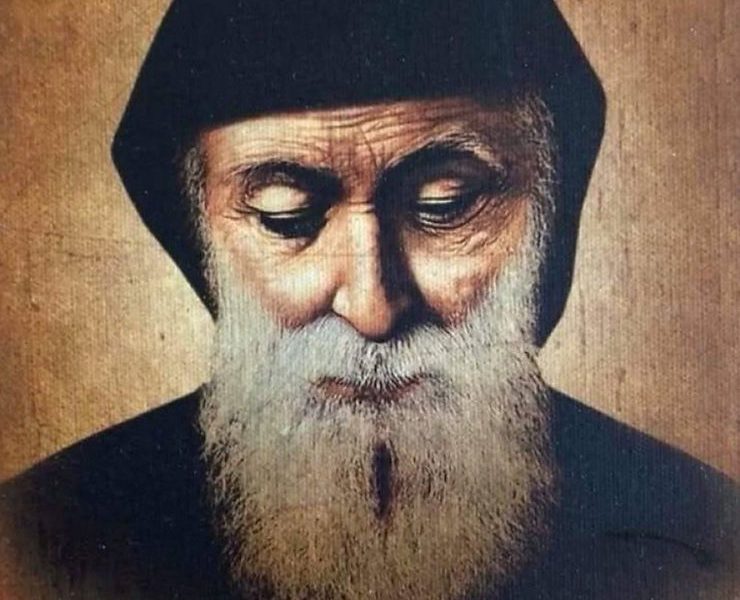
Saint Charbel is commonly portrayed wearing a monk’s habit, with a hood or head covering and a beard. These features help identify him and communicate his monastic background.
Different sculptural designs may emphasize different aspects of his life. A standing figure can create a clear focal point in a church or garden, while a seated figure holding a book may suggest study, prayer, or contemplation. A larger monumental sculpture can serve as a landmark within a religious complex.
The choice of pose and composition should reflect the intended setting. For example, a sculpture for a small prayer room may need a more compact design, while a church entrance or outdoor devotional area may call for a larger figure that can be seen from a distance.

Where Can a Saint Charbel Statue Be Displayed?
A Saint Charbel statue may be placed in several types of religious settings, depending on the available space and the needs of the community.
Churches and chapels: A statue can form part of a dedicated devotional area or complement other religious artworks.
Prayer rooms: A smaller sculpture can provide a visual focus for private prayer and reflection.
Religious gardens: Outdoor installations can create a quiet place for contemplation, provided the sculpture and its finish are suitable for the local climate.
Monasteries and pilgrimage sites: A statue may help visitors recognize a dedicated area of devotion and reflect on Saint Charbel’s monastic legacy.
Before choosing a sculpture, consider its overall height and width, viewing distance, installation surface, and access for delivery. Outdoor projects also require attention to weather exposure, anchoring, drainage, and maintenance.
Choosing a Saint Charbel Statue for a Religious Project
When selecting a Saint Charbel statue, it is useful to begin with the purpose of the installation rather than the material alone.
Consider whether the sculpture will be used indoors or outdoors, whether a standing or seated pose best suits the setting, and how much space is available. The desired level of detail, surface finish, weight, transportation requirements, and installation method should also be considered.
Fiberglass may be suitable for projects where a comparatively lightweight sculpture and flexible finishing options are important. Bronze may be considered for a different visual character and for projects that call for a traditional metal sculpture. The appropriate choice depends on the design, budget, structural requirements, and intended environment.
For a custom religious sculpture, reference images, approximate dimensions, material preferences, and installation details can help clarify the requirements before production.

Explore Saint Charbel Sculpture Designs
Saint Charbel’s spiritual legacy continues to inspire religious art in different sizes and materials. Whether the intended setting is a church, chapel, prayer room, or religious garden, the design should respect the saint’s identity while meeting the practical requirements of the installation.
At Meizz, we produce religious sculptures and can discuss custom dimensions, materials, finishes, and project requirements.
Explore our Saint Charbel statue for sale to view the seated fiberglass design, or see our large bronze Saint Charbel sculpture for a different sculptural approach.
If you are planning a Saint Charbel sculpture for a religious space, contact us with your preferred design, approximate size, and installation location to discuss suitable options.