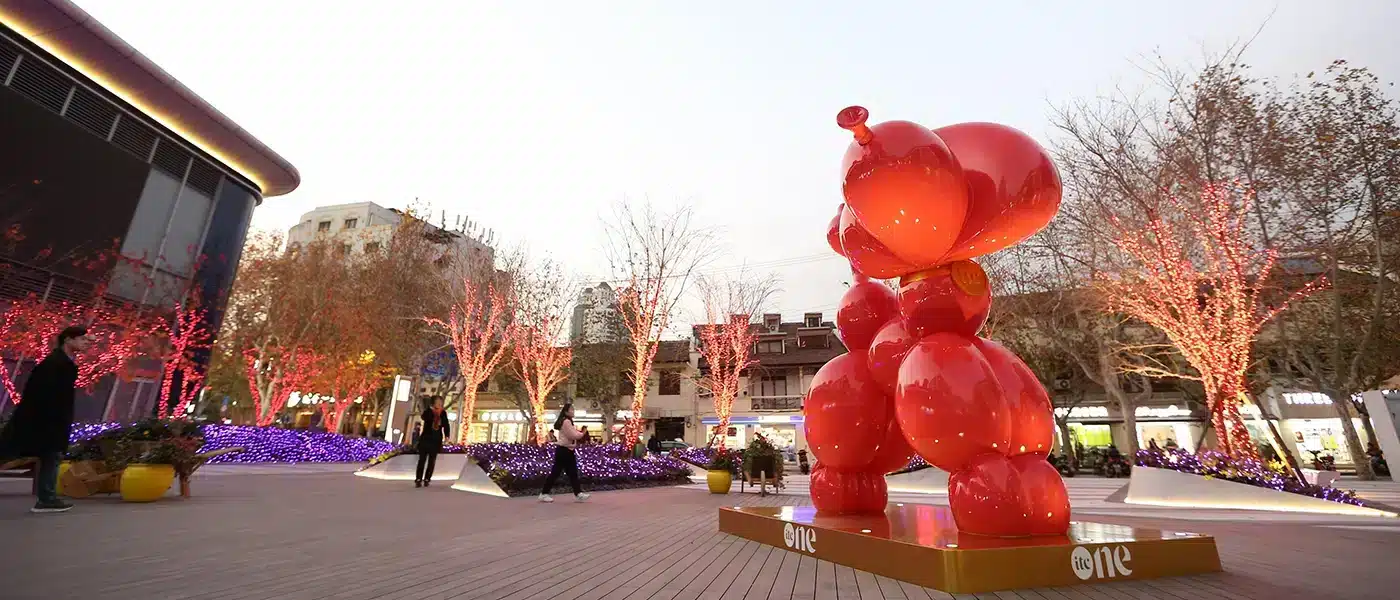
Why Animal Welcome Statues Work in High‑Traffic Venues
Well‑chosen entrance sculptures do three jobs at once: they telegraph identity, orient guests, and create a moment worth remembering (and sharing). In wayfinding theory, distinct visual anchors help people form mental maps of a place, reducing stress and hesitation at decision points. Industry research on placemaking echoes this: creative installations are associated with higher dwell and engagement, even if exact retail KPIs vary by site and concept.
The takeaway for practitioners: treat animal welcome statues as both brand storytelling devices and wayfinding landmarks. Place them where first impressions happen—at the main threshold, the first lobby node, or a garden gate—so they anchor sightlines without disrupting circulation.
Cultural Symbolism by Animal (and When to Use Each)
Symbolism varies by region and audience. Use the following as practical guidance, not rigid rules. When projects touch sensitive cultural narratives, consult local advisors.
Lions and Chinese Guardian Lions

Western lions often convey strength, dignity, and guardianship. In East Asian contexts, “guardian lions” (often called Fu dogs in English) embody protection, prosperity, and balance. Traditionally they come in pairs, flanking gateways, with subtle differences between the left and right figure indicating complementary guardianship. For a concise overview of history and entrance conventions, see the encyclopedic treatment of Chinese guardian lions. Consider these for formal hotel porticos, grand mall entrances, and theme‑park gateways where a stately, protective tone fits.
Design notes:
Use pairs for primary thresholds to frame the passage and reinforce balance.
Scale to architectural volume; life‑size or larger at tall entries prevents visual dilution.
In multicultural venues, consider abstracted or modern interpretations to avoid cliché.
Japanese Komainu (Lion‑Dogs)

Komainu guard Shinto and Buddhist entrances, typically as a pair expressing the a–un duality (one mouth open, one closed). Their meaning overlaps with protection and threshold guardianship.
Use when a venue leans into Japanese garden or shrine‑inspired design language, or where a contemplative, spiritual gateway is desired—boutique hotel courtyards, themed resorts, or cultural districts.
Elephants, Bears, Horses, Cranes, Owls, and Peacocks

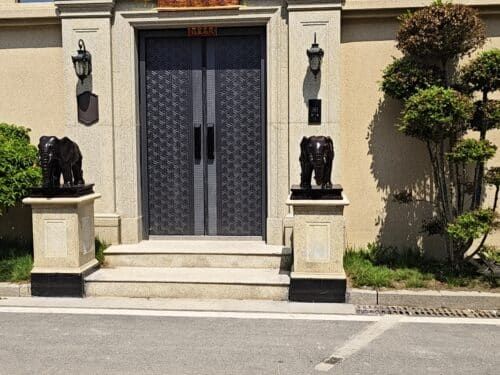
Elephants: Wisdom, strength, and good fortune across Hindu and Buddhist traditions; their calm presence can soften grand entries in tropical or resort contexts. Position to suggest welcome, not spectacle.
Bears: Strength, protection, and grounded power across Native American, Nordic, and modern symbolic traditions. Bears convey resilience and guardianship; sculptural forms work well at estate gates, luxury villas, or contemporary plazas to suggest presence and confidence without aggression. Use simplified or geometric styling to keep the tone refined rather than primitive.
Horses: Freedom, nobility, and movement in Greco-Roman, Chinese, and Middle Eastern traditions. Horses evoke prestige and momentum, making them ideal for grand entrances, equestrian estates, luxury resorts, and corporate headquarters. Position to imply forward vision and elegance rather than dominance—dynamic poses suit modern architecture, while classical stances reinforce heritage and tradition.
Cranes: Longevity and grace in Chinese and Japanese symbolism. Slim profiles suit garden approaches, spa entries, and tranquil hotel lobbies where serenity is the brief.
Owls: Wisdom and insight (Athena in Greek tradition; protective symbolism in parts of Japan). In some Western contexts owls imply foreboding—apply with cultural awareness and gentle styling.
Peacocks: Splendor and renewal in Greco‑Roman and Christian iconography, but can tip into ostentation; use to celebrate rather than to boast, especially in retail atriums or event foyers.
Pro tip: When your audience is diverse, choose forms whose posture and gesture convey welcome even before the cultural backstory lands. A poised crane or a seated, gently smiling lion reads hospitable across many contexts.
Placement and Wayfinding: Make It Obvious, Safe, and Memorable
Great placements do three things: they capture the approach sightline, they don’t choke the flow of people, and they preserve visibility of exit signage and information graphics.
Sightlines and framing: Primary animal welcome statues work best either centered on the approach axis (for drama) or as a symmetrical pair that frames the door or gate. If you expect crowds, a slightly elevated plinth keeps forms visible above heads and luggage.
Rhythm and decision points: Secondary pieces can “punctuate” turns—lobby to corridor, concourse to atrium—cueing direction without blocking it. If you ever wonder “is this too much?,” it probably is; let one dominant object carry the story.
Lighting: Aim for soft, even lighting from the visitor’s approach direction. Avoid glare that washes out exit signs or produces harsh shadows across steps and thresholds.
Accessibility and circulation reminders in practice:
Maintain generous bypass room. As a baseline, keep accessible routes clear at or above code minimums (see the ADA section below) and allow extra space for group movement and strollers.
Avoid “visual noise” around the focal object. A plinth, a ring of planting, or a subtle floor pattern helps carve out safe, intuitive circulation around the piece.
Entrance Statues Materials: Durability, Maintenance, and Cost
Selecting the right material is a lifecycle decision. In commercial venues with heavy touch and weather exposure, durability and upkeep can outrank upfront price.
Category | Bronze | Stainless Steel | Stone (e.g., marble/cast stone) | Fiberglass |
|---|---|---|---|---|
Durability | Extremely durable; decades outdoors; develops protective patina | Excellent corrosion resistance; robust in most climates | Long‑lasting; vulnerable to freeze–thaw and acids | Light weight; economical; prone to UV fading/cracking |
Maintenance | Gentle wash; 1–2×/year microcrystalline wax; conservation for patina | Low maintenance; occasional non‑abrasive polishing | Cleaning and periodic sealing; protect from salts | Repainting/refinishing cycles; UV‑stable topcoats essential |
Vandalism resistance | High; mass and toughness resist knocks/climbing | High; smooth, tough surfaces resist impact/graffiti | Moderate; edges chip; impact damage possible | Low–moderate; easier to dent/crack; repaint after defacement |
Lifecycle cost | High upfront; low long‑term | Moderate upfront; low long‑term | Moderate; environment‑dependent | Lowest upfront; higher long‑term due to replacements |
Material fit by venue:
Theme parks: Stainless steel or foundry bronze for durability and cleanability in high‑touch, high‑impact zones.
Hotels: Bronze, stone, or stainless where tactile quality matters; fiberglass works indoors for temporary/seasonal vignettes.
Malls: Stainless and bronze in active atriums; stone in calmer contemplative zones; avoid unprotected fiberglass in exterior entries.
Engineering, Anchoring, and Anti‑Tip Basics
Even medium‑scale sculptures can become hazards if they tip or slide. Your installation concept should be in the brief from day one.
Foundations and plinths: Outdoors in freezing climates, use reinforced concrete pads extending below frost line; integrate drainage and a tamper‑resistant plinth or base. Public art installation primers outline common pad and plinth strategies;
Anchors and hardware: Specify stainless or galvanized anchors sized for dead load and for lateral/overturning forces. Align anchor points precisely; torque evenly; consider thread‑locking compounds and concealed fixings in public‑touch zones.
Wind and seismic: Large, broad, or “sail‑like” forms collect wind; in seismic regions, anchorage must reflect local code. Engage a structural engineer for ASCE 7 wind and seismic checks on significant pieces.
Anti‑climb and public safety: Where climbing is likely, increase base height, simplify footholds, and ensure safe fall zones around the work.
Procurement Cheatsheet (What to Specify)
Cultural rationale and audience: Which animal, why it fits the brand narrative, and any cross‑cultural considerations.
Site drawings and photos: Measured plans/elevations, accessible routes marked, sightlines to exits and signage.
Materials and finish schedule: Alloy/grade, patina or coating, expected maintenance cadence and responsibilities.
Anchoring concept and pad: Plinth/pad dimensions, anchor type and layout, anti‑tip strategy, drainage.
Lighting and power: Fixture positions/aims, glare checks vs. exit signs, vandal‑resistant housings.
Operations and maintenance: Cleaning agents, inspection intervals, anti‑graffiti approach, warranty/conservator support.
Inspiration Snapshots and Case Notes
Theme park thresholds: Pairs of durable animal welcome statues at main gates immediately telegraph the world guests are entering. Fiberglass can work for large themed sets away from heavy touch, but bronze or stainless near the threshold resists knocks and climbing.
Resort lobbies: One commanding bronze figure in the arrival court, with a low plinth that protects the base while keeping it approachable for photos. Soft, even uplight avoids glare into the reception desk sightline.
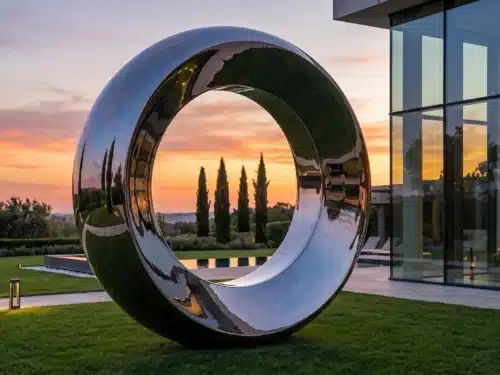
Retail atriums: A stainless steel animal sculpture with a clean, reflective finish reads contemporary and is easy to maintain. Position off the central flow with a floor pattern that subtly routes traffic around the piece.
FAQs for Design and Procurement Teams
How many animal welcome statues should I use at a main entrance?
For formal entries, a pair that frames the threshold is a time‑tested solution; for more casual or contemporary venues, a single commanding piece can be stronger. Let the architecture lead: tall porticos and broad doors can carry pairs; smaller doors often look crowded with two large forms.
Do statues actually increase footfall or sales in retail?
Peer‑reviewed, retail‑specific studies isolating “entrance statues” are limited. However, placemaking and wayfinding literature shows art and distinct landmarks can increase dwell and ease navigation, which supports positive guest experiences. Treat statues as part of a broader environment strategy rather than a stand‑alone ROI lever.
What’s the most durable material for high‑touch public areas?
Foundry bronze and stainless steel are the most resilient to repeated contact and weather. Stone is durable but sensitive to salts and freeze–thaw, and fiberglass is best for interiors or temporary installs unless heavily protected.
How do I prevent tipping or tampering?
Design a proper pad or plinth and use through‑bolted or embedded anchors sized by a structural engineer for wind/seismic where applicable. Conceal fixings where possible, and consider passive deterrents like base height and limited footholds.
Can animal symbolism backfire?
It can if context is off. Avoid using culturally specific guardians as mere “decor” in contexts where they could be read as caricature; prefer respectful, informed placement and, when in doubt, consult cultural advisors. Abstract forms inspired by animals are often a safe, elegant middle ground.
What maintenance plan should I budget for?
At minimum, specify cleaning methods, inspection intervals, and who holds responsibility. As a rule of thumb: bronze gets an annual wash and 1–2 waxings; stainless is low touch but benefits from scheduled polishing; stone may need periodic sealing; fiberglass needs UV‑stable coatings and refinishing over time.
Closing
Animal welcome statues can be powerful beacons for hotels, theme parks, and malls when their symbolism, placement, and materials align with the space and its guests. Start with the story you want to tell, size and site the piece so people can move safely and see their exits clearly, and pick materials you can maintain for the long haul. Engage early with the designers at Meizz Sculpture Factory to confirm anchoring solutions and maintenance guidelines, and include these details clearly in your project specifications. Ready to turn your entrance into an unmistakable arrival moment? Let’s make it both welcoming and compliant.