Classical Greek art has influenced sculpture and architecture for thousands of years. Among its most enduring expressions are Greek-style bronze female sculptures, often presented in harmonious pairs. These paired female figures embody balance, rhythm, and grace—qualities that continue to inspire modern gardens, architectural spaces, and public art installations.
In this article, we explore a collection of classical Greek bronze female sculptures designed as pairs, including figures holding lamps, carrying vases, playing the lyre, and dancing. Each pair reflects a different aspect of ancient Greek aesthetics while remaining highly relevant for contemporary outdoor and interior decoration.
The Tradition of Paired Female Figures in Greek Sculpture
In ancient Greek and Greco-Roman art, female figures frequently appeared in pairs or symmetrical arrangements. This was not accidental. Paired sculptures symbolized:
- Balance and harmony
- Ritual and ceremony
- Movement and musical rhythm
- The connection between art, nature, and daily life
Today, paired bronze female statues are especially valued in landscape design and architecture because they naturally frame entrances, pathways, fountains, and courtyards.
Bronze as the Ideal Material for Classical Greek Sculptures
Bronze was one of the most important sculptural materials in ancient Greece. Modern bronze casting techniques allow artists to recreate this classical beauty while ensuring durability and longevity.
Advantages of bronze for Greek-style female sculptures include:
- Excellent resistance to outdoor weather conditions
- Elegant surface patina that improves with age
- Strong structural integrity for life-size and large-scale works
- Authentic historical appearance
These qualities make bronze Greek female sculptures ideal for gardens, villas, museums, and public spaces.
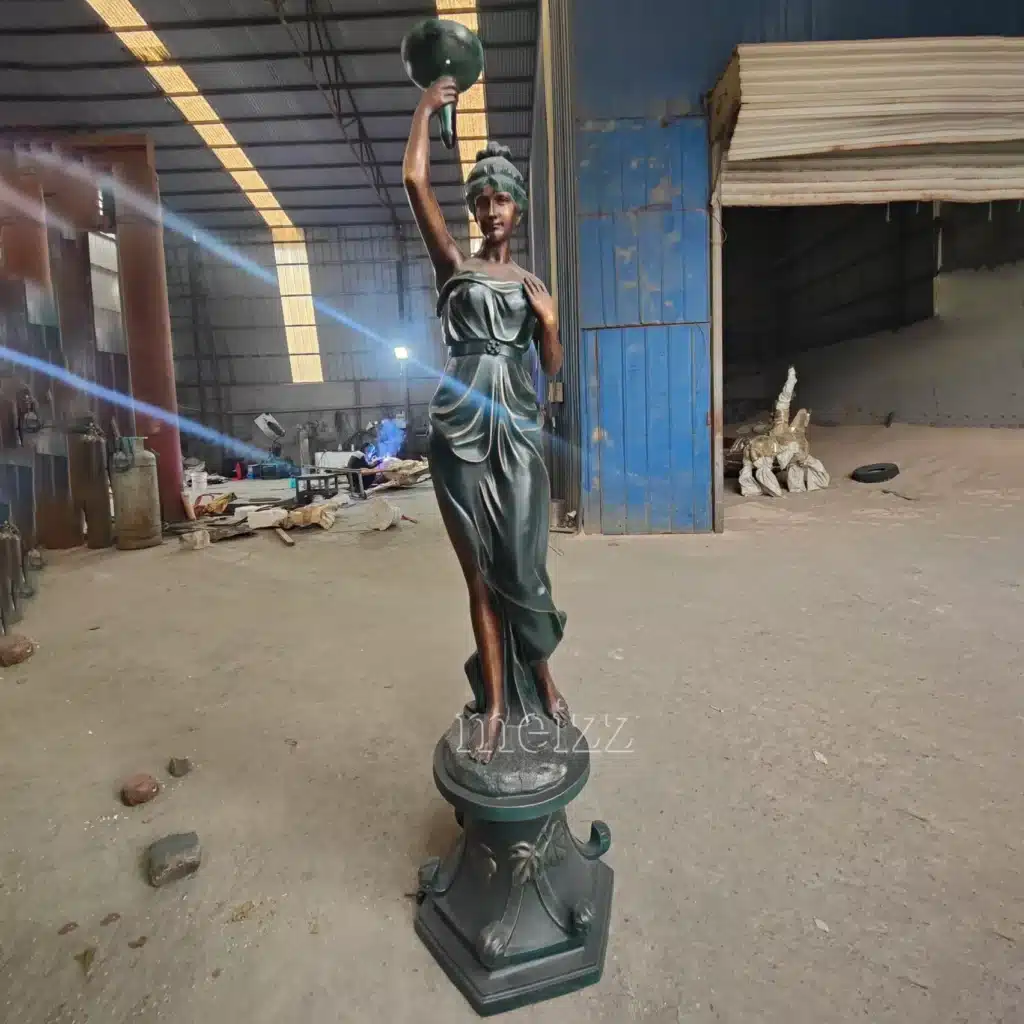
Paired Female Sculptures Holding Lamps: Light and Guidance
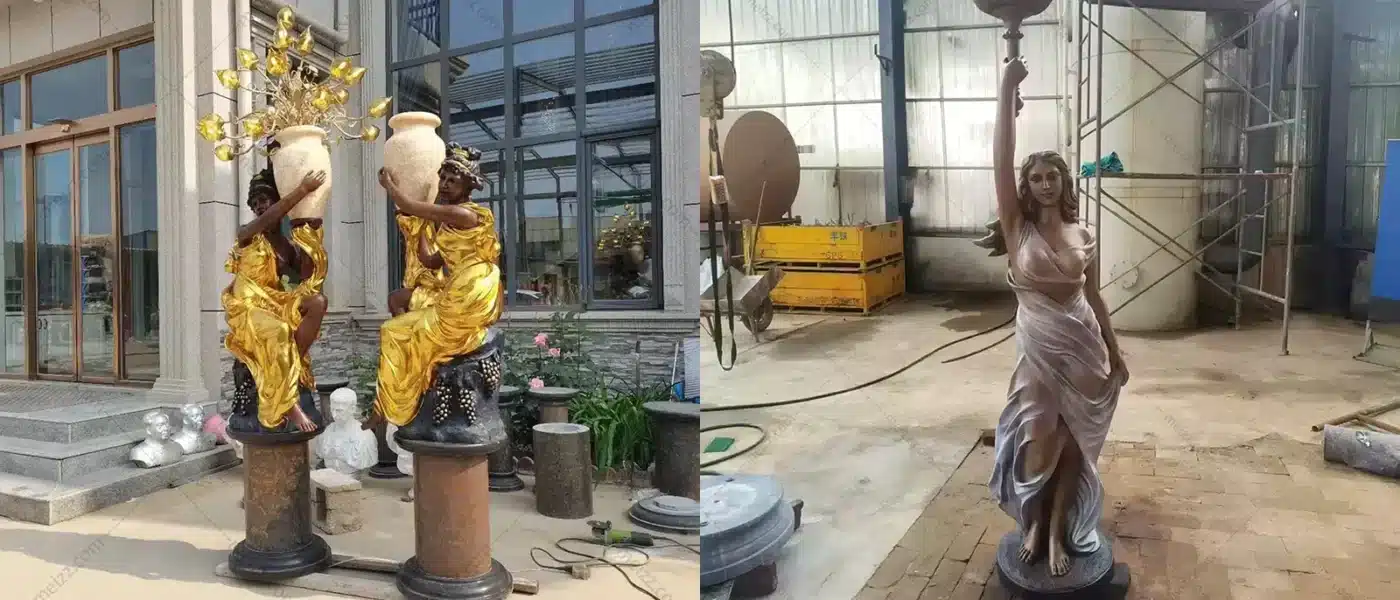
One of the most iconic designs in classical sculpture is the female figure holding a lamp. When presented as a pair, these sculptures traditionally symbolize guidance, wisdom, and enlightenment.
In modern applications, paired lamp-holding female statues are often used:
- At entrances of estates or courtyards
- Along garden pathways
- Near architectural facades or staircases
They can be adapted to function as decorative lighting sculptures, blending art and practicality in a refined classical form.
Paired Female Sculptures Holding Vases: Abundance and Elegance
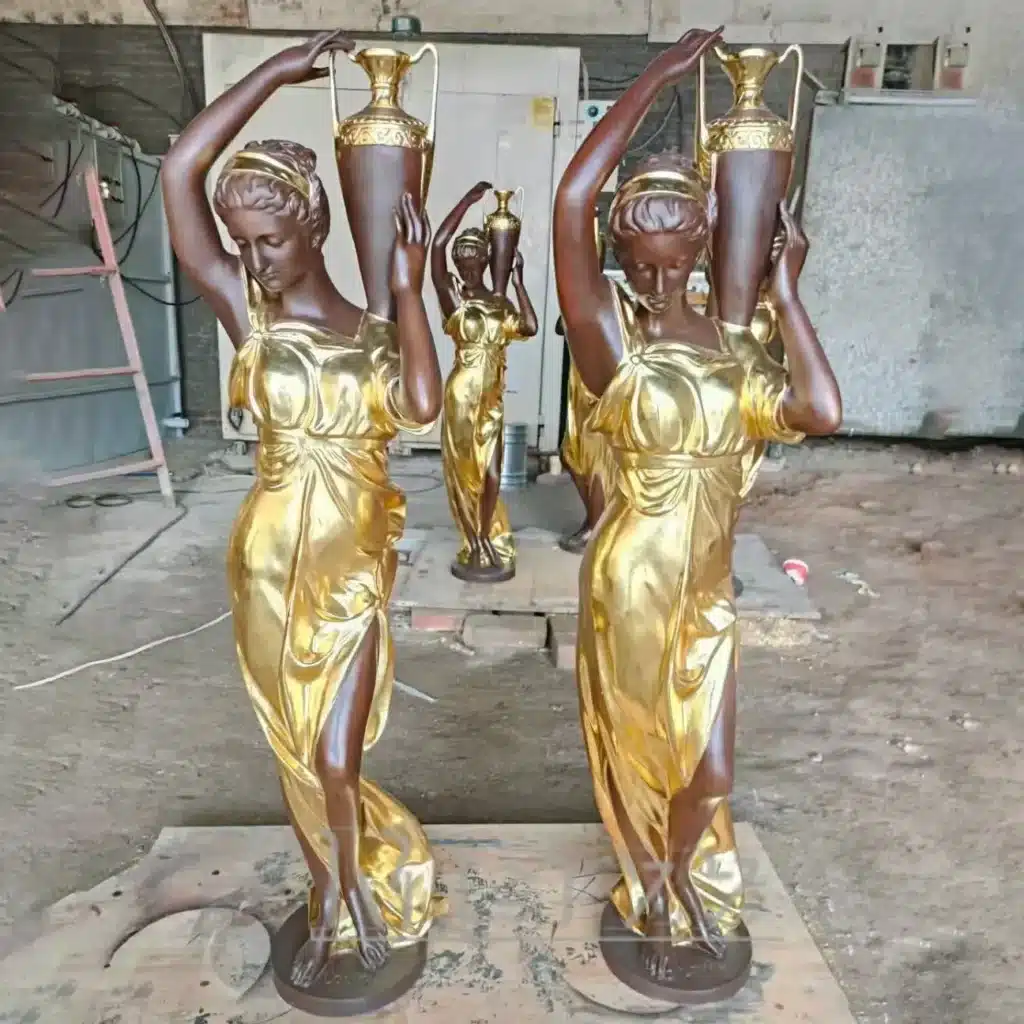
Female statues carrying vases or urns were commonly associated with offerings, water, and abundance in ancient Greek culture. As paired sculptures, they create a strong visual rhythm and sense of ceremony.
These Greek-style bronze female vase sculptures are especially suitable for:
- Fountain surroundings
- Garden focal points
- Courtyard and terrace decoration
The flowing drapery and upright posture highlight the elegance and calm dignity characteristic of classical Greek art.
Female Musicians: Lyre-Playing Sculptures in Classical Style
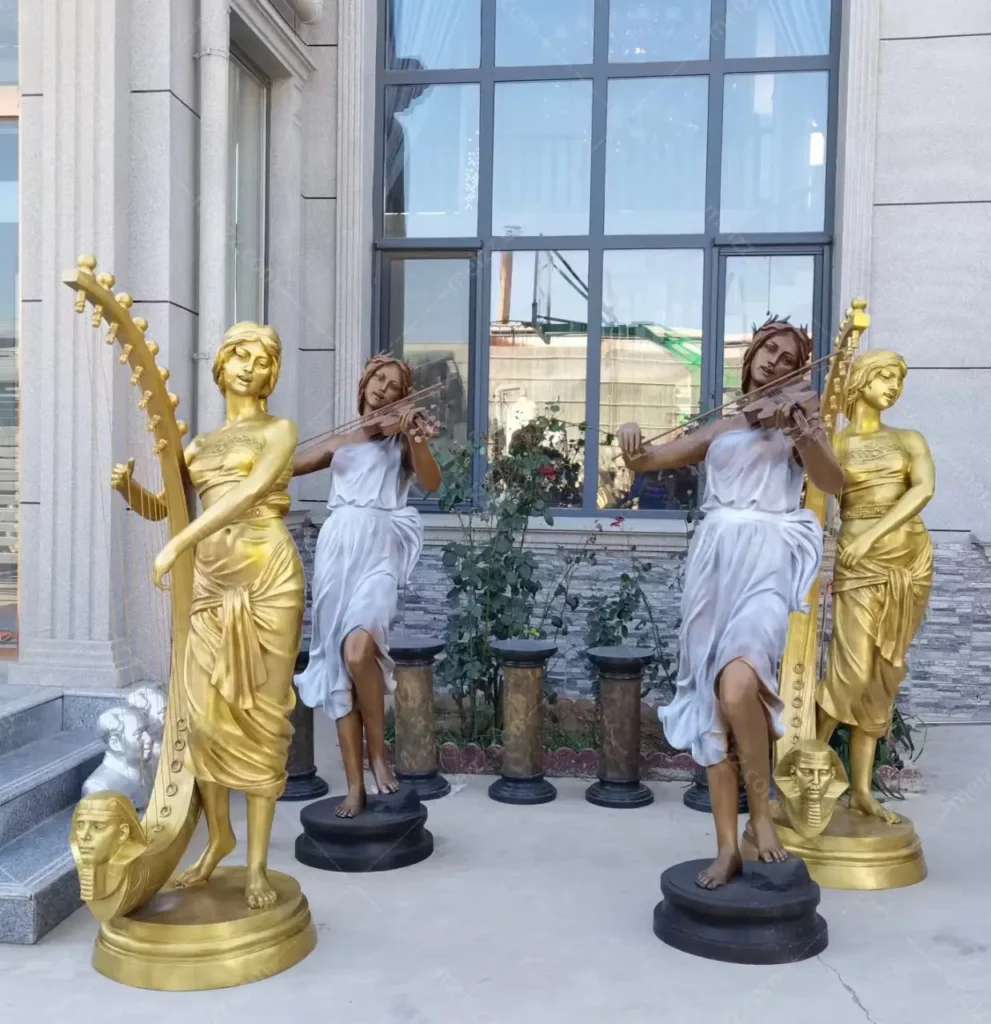
Music played a central role in Greek mythology and daily life. Sculptures of women playing the lyre represent harmony, intellect, and artistic refinement.
When designed as a pair, bronze female musician sculptures create a poetic and cultural atmosphere, making them ideal for:
- Cultural parks and museums
- Libraries and art institutions
- Private gardens with classical themes
Their gentle posture and detailed instruments reflect the refined craftsmanship of traditional Greek sculpture.
Dancing Female Sculptures: Movement Frozen in Bronze
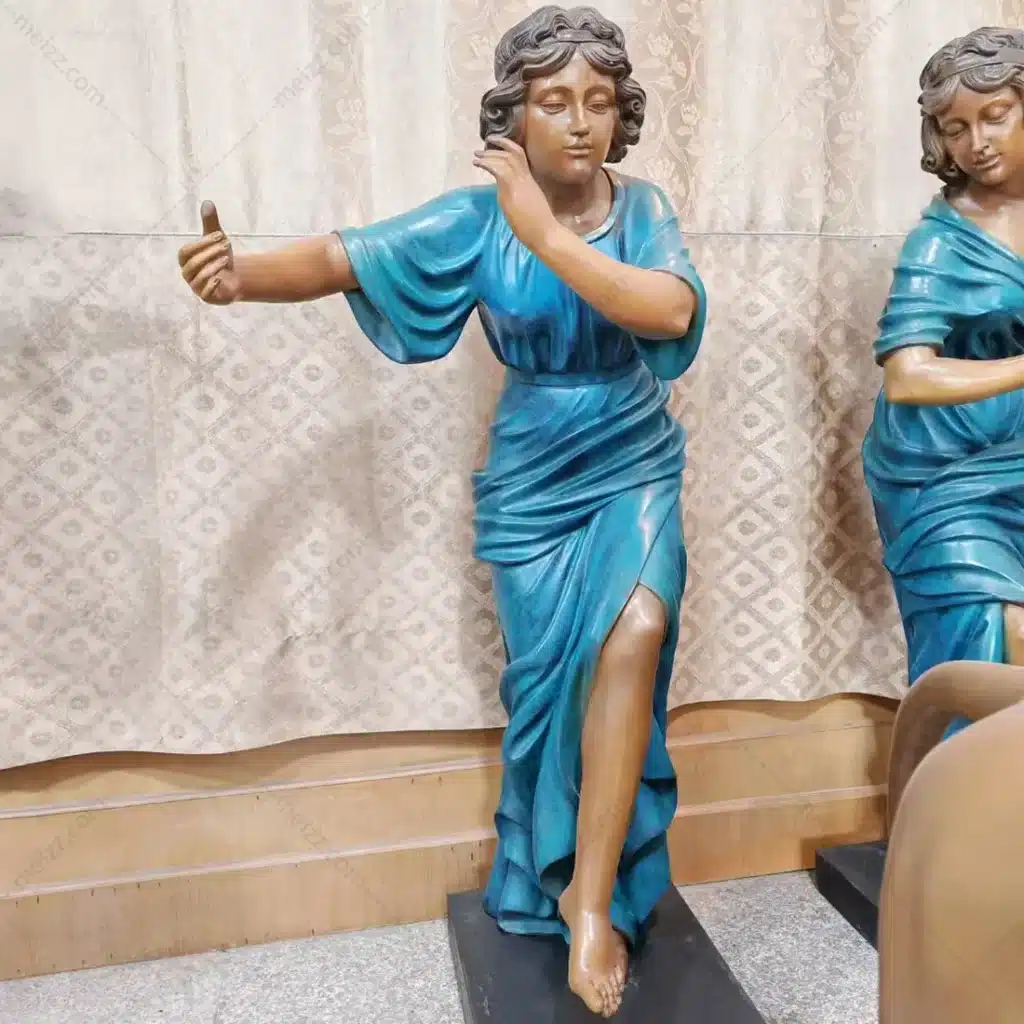
Dancing female figures capture one of the most dynamic aspects of Greek art—movement. These sculptures are full of life, with flowing garments and expressive gestures.
Paired Greek-style dancing female bronze sculptures are often used to:
- Add energy to open landscapes
- Enhance public plazas
- Create artistic focal points in resort or hotel gardens
Their symmetry and motion bring a sense of rhythm and joy to architectural spaces.
Where Are Classical Greek Bronze Female Sculptures Used?
Because of their timeless appearance, classical Greek bronze female sculptures complement both traditional and contemporary architecture. Their elegant forms create a sense of culture, sophistication, and permanence that few decorative elements can achieve.
Common installation locations include:
- Luxury villa gardens and courtyards
- Hotel entrances and landscaped resorts
- Museums and cultural institutions
- University campuses
- Public parks and plazas
- Historical buildings and restoration projects
- Wedding venues and event gardens
- Corporate headquarters with classical architecture
Bronze is especially suitable for outdoor environments because it develops a beautiful natural patina over time while maintaining exceptional structural strength. Whether displayed as a standalone centerpiece or incorporated into a fountain or landscape design, a classical Greek female sculpture brings artistic value and visual balance to almost any setting.
Custom Classical Greek Bronze Female Sculptures Available
Paired Greek-style bronze female sculptures can be customized to suit different projects, including:
- Life size or larger-than-life dimensions
- Surface patina and color tone
- Pose, gesture, and accessories
- Matching bases or pedestals
Custom solutions allow designers and collectors to integrate classical art seamlessly into modern landscapes.
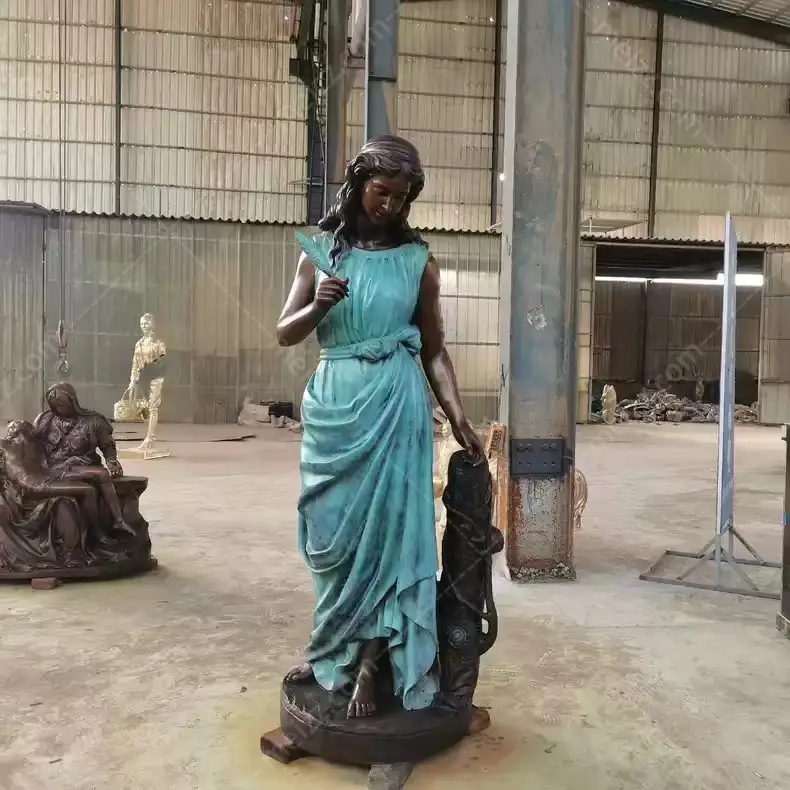
How We Reproduce Classical Greek Bronze Sculptures
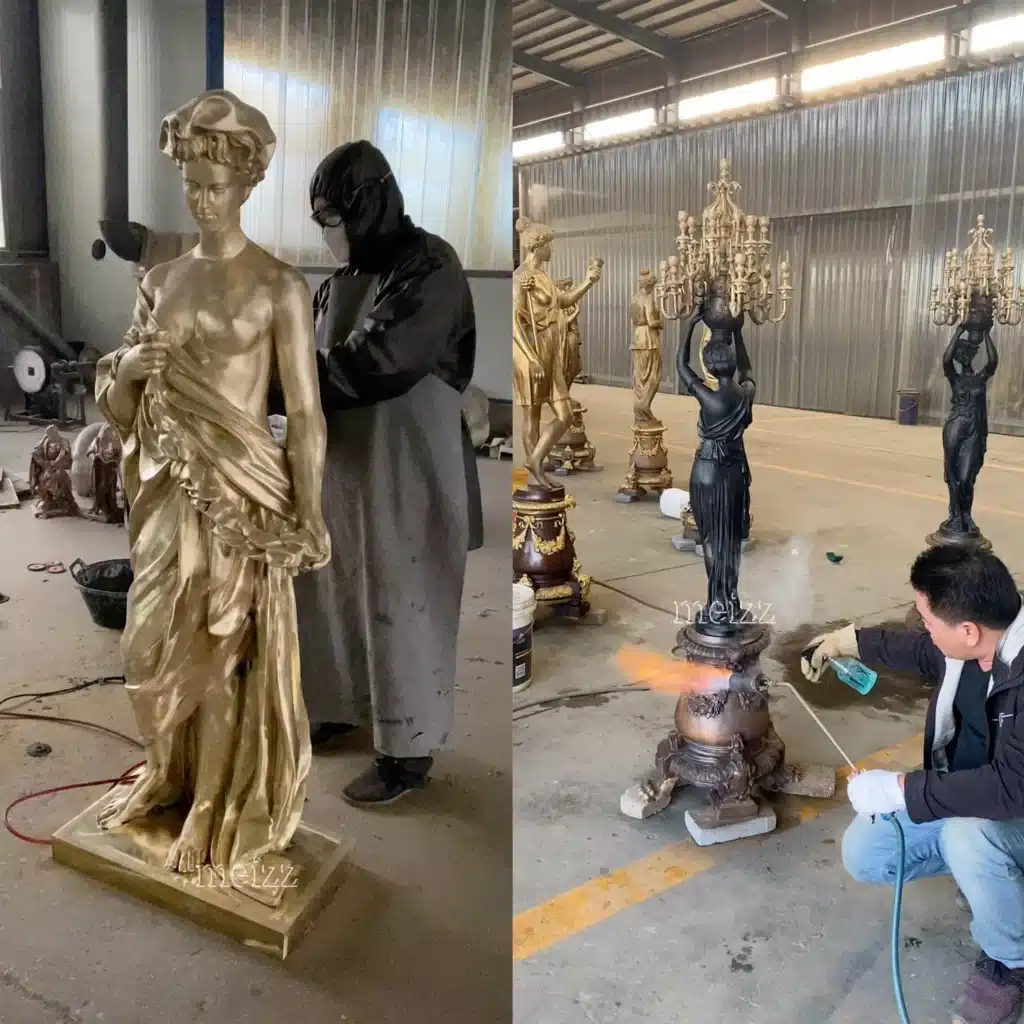
At Meizz, every classical Greek bronze sculpture is produced using the traditional lost-wax casting method, allowing us to capture even the finest artistic details found in historic masterpieces.
Our production process begins with a carefully sculpted clay model, where experienced artists refine facial features, flowing drapery, and body proportions inspired by classical Greek art. Silicone molds and wax patterns are then created before molten bronze is poured into the mold at high temperatures.
After casting, each sculpture is hand-welded, chased, polished, and finished by skilled craftsmen to achieve seamless joints and crisp surface details. Finally, a custom patina is applied to create the desired color, ranging from traditional antique bronze to green verdigris or modern dark finishes.
We also offer complete customization services, including life-size or monumental dimensions, personalized bases, custom inscriptions, and finishes tailored to your architectural or landscape project.
What Makes Classical Greek Female Sculptures Different?
Classical Greek female sculptures are admired for their timeless elegance, balanced proportions, and remarkable attention to anatomical detail. Unlike many modern decorative statues, these sculptures were created according to artistic principles developed in ancient Greece, where beauty was closely linked to harmony, movement, and ideal human form.
One of the most distinctive characteristics is the graceful contrapposto pose, in which the figure naturally shifts its weight onto one leg. This subtle posture creates a relaxed yet lifelike appearance that has influenced sculptors for centuries. Flowing garments are another defining feature, with carefully carved folds that suggest movement while highlighting the figure’s natural silhouette.
Many classical Greek female sculptures depict goddesses such as Aphrodite, Athena, or Artemis, each representing different virtues including beauty, wisdom, courage, and purity. Their refined expressions and elegant proportions make these statues popular not only as works of art but also as architectural focal points in luxury landscapes and public spaces.
Why Classical Greek Female Sculptures Remain Popular Today
The enduring appeal of classical Greek bronze female sculptures lies in their timeless beauty. They transcend trends, offering elegance, cultural depth, and artistic value that enhances both traditional and contemporary spaces.
Whether holding lamps, vases, musical instruments, or dancing gracefully, these paired female figures continue to embody the ideals of harmony, beauty, and human expression.
FAQ
Are classical Greek female sculptures suitable for outdoor use?
Yes. Bronze is one of the most durable materials for outdoor sculptures. It withstands rain, sunlight, and seasonal temperature changes while gradually developing a protective natural patina.
Can I customize the size of the sculpture?
Absolutely. We manufacture sculptures in various sizes, from tabletop decorative pieces to life-size and monumental public artworks, according to your project requirements.
What finish options are available?
We offer antique bronze, dark bronze, green patina, black bronze, polished bronze, and other custom finishes to match different architectural styles.
How long does it take to produce a custom bronze sculpture?
Production typically takes 30–60 days, depending on the sculpture’s size, complexity, and customization requirements. Shipping time varies by destination.
Can you reproduce famous Greek goddesses such as Aphrodite or Athena?
Yes. We can create museum-quality reproductions inspired by famous classical Greek sculptures, as well as fully customized designs based on your drawings, reference images, or project concepts.
How do you ensure the quality of each sculpture?
Every sculpture undergoes multiple quality inspections throughout the modeling, casting, welding, polishing, and patina processes. Before shipment, we provide detailed photos or videos for customer approval to ensure the finished piece meets your expectations.