

Neptune god of the sea statue
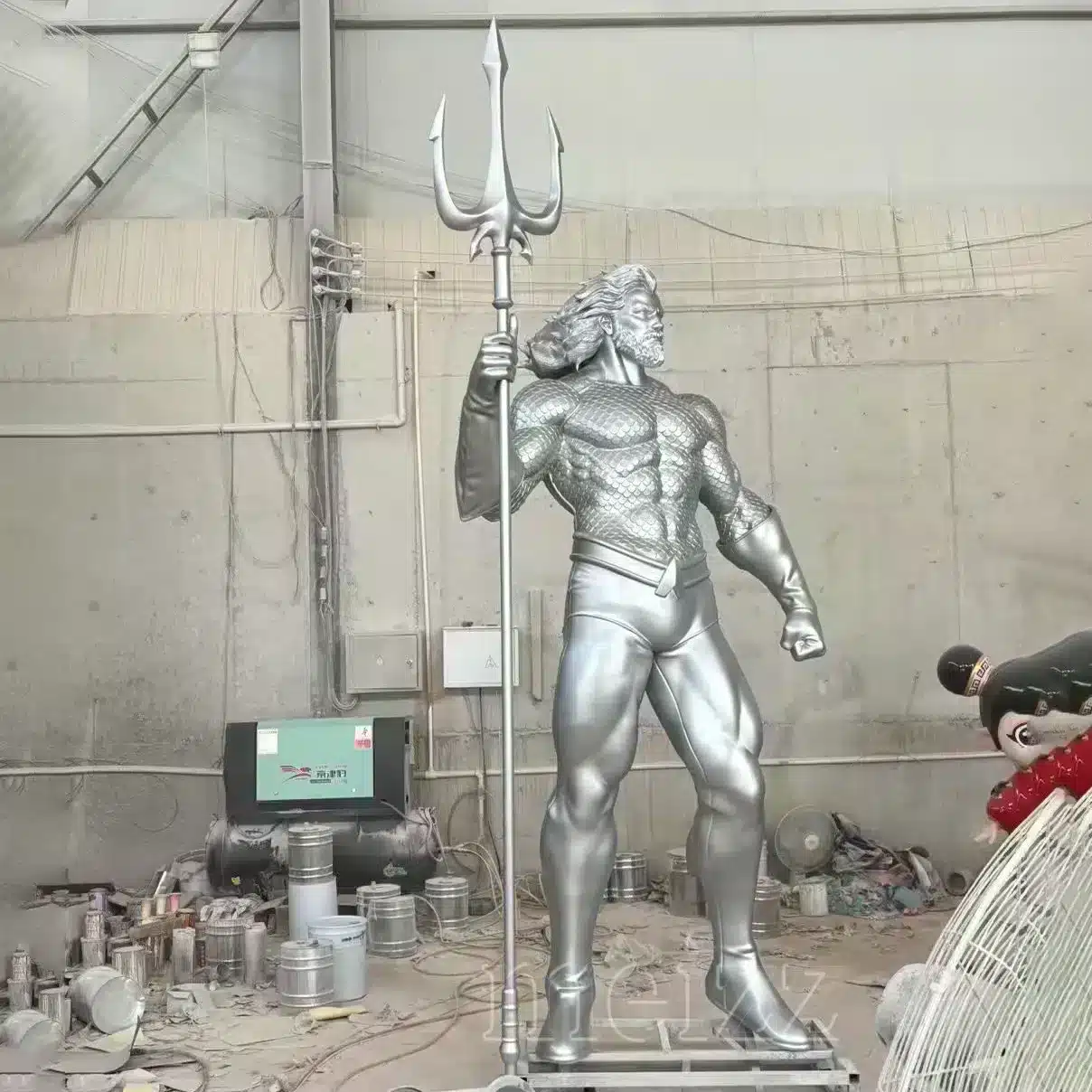
The neptune god of the sea statue, rendered entirely in a silver-gray metallic finish, stands tall, majestic, and imbued with a powerful presence. His massive physique, with defined muscles, embodies the image of the supreme ruler of the sea in classical mythology.
Standing tall on a pedestal, he holds a trident in his left hand, his right fist clenched, projecting unparalleled majesty and power. His hair and beard flutter in the breeze, as if a sea breeze is sweeping up from the depths, imbuing the figure with a powerful sense of dynamism.
Neptune’s body is covered in armor resembling fish scales, his legs muscular, and his footsteps steady, symbolizing strength. This stance embodies the majestic presence of ancient Greek sculpture, imbuing the statue with both realistic human beauty and a mythical, transcendent aura.

The Mythological Origins and Evolution of Neptune’s Image
Neptune, originating from ancient Roman mythology, is the ruler of the ocean and, like Poseidon in Greek mythology, represents different cultural representations of the same deity. Brother of Jupiter, king of the gods, Neptune oversaw all natural phenomena related to water—waves, storms, tides, and even the fate of sailors.
In ancient Roman art, Neptune is often depicted as a majestic, bearded man, wielding a trident and navigating the oceans in a chariot pulled by seahorses or dolphins. He symbolizes not only the power of the sea but also the boundless energy of nature and the human spirit of exploration.
Over time, Neptune’s image has come to encompass both strength and wisdom, becoming a symbol of humanity’s reverence for and conquest of nature.











Reviews
There are no reviews yet.