
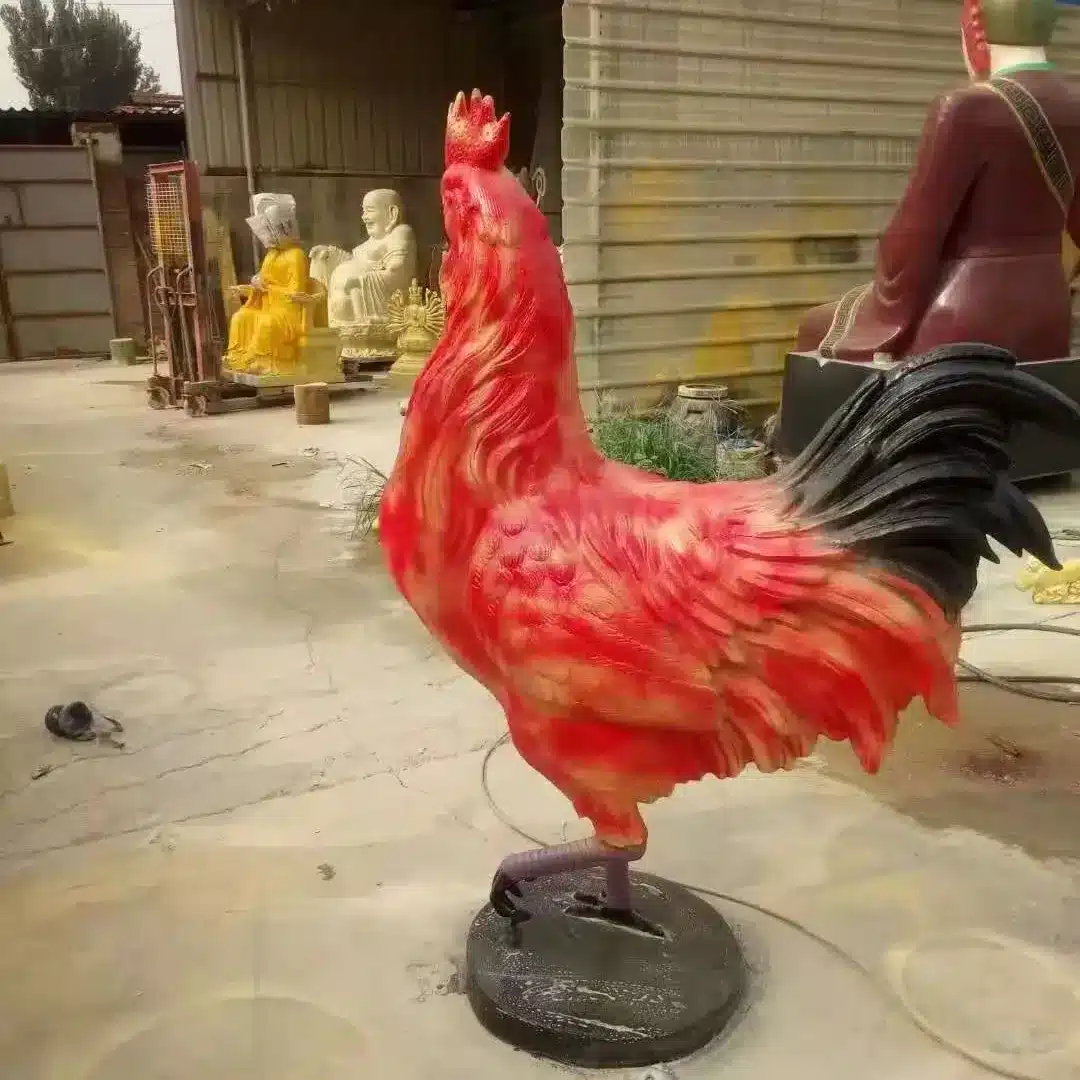
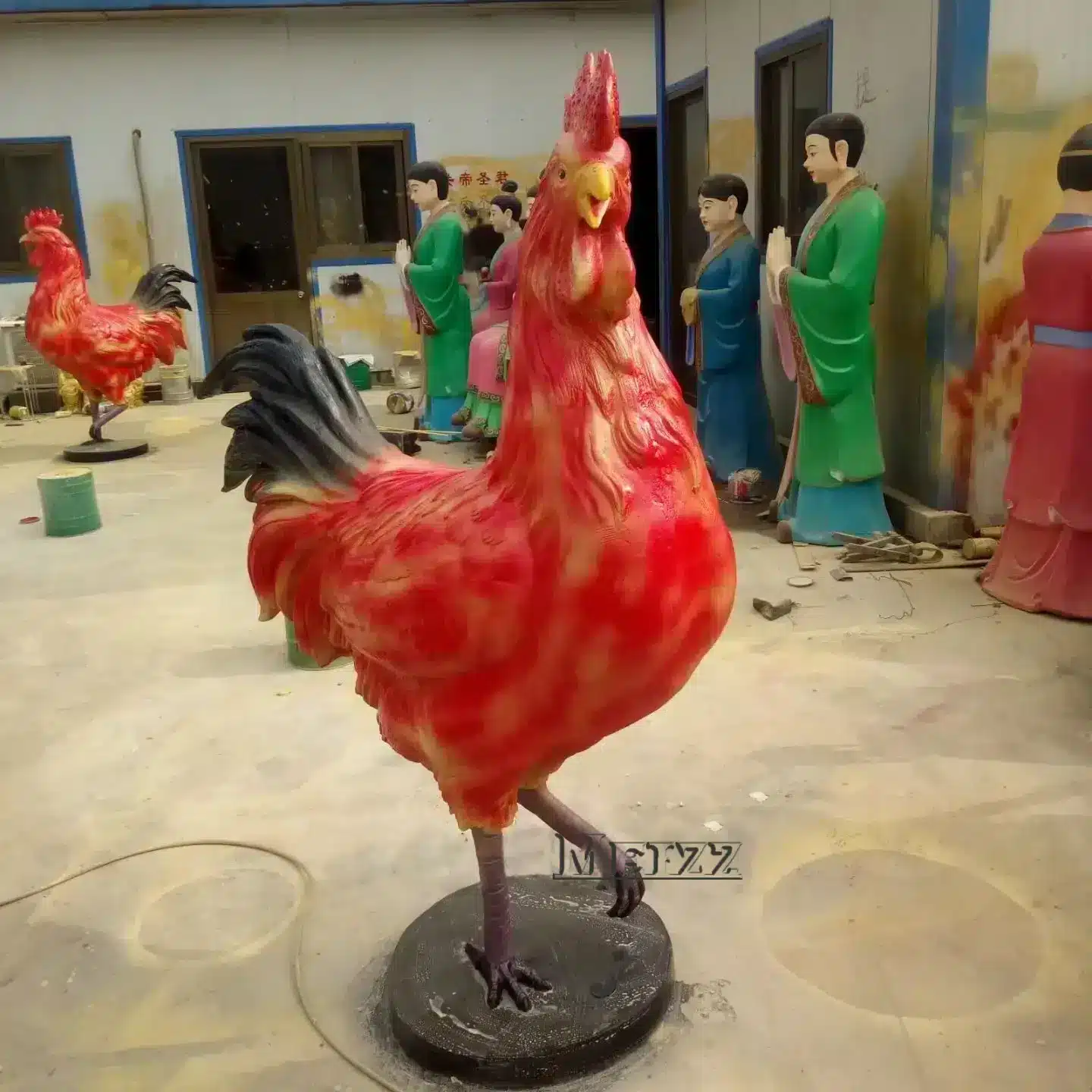
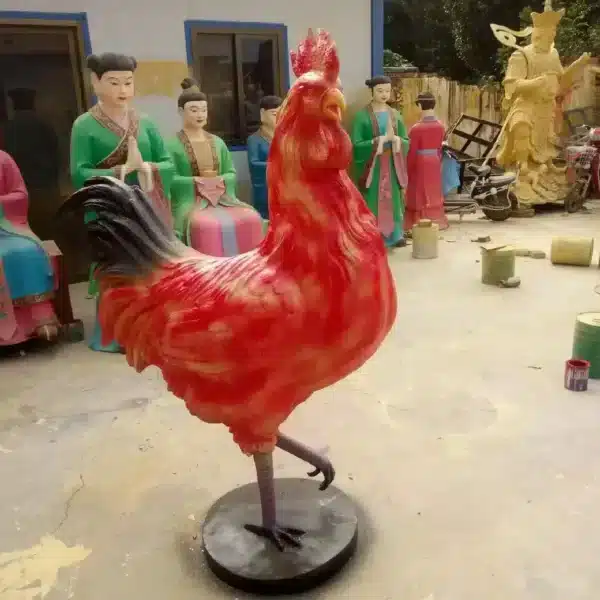
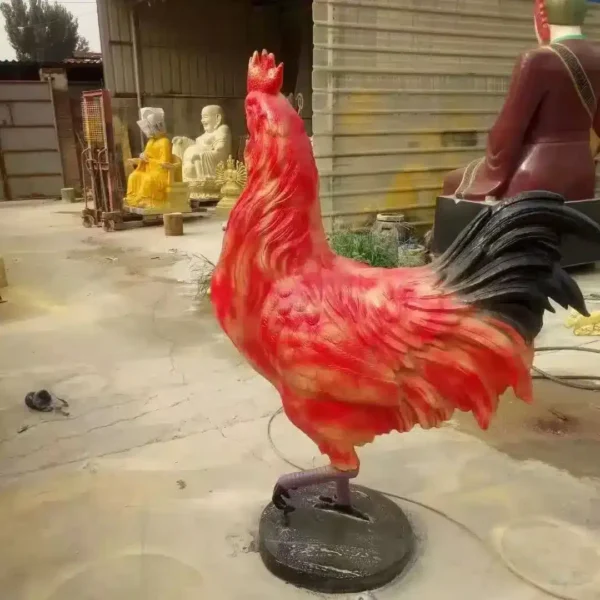
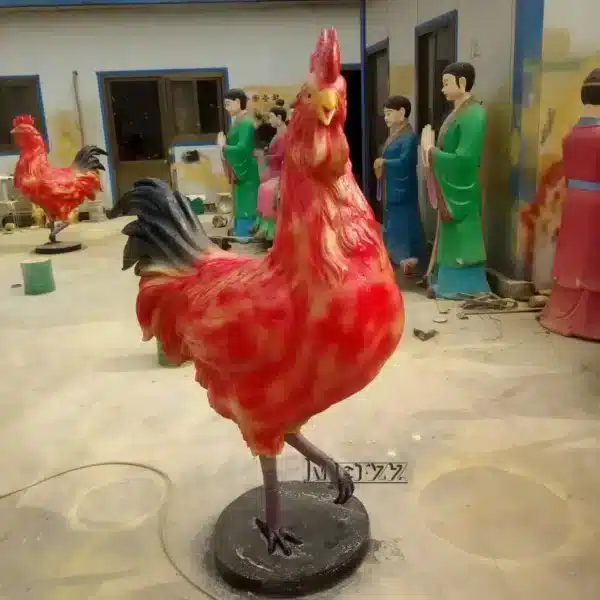
5.25-Foot (160 cm) tall bronze rooster sculpture
This is a 5.25-Foot (160 cm) hand-painted bronze rooster sculpture produced by our Meizz Sculpture Foundry. It is made of bronze and weighs approximately 50 kg. The ex-factory price is USD 2,150.
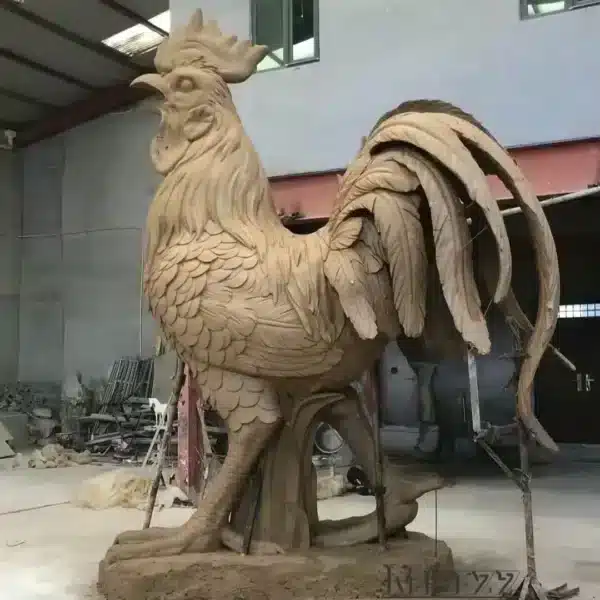
The bronze casting process alone takes about 25 days, covering stages from clay modeling and demolding to wax casting and bronze pouring. The details of the rooster’s feathers are carefully sculpted, with each individual feather clearly visible.
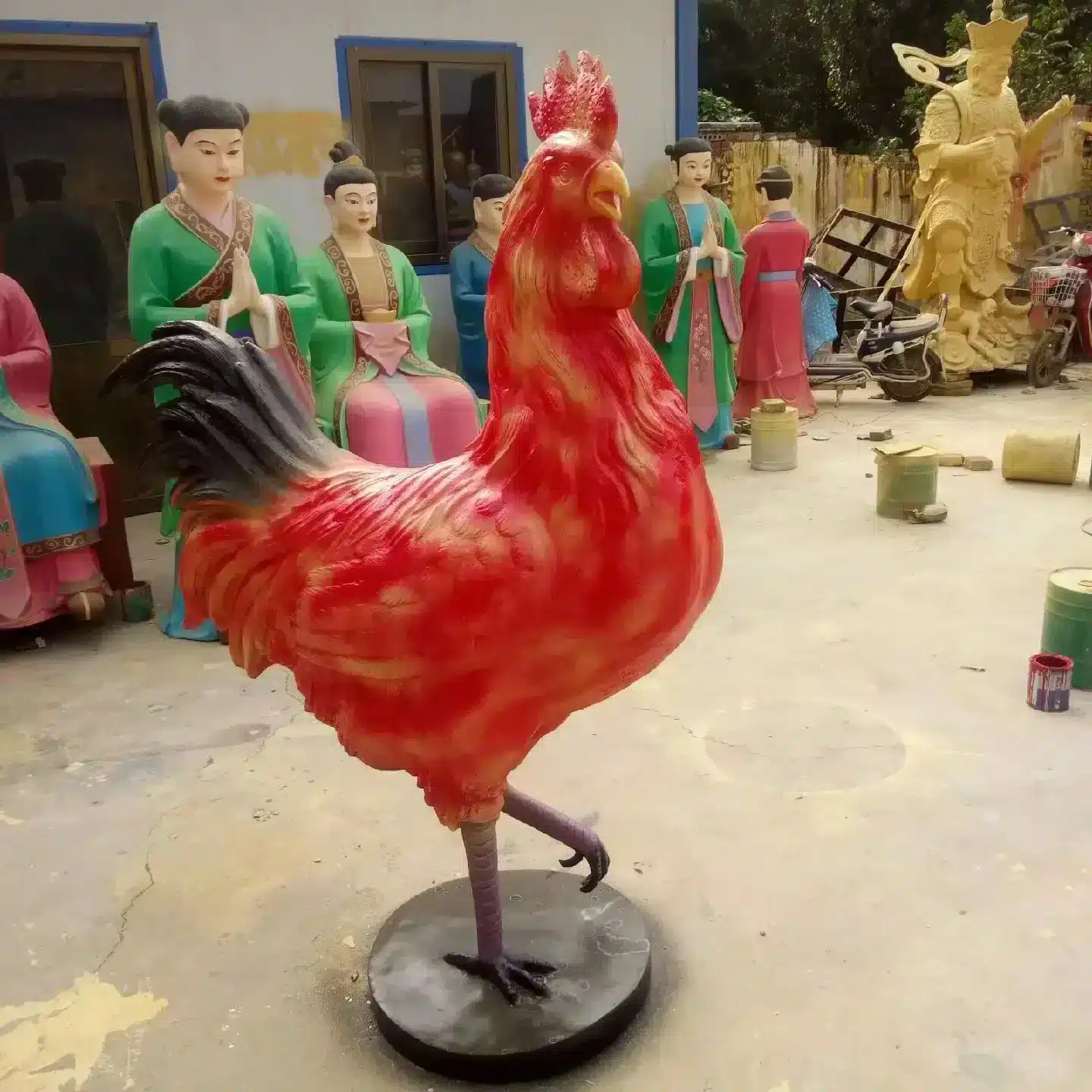
The surface finish of the Giant Metal Rooster Statue adopts an antique bronze base combined with refined hand painting. The bronze is first aged to create a calm, classic antique bronze tone, and then hand-painted to restore the vivid red feathers and black tail. This process preserves the solid, weighty texture of bronze while highlighting the rooster’s lively and expressive form, making it a natural focal point wherever it is displayed.
The production steps of this 5.25-Foot (160 cm) bronze rooster sculpture are as follows:
1. Prototype design and clay modeling
Based on rooster images provided by the client, a clay model is created at a 1:3 scale of a real rooster. Details such as the layering of feathers, the curves of the claws, and the expression of the head are carefully refined. The form is adjusted repeatedly until it is accurate, vivid, and fully meets the client’s requirements.
2. Silicone mold making
A sectioned silicone mold is made over the surface of the clay model. After the silicone cures, a fiberglass outer shell is added for reinforcement. This ensures the mold can precisely reproduce every detail of the clay prototype, such as the direction of feather textures and the sharpness of the beak.
3. Wax model production and refinement
Molten wax is poured into the mold and allowed to cool, forming a wax rooster model. Artisans then hand-finish the wax, filling tiny air bubbles and trimming rough edges to ensure the wax model matches the original design exactly.
4. Shell building and dewaxing
The wax model is coated layer by layer with refractory slurry (a mixture of quartz sand and clay) to form a 5–6 layer hard ceramic shell. After drying, the shell is heated in a high-temperature kiln, allowing the wax to melt and drain out, leaving a hollow cavity identical to the wax model.
5. Bronze casting
Molten bronze is poured into the hollow shell. After natural cooling for about 24 hours, the shell is broken away to reveal the rough bronze casting.
6. Welding, refinement, and polishing
Excess parts such as gates and risers are removed. The surface is then carefully refined and polished using chisels and sandpaper, making details like feathers and claws more defined and ensuring a smooth overall texture.
7. Surface coloring and hand painting
The bronze surface of bronze rooster sculpture is first treated with an antique finish (chemical oxidation to create a dark patina). Then, special metal pigments are applied by hand: the red feathers are painted in layered cinnabar red, the tail feathers are shaded in deep black, and the eyes are highlighted with bright yellow. Finally, a transparent protective coating is sprayed on, preserving the bronze texture while restoring the rooster’s vivid colors.
The entire process takes approximately 25 days. Each step is carried out by artisans with over 10 years of experience, ensuring exceptional detail accuracy and artistic quality in the final sculpture.

FAQ – 160 cm Bronze Rooster Sculpture
1. Is the sculpture made of pure bronze?
No. It is made of brass (approximately 85% copper + 15% tin), which retains the classic bronze appearance while the tin content enhances overall hardness and durability.
2. Will the surface colors fade over time?
The surface is finished with high-temperature-resistant metal pigments and sealed with a transparent protective coating. When placed indoors, the colors can last 5–8 years without noticeable fading. For outdoor use, we recommend applying an additional protective clear coat once a year to prevent rain and moisture damage.
3. How much does it weigh? How many people are needed to move it?
The sculpture weighs approximately 50 kg. It is recommended that 2–3 people move it together. Hidden lifting grooves are designed at the base to make handling easier.
4. Can the size be customized, for example reduced to 100 cm?
Yes. Custom sizes from 50 cm to 200 cm are available, with pricing depending on the size.
• Smaller sizes: production time is about 15 days
• Larger sizes: production time is about 25 days
5. Does the sculpture collect dust easily? How should it be cleaned?
The surface has a matte finish, which does not easily show dust. For daily cleaning, simply wipe with a soft, dry cloth. For stubborn stains, use a slightly damp cloth with clean water. Avoid chemical cleaners.
6. Can it withstand wind and rain if placed outdoors?
It is suitable for semi-outdoor areas (such as under eaves or covered spaces). For fully exposed outdoor installation, an additional anti-corrosion coating is recommended. The sculpture can withstand temperatures from –10°C to 40°C. After heavy rain, any standing water around the base should be removed promptly.
7. Can text be engraved, such as a blessing on the base?
Yes, engraving is supported. The text is designed during the clay modeling stage, with a recommended depth of about 1 mm, ensuring it does not affect the overall appearance. Please provide the engraving content when placing the order.
8. Will it be damaged during shipping? How is it packaged?
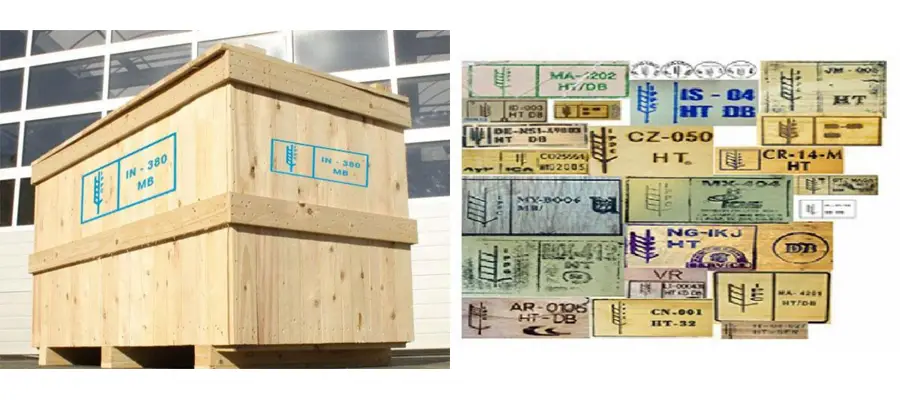
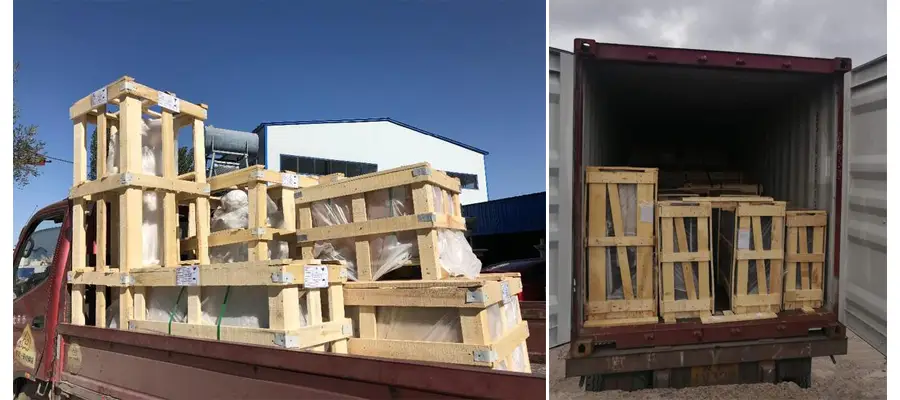
The sculpture is packed in a wooden crate with foam reinforcement. The interior is wrapped with soft fabric, and all corners are protected with impact-resistant padding. Door-to-door delivery is available, but please confirm in advance that the delivery address allows access via elevator or corridor.



Reviews
There are no reviews yet.