
Giacometti Inspired Standing Woman Sculpture
A figure reduced to its essential vertical form, this standing woman alberto giacometti sculpture is defined by an elongated body, narrow shoulders, extended legs, and a heavily textured surface. Rather than presenting a realistic female figure, the sculpture focuses on proportion, distance, and the visual effect of a solitary human presence.
The body appears almost stretched upward. From the small head and compressed torso to the extremely long legs, every section contributes to a strong vertical silhouette. The irregular surface is intentionally retained instead of being polished smooth, giving the sculpture a hand-worked, almost excavated appearance.
This design is suitable for collectors, galleries, interior designers, hotels, art spaces, and architectural projects looking for a large standing figure sculpture with a strong connection to 20th-century modern art.

Built Around a Vertical Human Form
The most distinctive feature of this standing woman sculpture is its proportion.
The figure occupies very little horizontal space. The shoulders, waist, arms, and legs remain close to the central axis, creating a narrow silhouette that rises directly from the base. This makes the sculpture visually different from conventional female statues that rely on wide gestures or dramatic movement.
Its elongated structure also changes depending on the viewing distance.
From nearby, the rough surface, uneven edges, and accumulated modeling marks become more visible. From a distance, many of these details disappear and the sculpture reads primarily as a dark, vertical human form.
Because of this, the sculpture works particularly well in locations with long sightlines, entrance halls, open galleries, stairwells, hotel lobbies, and landscaped architectural spaces.
Rough Surface Is Part of the Sculpture, Not a Finishing Defect
One of the important characteristics of this Alberto Giacometti style sculpture is its deliberately irregular texture.
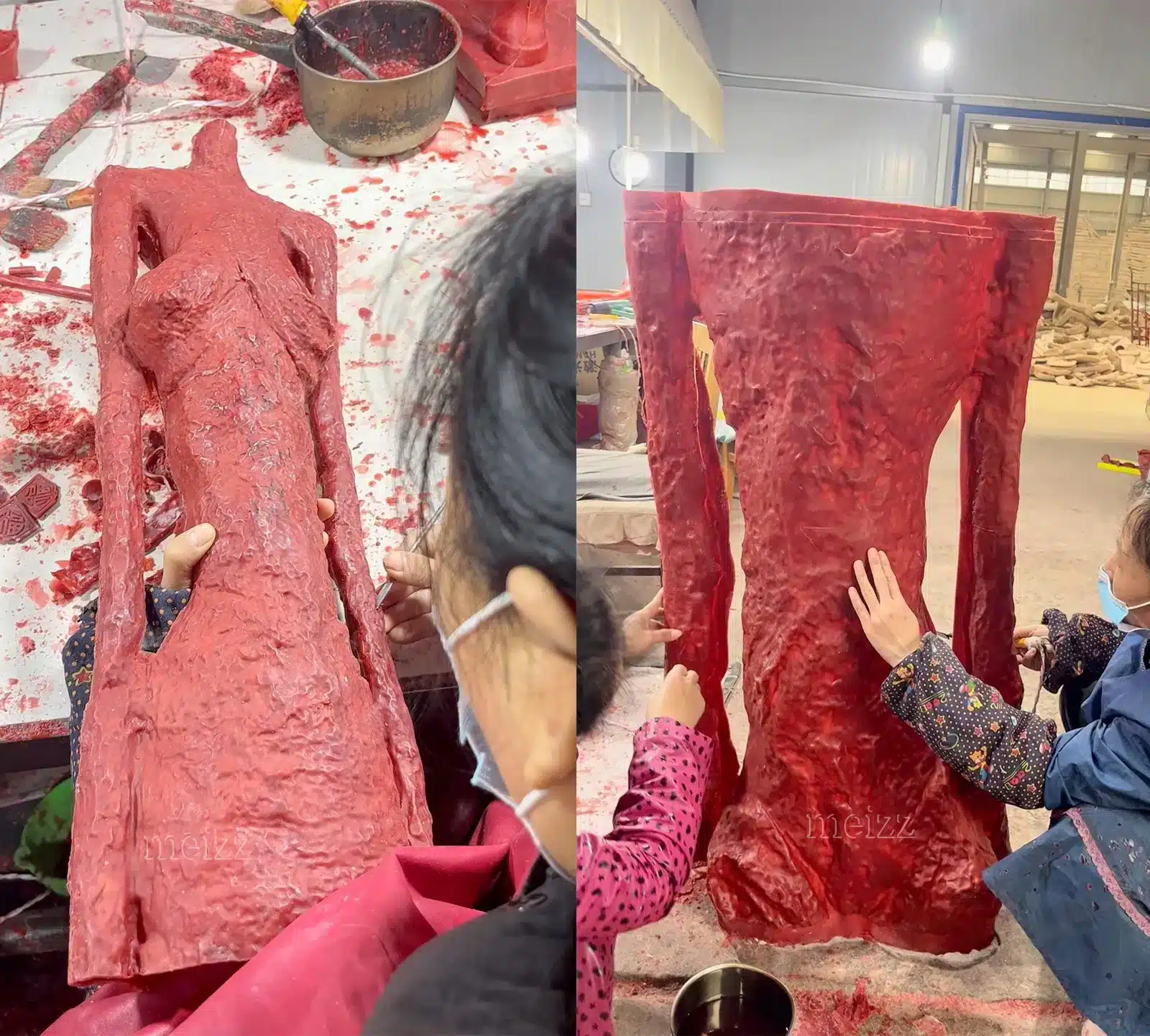
The surface is not intended to be smooth or mechanically uniform. During production, the original model can be shaped to preserve folds, depressions, tool marks, and uneven material buildup across the body. These details are then transferred through the mold-making and casting process.
For bronze versions, the sculpture can be produced using the lost wax casting process. Because of the figure’s height and narrow proportions, the sculpture is normally divided into suitable casting sections rather than cast as one extremely tall solid piece. After casting, the sections are carefully assembled and welded together.
The welded areas are then reworked by hand so the transitions blend into the surrounding rough texture instead of appearing as obvious straight seams.
This is especially important for a Giacometti-inspired sculpture: a perfectly smooth welded surface would look inconsistent with the intentionally raw modeling language of the figure.
How the Tall, Narrow Structure Is Engineered
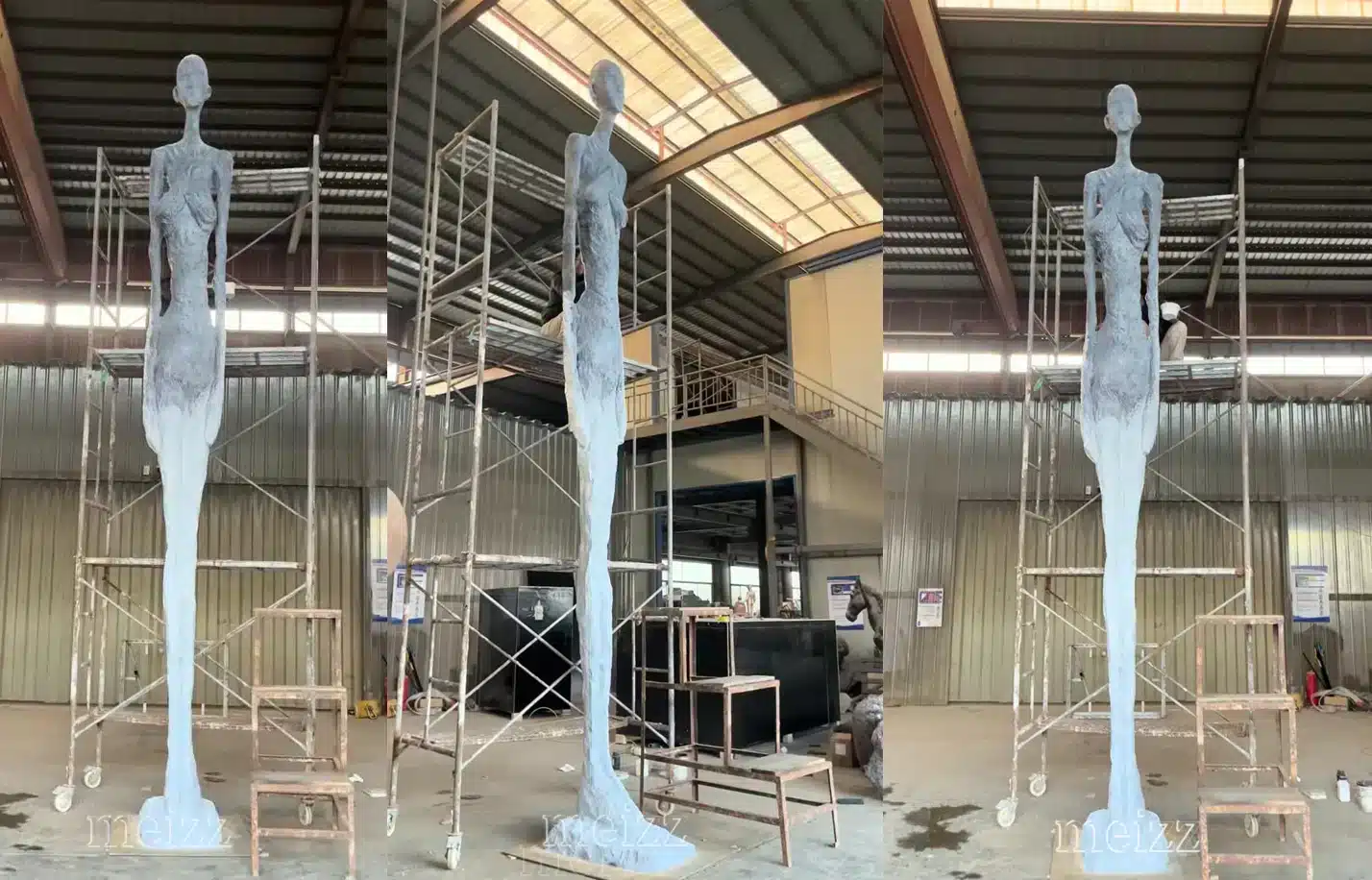
A sculpture with such thin legs requires more structural consideration than a wider figurative statue.
The internal construction can be reinforced according to the final height and installation environment. The two elongated legs are designed to connect securely with the lower support structure, transferring the sculpture’s weight toward the base.
For larger custom sizes, we can adjust:
- Internal reinforcement
- Leg thickness
- Connection between the feet and base
- Base dimensions
- Mounting points
- Indoor or outdoor installation requirements
The goal is to preserve the extremely slender appearance of the original design while ensuring that the sculpture has an appropriate structural support system.
For outdoor projects or large public installations, a heavier base or concealed anchoring system can be prepared according to the site conditions.
A Sculpture That Changes the Space Around It
This standing woman alberto giacometti sculpture does not require a crowded display environment.
Because the sculpture is tall and narrow, it can create a strong focal point without occupying a large floor area. It is particularly effective when placed where the surrounding architecture allows viewers to see the full height of the figure.
Suitable installation locations include:
Gallery entrances
A single tall figure can establish a clear visual transition between the entrance and exhibition space.
Hotel and commercial interiors
The vertical form works well beside high walls, double-height spaces, reception areas, and corridors.
Modern residences
A smaller version can be installed in an entrance hall, living room, courtyard, or beside a staircase.
Outdoor sculpture gardens
The dark textured surface creates contrast against lawns, stone paving, concrete walls, and minimalist landscaping.
Architectural projects
Several standing figures can also be produced as a group installation, creating different visual rhythms across a larger space.
Base and Installation Can Be Customized
The Bronze Abstract Figure Sculpture shown in the photo is supported by a simple rectangular base that allows the extremely thin figure to remain visually separated from the ground.
Depending on the project, the base can be customized as:
Bronze base
Steel internal support with bronze cladding
Black granite pedestal
Natural stone pedestal
Concrete foundation
Hidden underground anchoring system
For permanent installations, anchor bolts or embedded steel components can be prepared in advance. This allows the sculpture to be securely fixed after transportation rather than relying only on the weight of the sculpture itself.
If the sculpture is intended for an existing floor or pedestal, we can also adjust the mounting system according to the available installation dimensions.
Custom Manufacturing from Sculpture Model to Final Installation
At Meizz Sculpture Factory, this type of elongated figure requires attention not only to appearance but also to the relationship between surface texture and structural construction.
The production process can include:
1. Sculpture modeling
The elongated female form is developed with intentionally uneven surface modeling rather than smooth anatomical detailing.
2. Mold preparation
The model is divided according to the sculpture’s shape and production requirements.
3. Bronze casting
Individual sections are cast using the lost wax process.
4. Assembly and welding
The body, legs, arms, and other casting sections are joined together.
5. Texture restoration
After welding, the surface is manually reworked so that the welded areas continue the same irregular texture.
6. Patina finishing
A dark or customized surface color is applied to emphasize the depth of the textured bronze.
7. Base preparation and installation system
The bottom structure is prepared according to whether the sculpture will be installed indoors, outdoors, or on a permanent foundation.
Why Choose a Giacometti Style Standing Woman Sculpture?
This sculpture is not designed to fill space with decorative detail. Its impact comes from the opposite approach.
The figure is reduced, narrow, isolated, and vertically extended. The rough surface prevents it from looking like a digitally produced or mass-manufactured decorative object, while the long proportions create a strong relationship with the height and scale of the surrounding architecture.
For collectors and designers looking for a modern standing woman sculpture, this style offers a recognizable sculptural language that works in both private and large architectural environments.



Reviews
There are no reviews yet.