
family of three sculpture
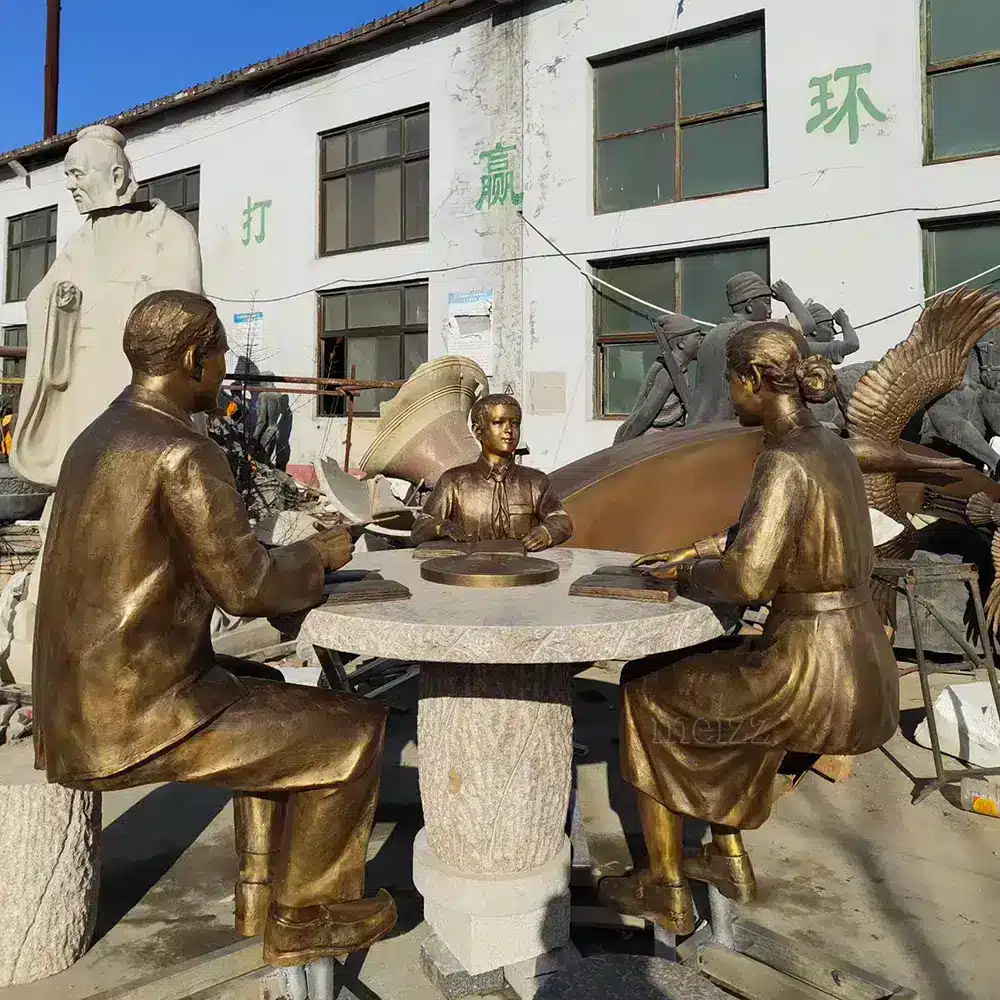
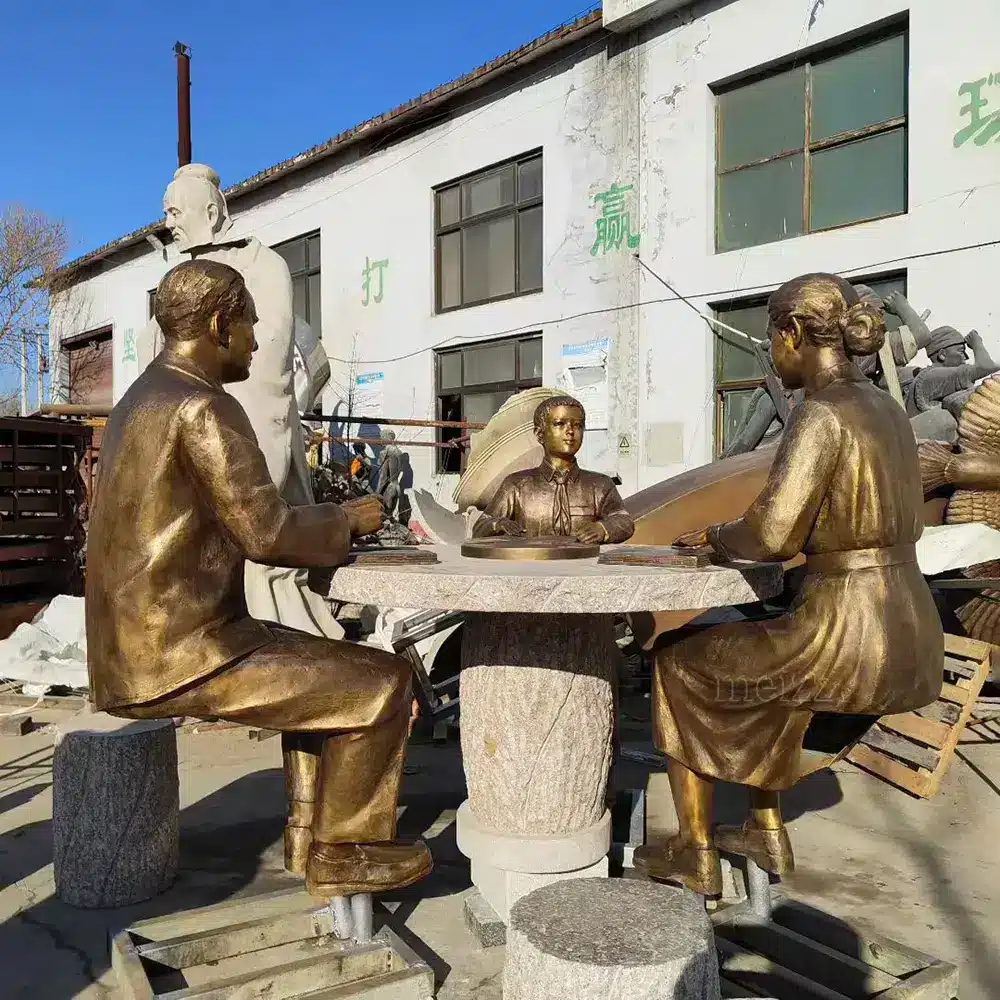
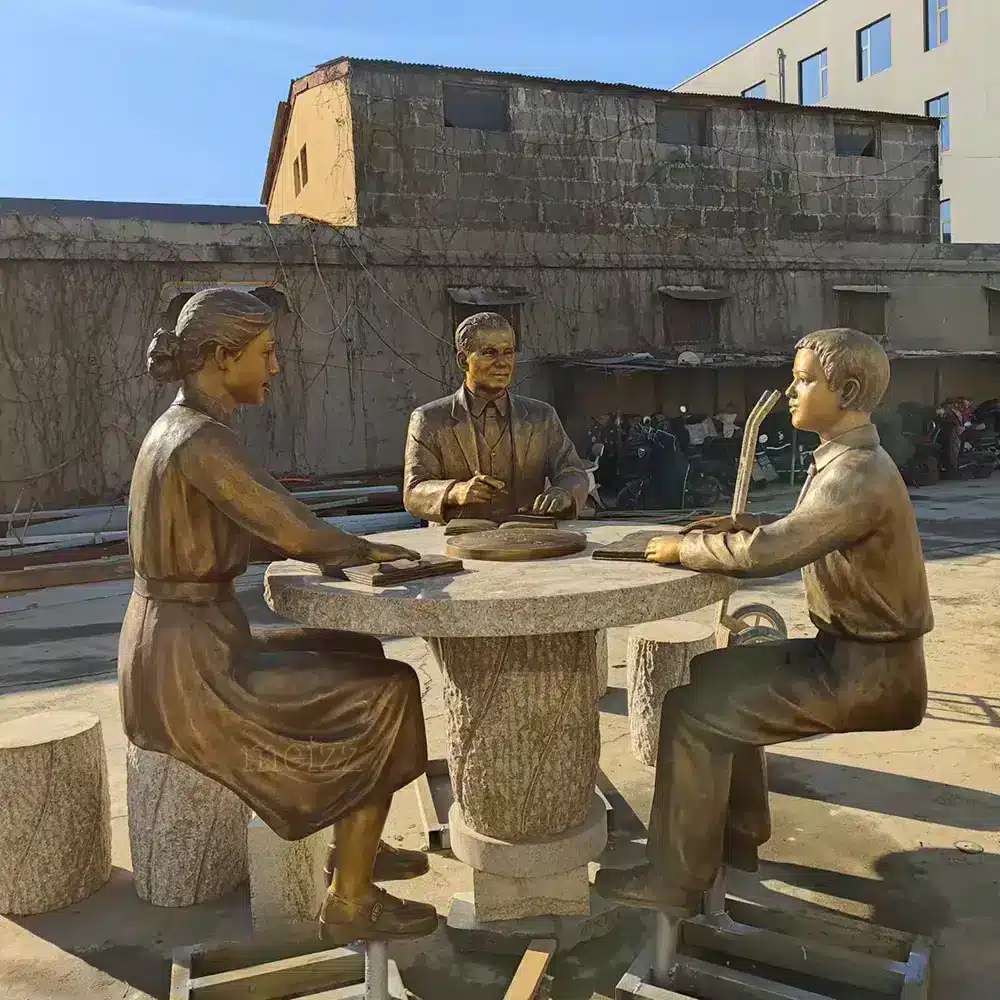
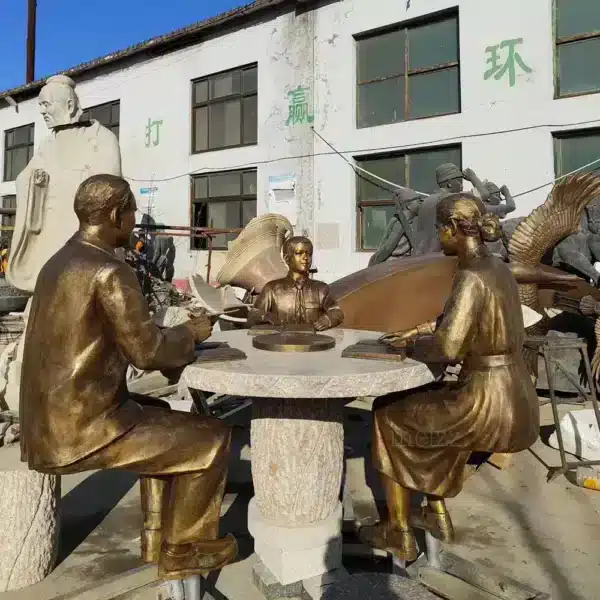
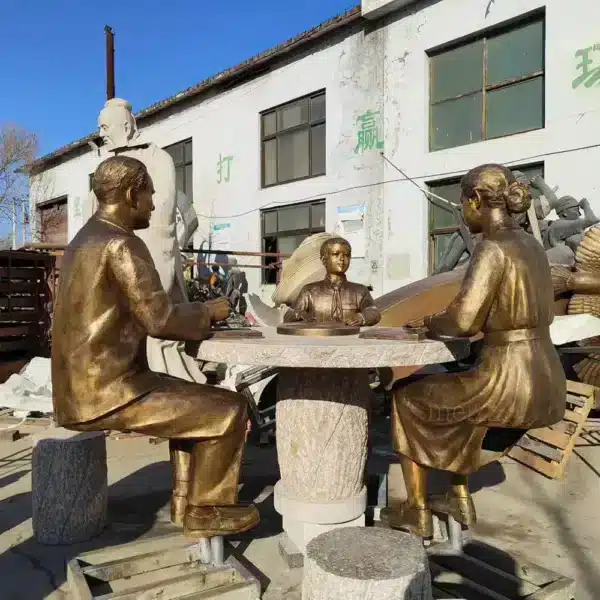
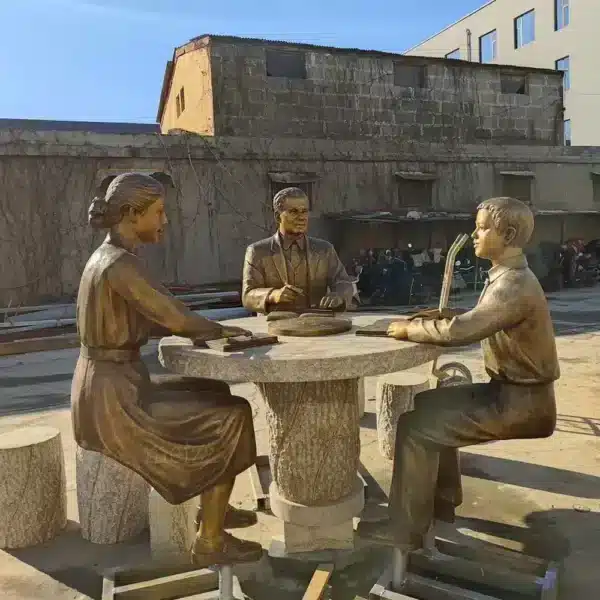
This life size family of three sculpture is based on the everyday scene around the round table: the mother is sitting at the table, her hair is curled into a gentle comb, the skirt folds naturally with the sitting position, the fingertips are leaning on the desk; the father in the middle wears a simple uniform, the fingers of the pen are slightly bent, the spirit is gentle as listening; the child across the table sits in an extended posture, the elbows are placed on the stone table, the eyes meet with the parents, and the intimacy is relaxed.
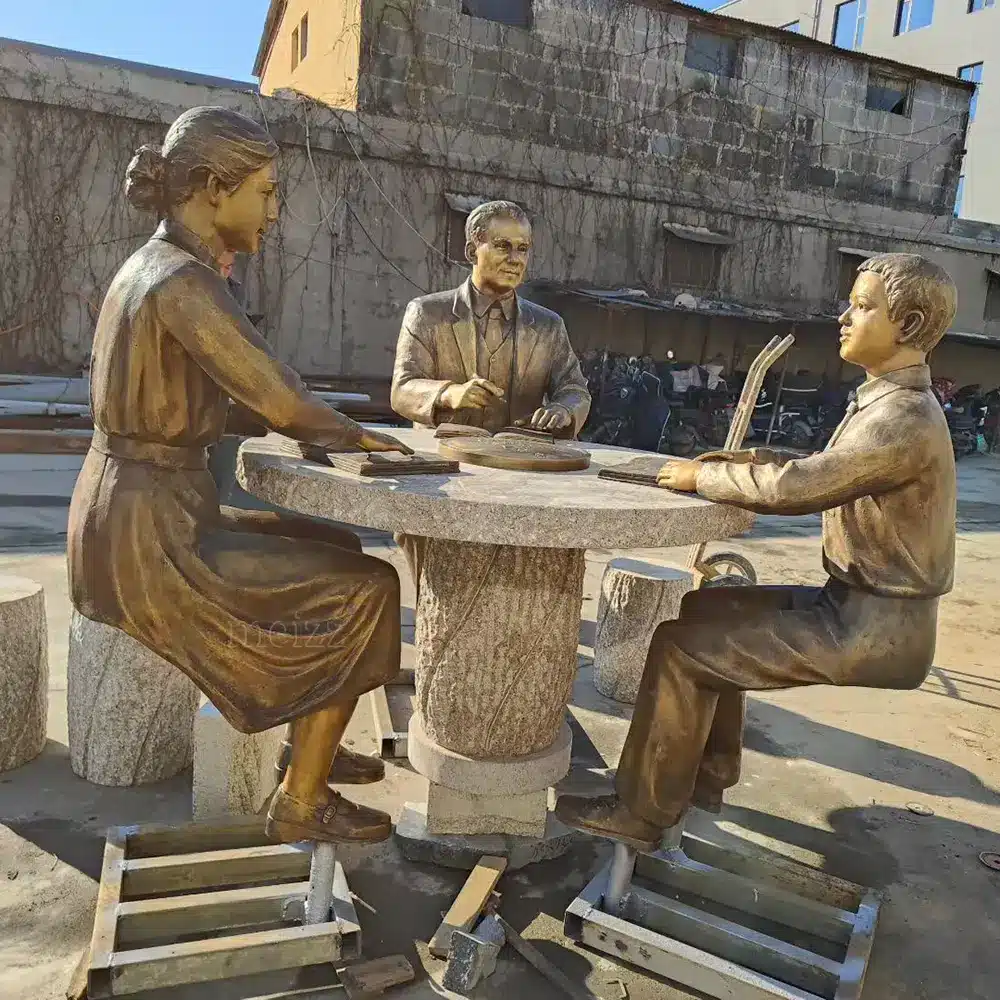
The “Bronze Family of 3 ” is the core of the sculpture:
it is the continuation of life, the nest of emotions, our first bond in the world. Just as Henry Moore’s “Family” sculpture constructs the space “parents as walls, children as nuclei” in abstract form, while the “Family of Three” in the picture tells us in concrete everyday life that “companionship is the longest confession”.
The sculpture conveys a tone of warmth, harmony, and happiness, and the family is seen as the idealized embodiment of “harbour” and “emotional destination”. Happiness and responsibility, sweetness and burden, achieve dialectical unity in this silent form.
Usage of the statue
In a square, park, or community, it intuitively conveys the values of harmony, shelter, and inheritance through a stable triangle formed by parents and children. In a specific historical context (such as China), it has also served as a visual symbol of family planning policies to document social change. Its abstract form transcends the specific narrative, becoming a cultural symbol that triggers extensive emotional projection and collective memory, ultimately serving multiple purposes of beautifying the environment, inspiring thought, and cohesive emotions.


Reviews
There are no reviews yet.